Fishink Bits n Bobs.
I was recently contacted by Jeremy Craddock (nice hat)

the deputy editor of the Warrington Guardian who also writes a blog called Bookengine.

His site celebrates children’s writers, fiction and illustration and I was privileged to be invited to contribute. You can see the article here and possibly learn a little more about me and what makes me tick, squeak and whirr ! lol Jeremy has written about some of children’s literary greats such as Roald Dahl and Philip Reeve. Thanks again Jeremy for the chance to take part.
From something new to something rather old, about four and a half billion years old to be precise.

Back in the year 2000, a 1,003 kilogram (2,211 lbs) meteorite was discovered near Fukang, a city located in the northwestern region of Xinjiang, China. Named the ‘Fukang meteorite‘, it was identified as a pallasite, a type of stony–iron meteorite, with striking olivine crystals throughout. Pallasites are extremely rare even among meteorites (only about 1% of all meteorites are this type) and Fukang has been hailed as one of the greatest meteorite discoveries of the 21st century.
The Fukang pallasite is believed to originate from deep inside intact meteors created during the formation of the solar system about 4.5 billion years ago and very few specimens are thought to have survived their descent through Earth’s atmosphere.
An anonymous group of collectors currently holds the largest portion which weighs 419.5 kg (925 pounds). In 2008 they attempted to sell it at auction at Bonham’s in New York for approximately $2 million but did not receive any bidders. A total of 31 kilograms (68 lb) of the specimen is on deposit at University of Arizona’s Southwest Meteorite Laboratory.
(Information sources: Twister Sifter, Meteoritical Society, Southwest Meteorite Laboratoy, The Michael Farmer Collection, DailyMail, Wikipedia)
I thought the images were amazing and it reminded me of looking up into a canopy of trees when the sun’s shining. It still excites me a little to think that we are all made of stars !
From stars to carbon or rather Carbonmade. My site for showcasing my work has just added some new options for showing your talents with respect to attracting commercial clients. You can see the new additions to my site here.

Last but not least, my good friends Sarah and Carrole Morpeth are taking part in the Northumberland Open Studios in June. Contact either on their Website for more details regarding opening times etc. One not to be missed. Here’s some info on both of them from an earlier blogposting.

Fishink Walks around Cheshire.
We took the opportunity to grab another of spring’s random sunnier days and headed out into the Cheshire countryside. On the way I took a quick pic of this lovely old mill in Nether Alderley, but thought it a little steep to pay £5 to have a look inside so we got on with our plans for walking. This time not far from Jodrell Bank near the village of Siddington.

A sunny but cool start and already there were small signs of spring finally starting to show, with buds unfurling and Primula and cherry trees in flower. A few views of Capesthorne Hall too.


Some lovely wooded areas where the sun had managed to find its way through the trees and awaken the bluebells which were just starting to develop.
I loved how the rough edge of peeling bark on this birch tree caught the sunlight. The colours and patterning of trees are always interesting.

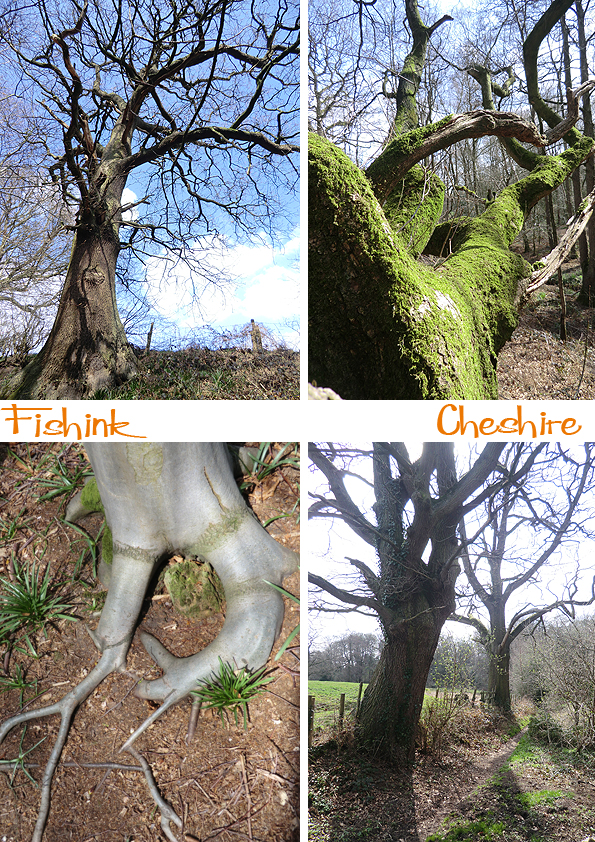
Some remarkable trees on the walk as well as a host of fallen trees who didn’t make it through the high winds and long winter we had this year. I spotted the lovely silvery bark and roots on the tree below.
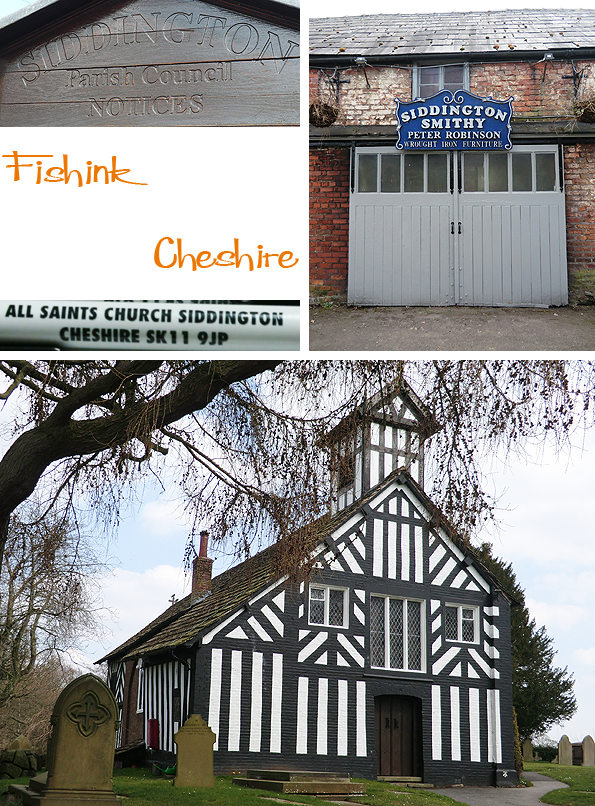
We missed the majority of the village of Siddington but by it’s many ‘best kept village’ signs it must be pretty special. Instead we were treated to a short tour of the All Saints Church. Initially it struck me as very unusual to paint a church to mimic a tudor, beamed building but once we went inside I really warmed to the beauty of the place.
I discovered that there are records of a chapel at Siddington in 1337 and again in 1474. It was originally a timber-framed building. By 1815 the walls were bulging and the timber-framing was strengthened by being enclosed in brick. Restorations were carried out in 1853 and 1894.
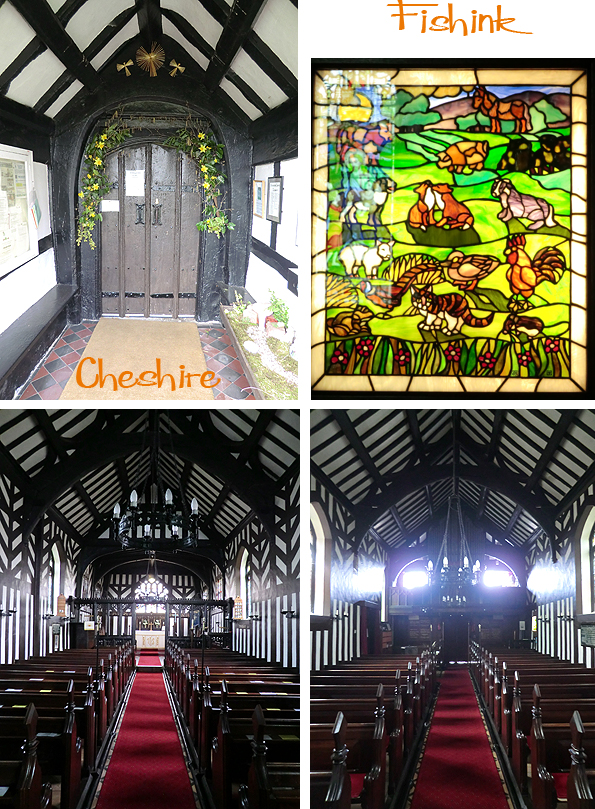
All the church fittings are relatively new other than the pulpit which dates from 1633. The gallery at the west end was erected in 1786. Apparently a Jackdaw has resided in the cockloft above the roof for a few years. Recently somebody inspected the area to find it filled with straw, it took 20 large bin bags to empty the space, and the straw has been patently brought in piece by piece over the years. That’s one industrious bird !
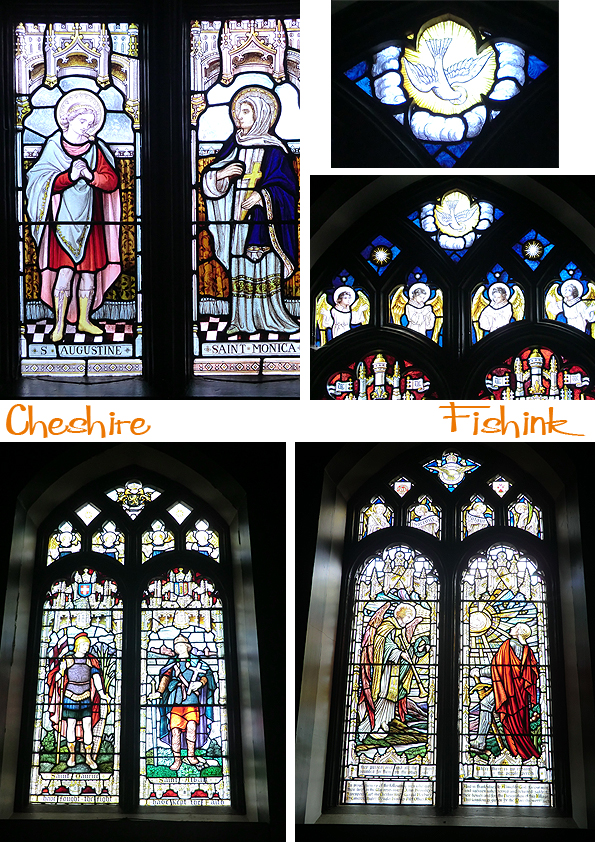
Some beautiful stained panels above. The one on the right was paid for by the parishioners in memory of the locals who served in the war between 1939 and 1945. The words Sacrifice and Valour are held by the angels above. Shortly after the church we came across a Black (or sometimes called Blue) Pheasant. Not as unusual as I imagined, I think this one was nesting. I was amazed to discover that there are so many varieties in colour and size. Sadly as I googled the Pheasant I also came across articles in places like The Shooting Times, where gamefarmers talk about rearing over 300,000 a year to fill their demands. This is also the reason that more unusual varieties are making their way onto British soils as different birds have different preferences to the kind of terrain they choose to live on. The increase in desire to shoot these beautiful animals is for me another sad part of country life. On a warmer note I did like the message we saw on this open gate.

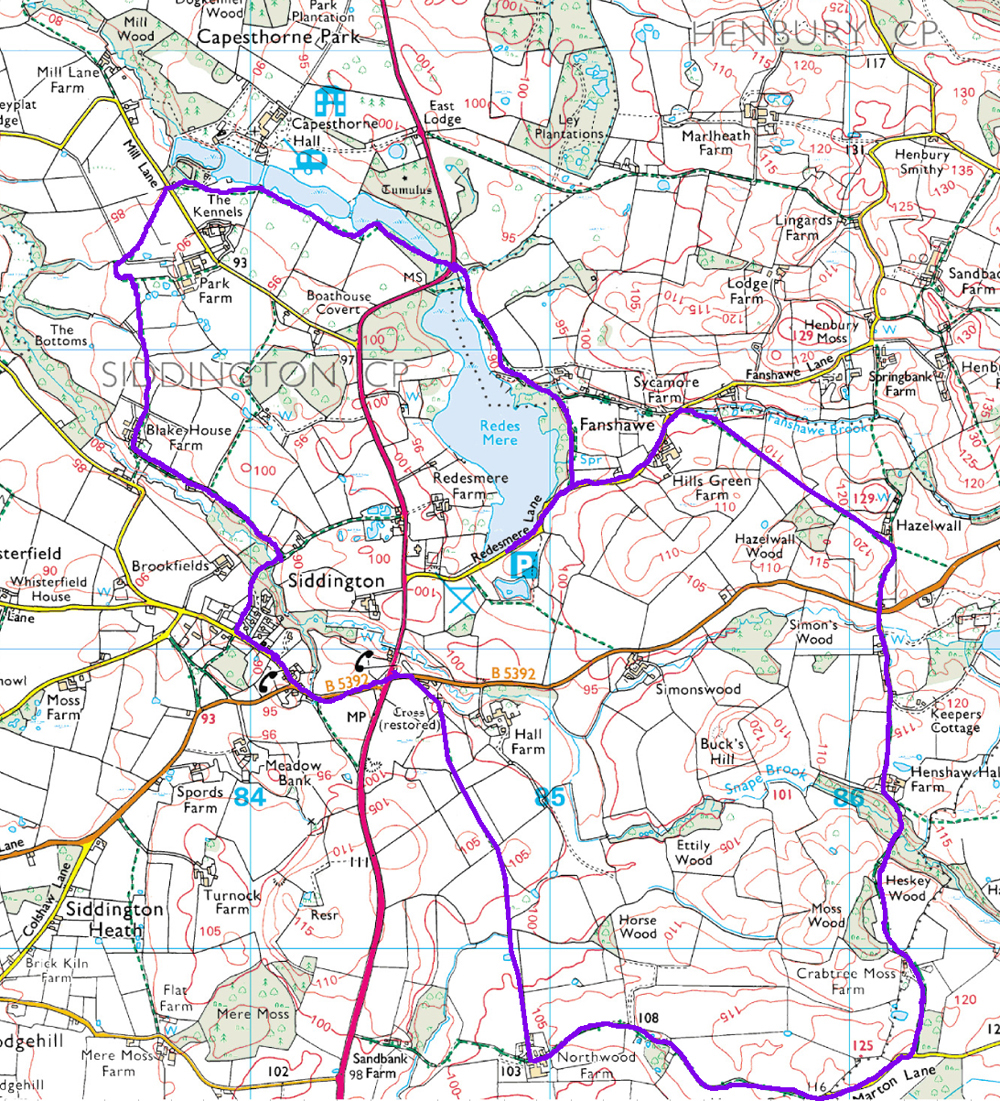
Another great day and for those who maybe interested here’s the route we took, marked in purple.
Jan B. Balet Mid century Illustrator
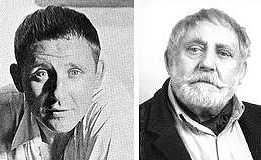
Jan. B. Balet was born in 1913, the son of German/Dutch parents. Three years later, his parents divorced and he and his mother moved to live with his mother’s parents Langenargen at Lake Constance in Germany. His grandfather was the senior judicial counsellor in the area Eduard Eggert and his uncle was the famous painter and illustrator Benno Eggert. Many well-known personalities of the time were friends of his grandfather. In 1920 his grandfather sold the house in Langenargen and the family moved to Friedrichshafen at Lake Constance. Jan started school 1920. Because his mother and his grandmother had difficulties bringing him up after the death of his grandfather in 1926 Balet was sent to boarding school in GermanySchule Schloss Salem. In 1927 Balet moved to the Hansa Home, a strictly catholic institution in Munich and attended grammar school. In order to take up an apprenticeship with a painter shop Balet left school before finishing sixth class. He cut the apprenticeship short, leaving before the end of the second year,

In 1929, at the age of 17, he moved to Berlin at the invitation of his father and studied Drawing at the college of Arts and Crafts (Kunstgewerbeschule Ost am Schlesischen Bahnhof). A year later, he went to live with his mother and his grandmother, in Munich. Balet transferred his studies to the Munich College of Arts but was dismissed in 1932. He went on to study with Professor Ege, at a private school for commercial art. During this time he also worked at an institute for lithography and for the art gallery Wallach. Balet rented his first small studio at the age of nineteen, where he manufactured and sold hand colored Bavarian woodcuts. 1934 he passed the entrance examination to the Akademie der Bildenden Künste München and undertook further studies with Olaf Gulbransson.


In early 1938 Balet was recruited by the German military and because his ancestor’s passport was not complete, he was forbidden to associate further with the Akademie der Bildenden Künste München. Later that year Balet emigrated to the USA, settled in New York and painted rustic furniture for a living. One winter he jobbed as a skiing teacher in Vermont and occasionally jobbed as an advertising commercial artist. Among other projects, he painted the cafeteria of the largest of New York’s department stores R.H. Macy. He married a young woman named Bertha Quinn and in 1940 his son Peter was born. From time to time Balet’s designs appeared in the fashion magazine Mademoiselle and in 1943 he became Art Director at the magazine. Balet became so successful as a commercial artist that he was able to give up paid employment and start his own business. He worked for the radio station CBS, magazines such as Vogue, House and Garden, House Beautiful, The Saturday Evening Post, Glamour, Good Housekeeping, This week. After the war ended in 1945 he acquired U.S. citizenship.

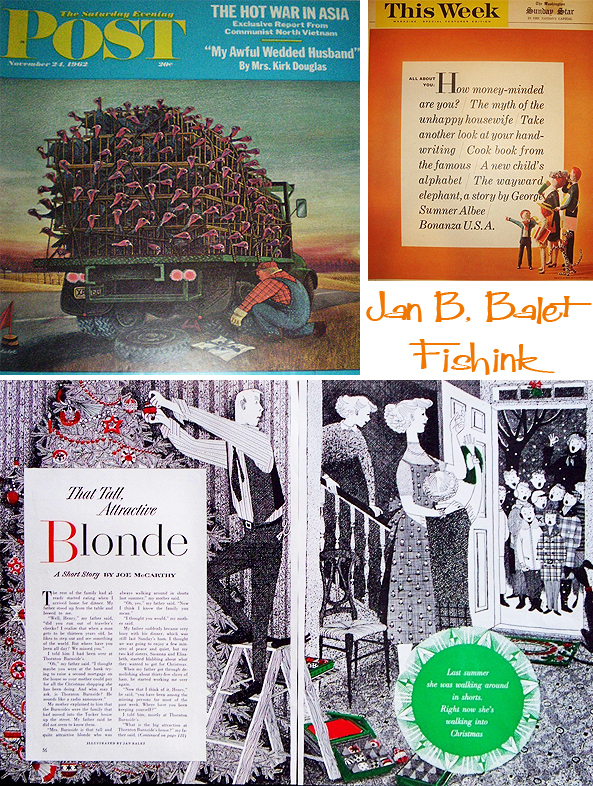
In 1945 Balet and his wife divorced and Peter and his mother went to live with her parents in Ballston Spa, NY. Balet commuted between his studio in New York and an old, boat house in the dunes of Montauk, Long Island, which he had converted to a studio where he painted and drew. His first children’s book Amos and the Moon was published in 1948. Soon after he travelled to Europe to visit his mother and his grandmother in Munich and then spent two months in Paris, which provided great inspiration for his future work. His grandmother died in 1949 at the age of 93 years and Balet said she had been “the most important and dearest person” in his life. Around this time Balet began a relationship with American photo model Lisa Tallal, whom he married a few years later. Balet sold his boat house and purchased his dream house, also on Long Island. Balet and his wife enjoyed an expensive lifestyle which required him to focus on commercial art. During travels to Europe and Mexico Balet took many photographs, since there was insufficient time for drawing. Despite what was regarded in the USA as fashionable art Abstract, Op-art and Popart Balet continued to paint in his own style. His mother died in 1963 and he inherited the house in Munich. As a former pupil of Olaf Gulbransson, Balet was invited, in 1964, to present an exhibition in the Pavillon Alter Botanischer Garten Munich. Many of his children’s books and illustrations were included in the exhibition as well as a variety of his commercial artwork. This encouraged Balet to keep on painting in his special style.

He helped advertise perfumes with his witty characters.


Images to run alongside articles.

And a whole host of children’s books.



He even snook a few record covers in the mix too !

In 1965 Balet and his wife Lisa divorced and he returned to Munich where he started to illustrate children’s books again, to paint his impressions of his various journeys and to hold exhibitions of his work. In 1973 he settled in the countryside with Claudia (Gerda) C. Foth, in La Landelle in France. Balet enjoyed increasing success with painting and stopped working as a commercial artist. In 1976 Balet received an order from an art dealer to make a number of lithographs annually in Switzerland. Circle Fine Art arranged several exhibitions of these in many different countries. Baletand his wife, Claudia, moved to Estavayer le Lac on Lake Neuchatel in Switzerland in 1978 so he would not have to travel so far to Zurch to work on his lithographs. Coincidentally his father’s family originally came from this area where Balet is a common family name.
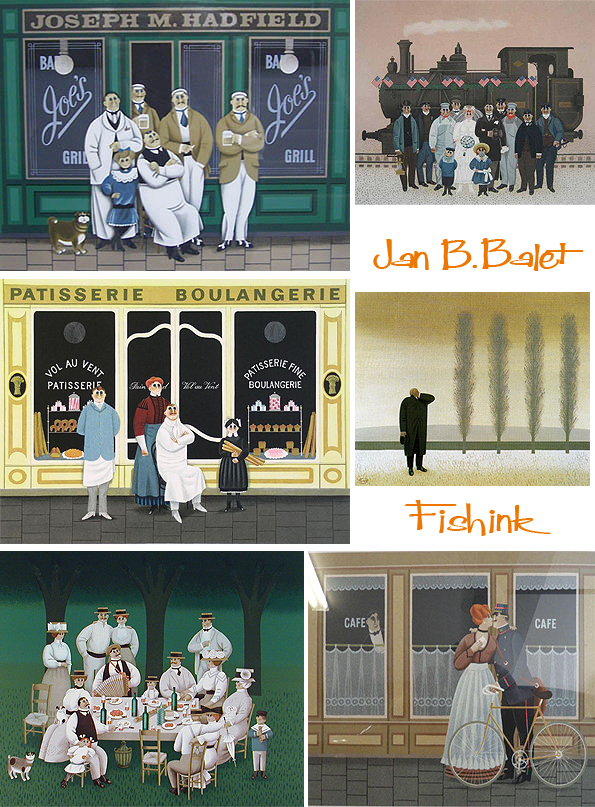
Such an array of wonderful work. Thanks to Wikipedia for the information and to Leif Peng and Ward Jenkins for some of the imagery used here.
Fishink Walks
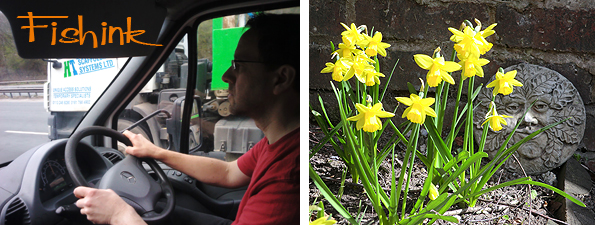
For all of you concerned readers who may (or may not be) interested in the trials and tribulations of my house move, it’s now done. Hurrah I gasp. I even did a stint as a white van man on monday to seal the deal ! What’s more I’m alive and my back is still (ouch) intact so double hurrah for that. Just got a house to paint and rent out now… hey ho little steps hey. Proof of me driving the Luton Van (in high winds) and on a nicer note, I loved seeing the sun on my green man yesterday … he wasn’t the only one smiling.
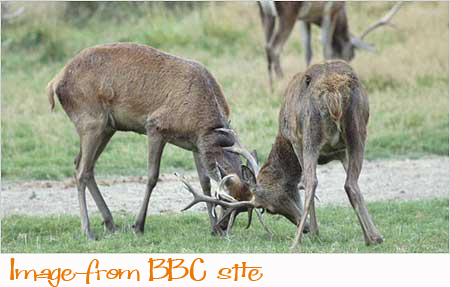
Just got time to post a few snippets from recent walks. One to Dunham Massey where the deer were play ‘rutting’ and locking their antlers in early displays of wanting to be top stag.
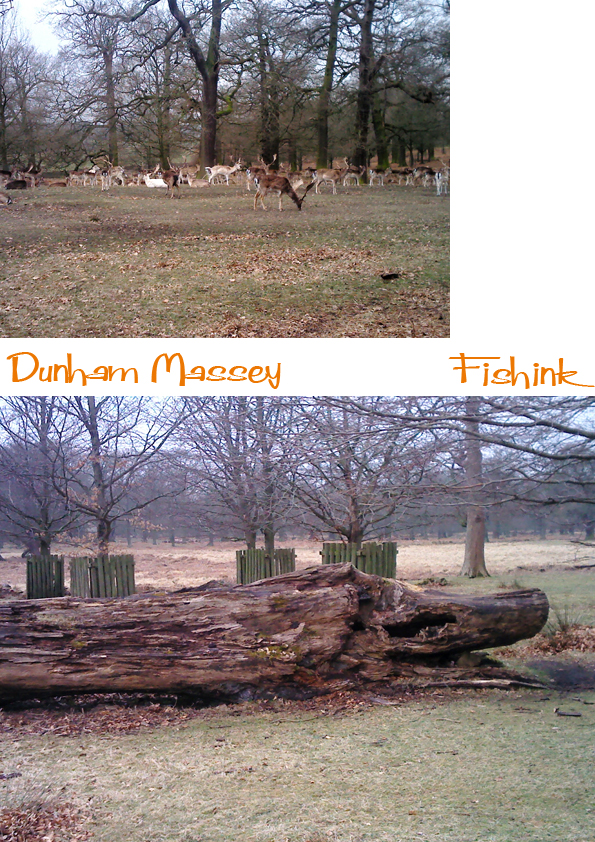
Not many of the other deer were interested (as they probably see it happening all day long !) but the sound they made was like knocking two hollow bamboo sticks together. There were definite Wolf Trees around too, here’s one I managed to snap before it skulked away into the darker woods. sneering and quietly mumbling to itself lol
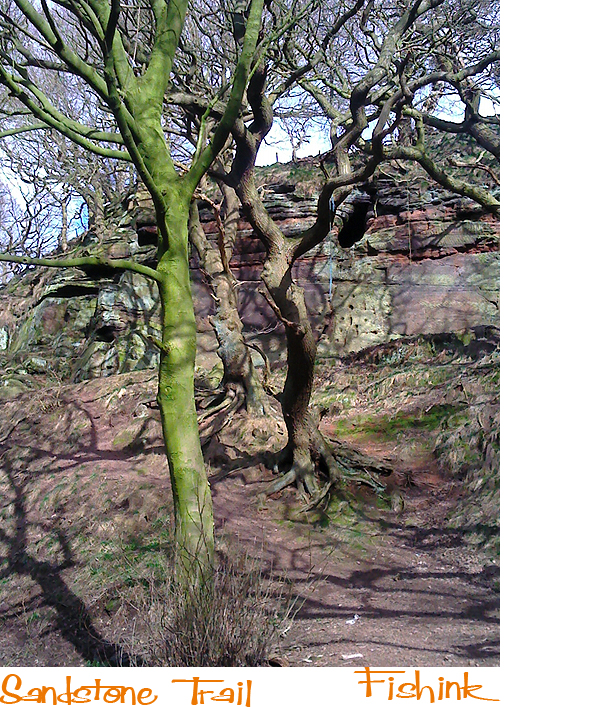
Another day we did a stretch of the Sandstone Trail. The trail itself stretches for 34 miles/55 kilometres and offers superb, unbroken, and often elevated walking across the still largely green and pleasant English county of Cheshire — from the ancient market town of Frodsham on the broad Mersey estuary, in the north, to Georgian Whitchurch in rural north Shropshire, in the south. We did part of the first section from Frodsham to Manley Common. It was only last week, but there was still snow in parts that the sun hadn’t manage to melt. The light and green lichen on the trees were quite an impressive sight.
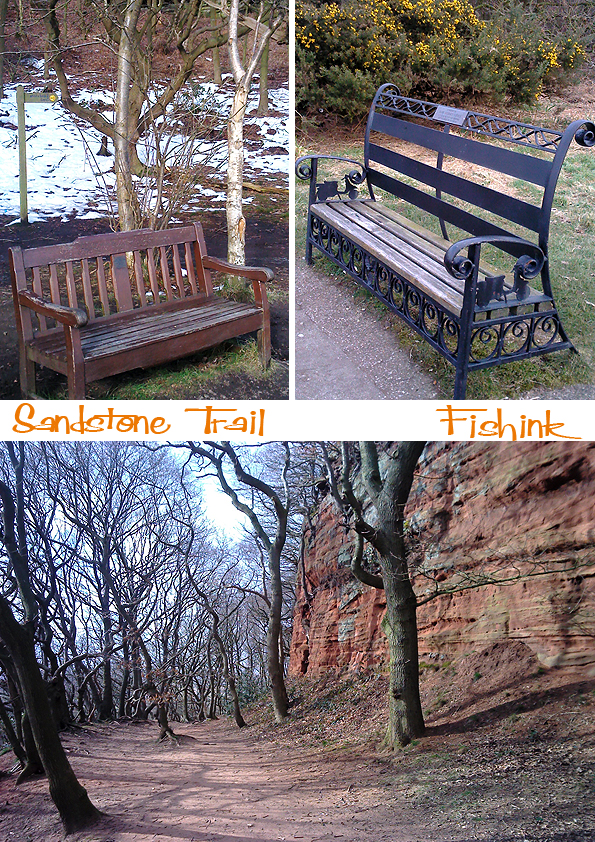
I loved this shot of the twisty branches, their shaddows and the red rocks. Did you notice that cave behind them ? I wondered if that’s where those Wolf Trees might live : )
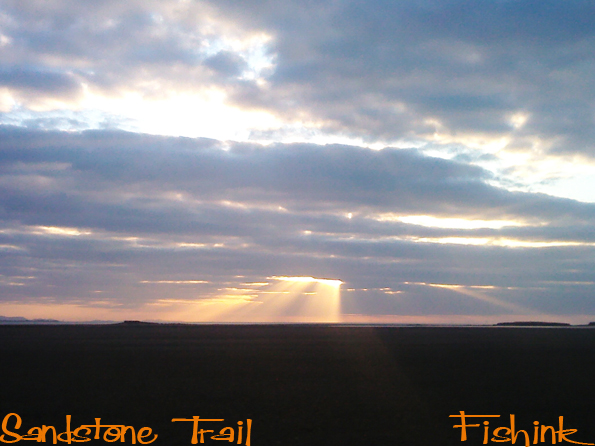
A lovely sunset too.
Grant Wood , American Gothic and his love of the landscape
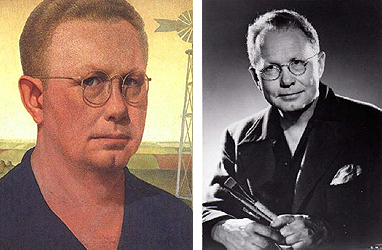
Grant DeVolson Wood (February 13, 1891 – February 12, 1942) was an American painter born four miles east of Anamosa, Iowa. Wood’s best known work is his 1930 painting American Gothic, which is also one of the most famous paintings in American art, and one of the few images to reach the status of universally recognised cultural icon, comparable to Leonardo da Vinci’s Mona Lisa and Edvard Munch’s The Scream. It was first exhibited in 1930 at the Art Institute of Chicago, where it is still located. It was given a $300 prize and made news stories country-wide, bringing Wood immediate recognition. Since then, it has been borrowed and satirised endlessly for advertisements, cartoons even depicted on buildings and as statues.

Wood’s inspiration came from a cottage in Eldon, Iowa designed in the Gothic Revival style with a distinctive upper window and a decision to paint the house along with the kind of people that the artist felt should live in that house. The painting shows a farmer standing beside his spinster daughter. The figures were modeled by the artists’ sister and dentist. Each element was painted separately however the models sat separately and never stood in front of the house. Interestingly, Wood’s sister insisted that the painting depicts the farmer’s daughter and not wife, disliking suggestions it was the farmer’s wife, since that would mean that she looks older than Wood’s sister preferred to think of herself. The dentist, Dr. Byron McKeeby (1867–1950) was from Cedar Rapids, Iowa. The woman is dressed in a colonial print apron mimicking 19th century Americana and the couple are in the traditional roles of men and women, the man’s pitchfork symbolizing hard labour.
His family moved to Cedar Rapids after his father died in 1901. Soon thereafter he began as an apprentice in a local metal shop. After graduating from Washington High School he enrolled in an art school in Minneapolis in 1910, and returned a year later to teach in a one-room schoolhouse.
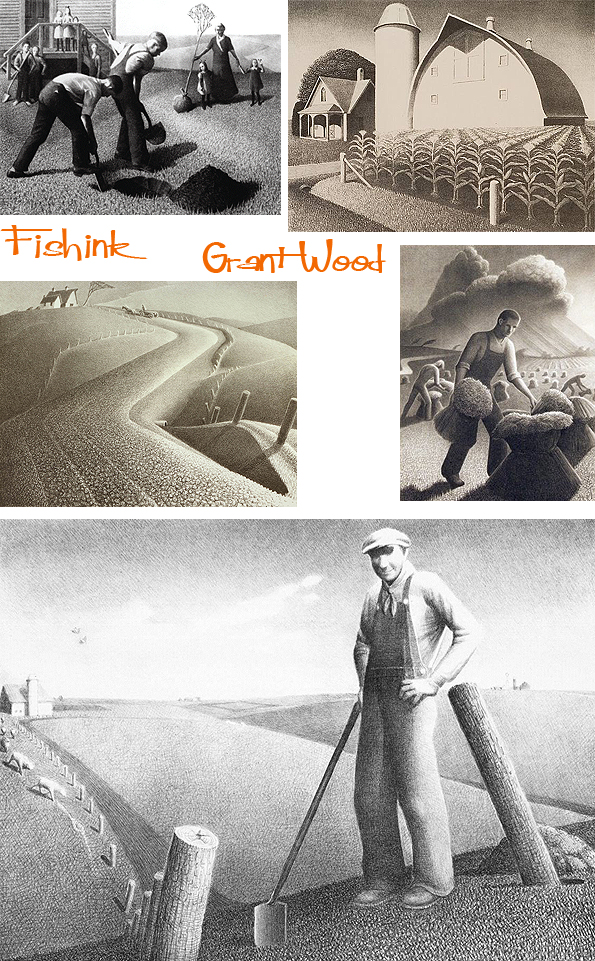
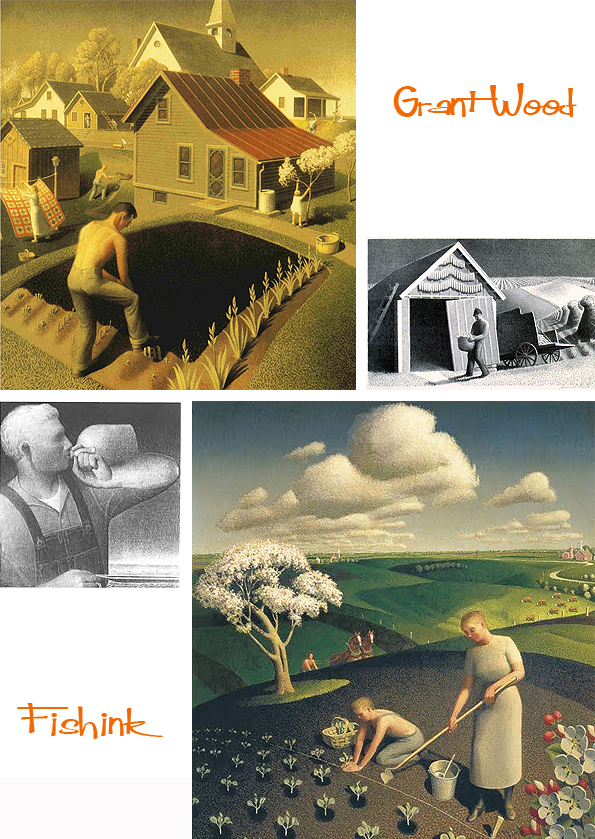
In 1913 he enrolled at the School of the Art Institute of Chicago and did some work as a silversmith. From 1920 to 1928 he made four trips to Europe, where he studied many styles of painting, especially impressionism and post-impressionism. But it was the work of Jan Van Eyck that influenced him to take on the clarity of this new technique and to incorporate it in his new works. For me it’s not the people who I find inspirational in Grant’s work, its the observation of the rolling hills and lush countryside.
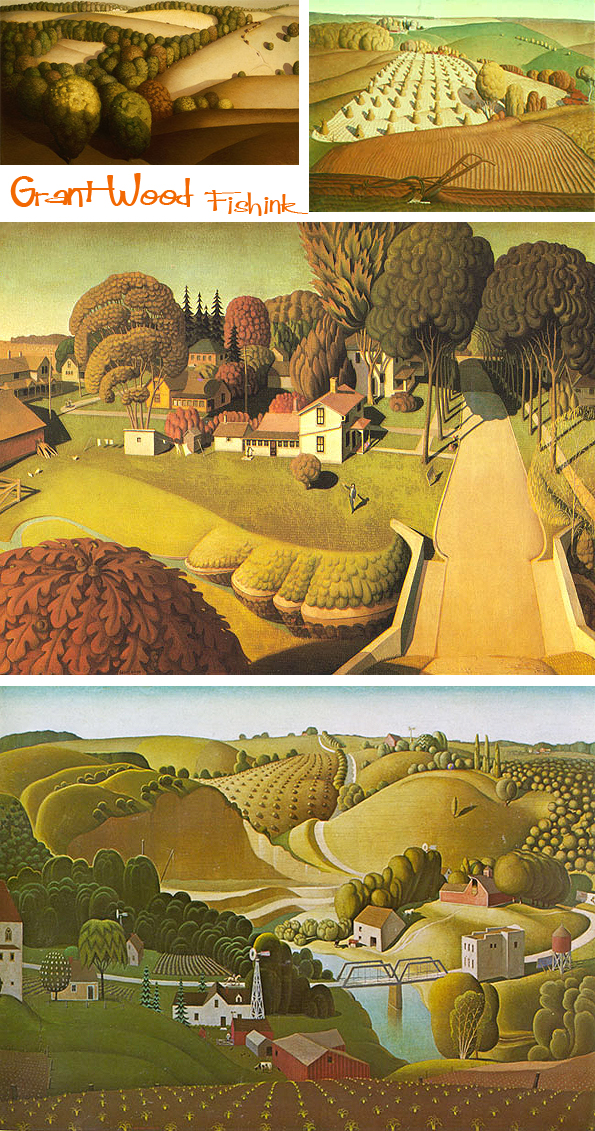
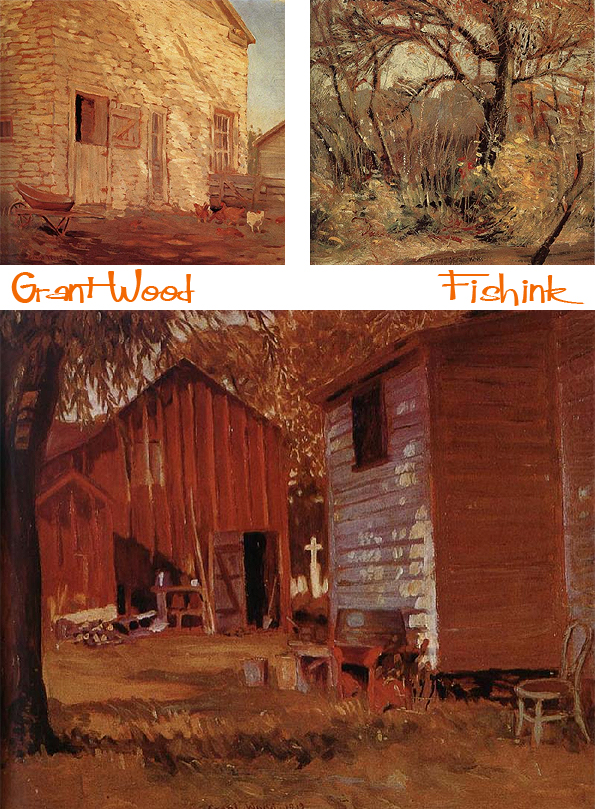
In fact the top image (below) was one of the first of Grant’s work that I came across and liked, back in the 1980’s. His work has visual links for me to paintings of the english landscape by Ravilious too.
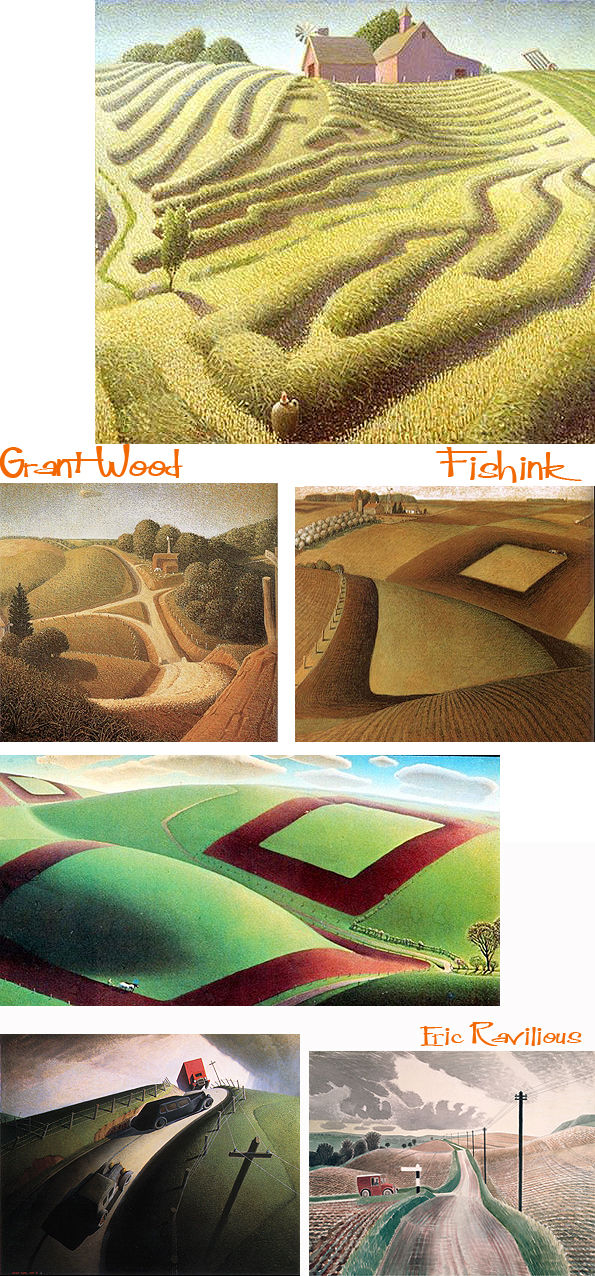
Theres a great drama from his use of perspective, simplification and generalisation of the landscape alongside his warm tones and colours.
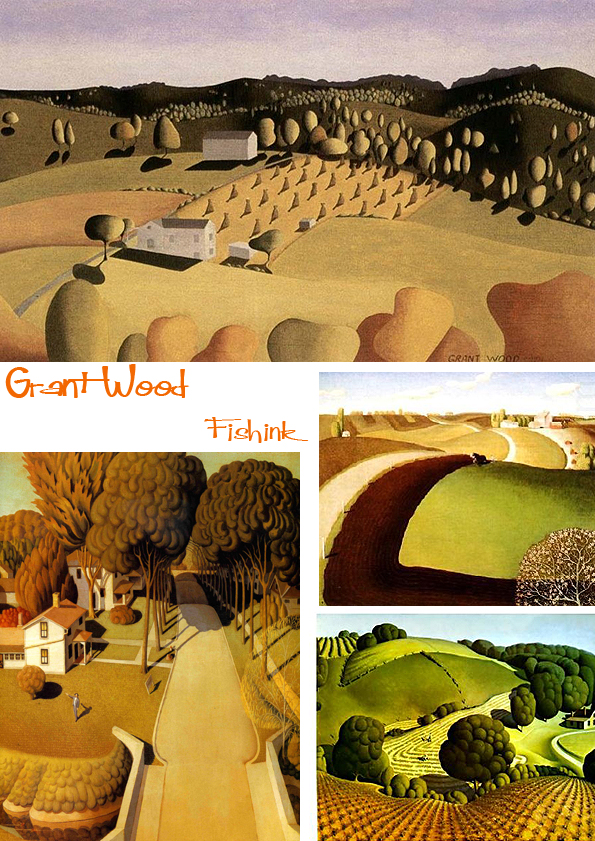
It’s sometimes hard to know what his real work look liked when you can find three versions on the internet alone lol, but I imagine the larger image from the three below is nearer the truth and the top left one has been ‘freshened’ to appeal to a new generation of admirers.
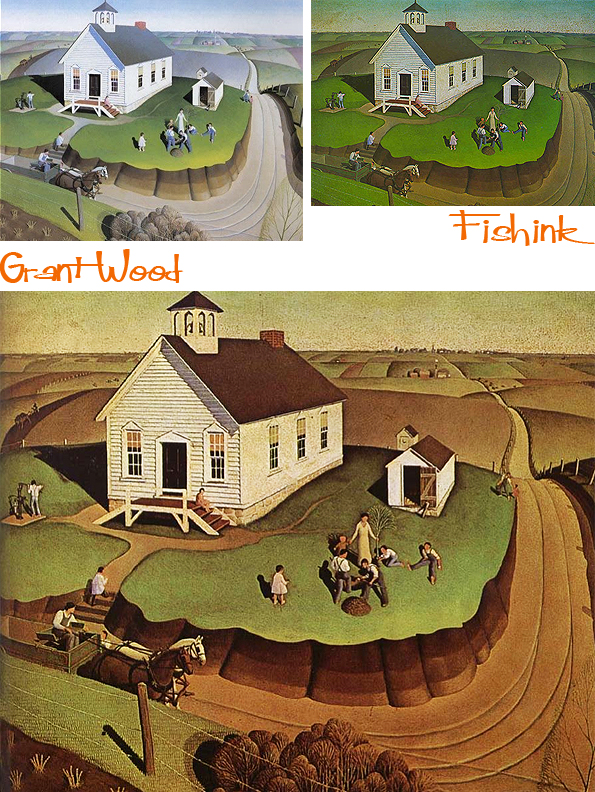
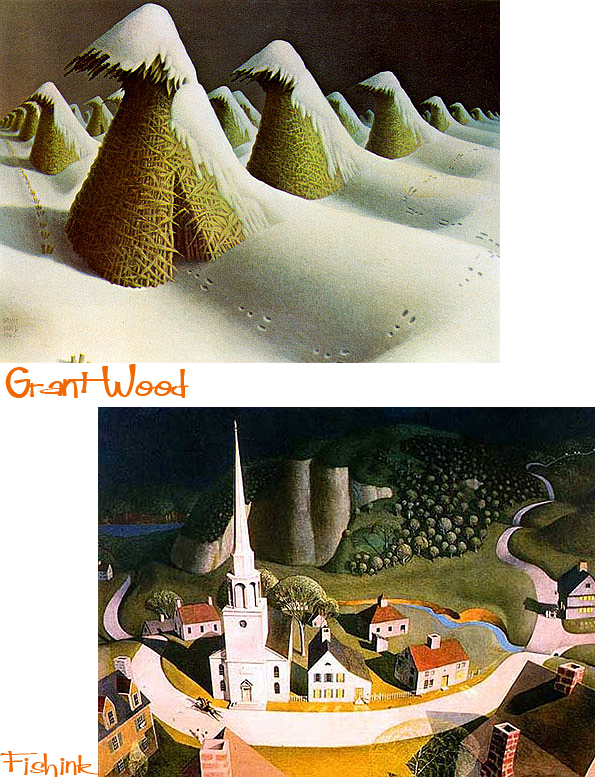
Grant worked largely within his local community. His work was a social record of life in that part of the work at that time, and he captured it (and often himself too) so well.

From 1924 to 1935 Wood lived in the loft of a carriage house that he turned into his personal studio at “5 Turner Alley” (the studio had no address until Wood made one up himself). Thanks to Jennifer Black Reinhardt for these lovely images from her blog.
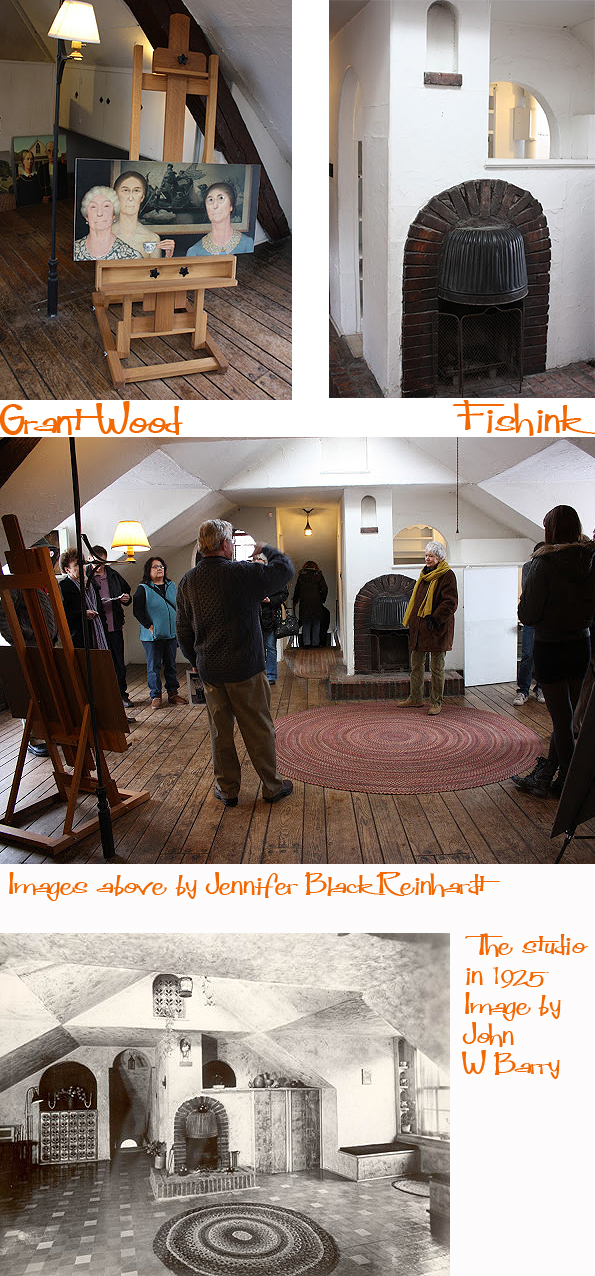
In 1932, Wood helped found the Stone City Art Colony near his hometown to help artists get through the Great Depression. He became a great proponent of regionalism in the arts, lecturing throughout the country on the topic. Wood taught painting at the University of Iowa’s School of Art beginning in 1934. During that time, he supervised mural painting projects, mentored students, produced a variety of his own works, and became a key part of the University’s cultural community. Throughout his life he hired out his talents to many Iowa-based businesses as a steady source of income. This included painting advertisements, sketching rooms of a mortuary house for promotional flyers and, in one case, designing the corn-themed decor (including chandelier) for the dining room of a hotel. In addition, his 1928 trip to Munich was to oversee the making of the stained-glass windows he had designed The Grant Wood Window Drawings for a Veterans Memorial Building in Cedar Rapids.
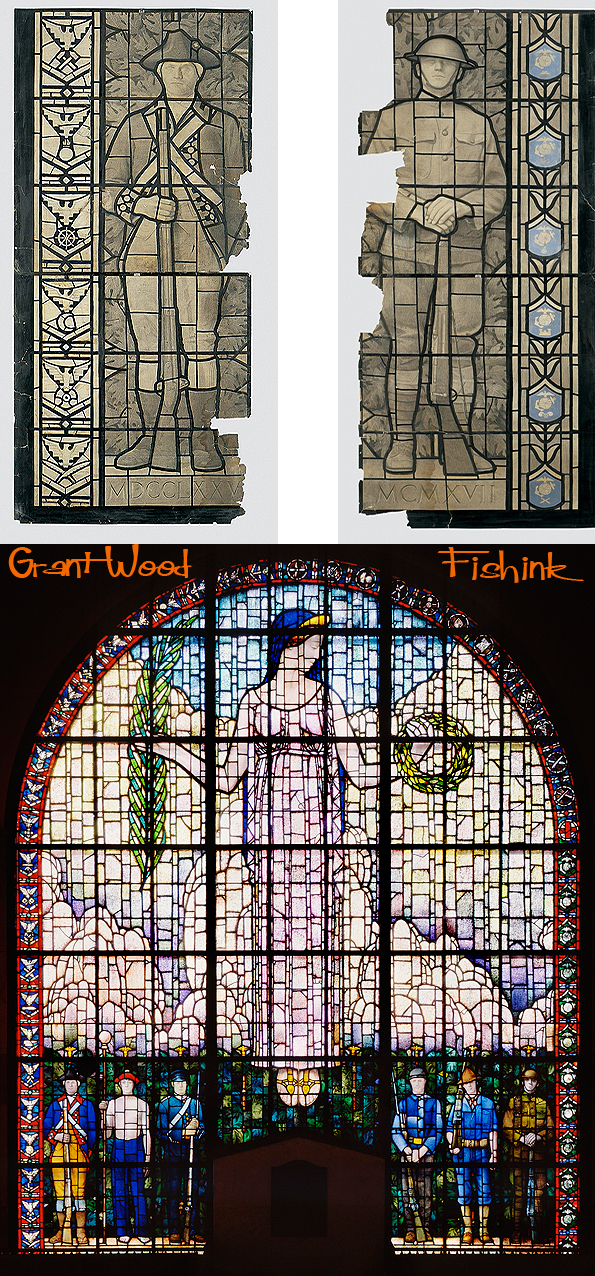
What a stunning window and apparently his sister (Nan) from ‘American Gothic’ fame is again the central figure in this piece. On February 12, 1942, one day before his 51st birthday, Wood died at the university hospital of liver cancer. His estate went to his sister, Nan Wood Graham, and when she died in 1990, her estate, along with Wood’s personal effects and various works of art, became the property of the Figge Art Museum in Davenport, Iowa. When you read what was written in the local papers at the time, you can appreciate how much Grant had become a well known and well liked central figure in his community.
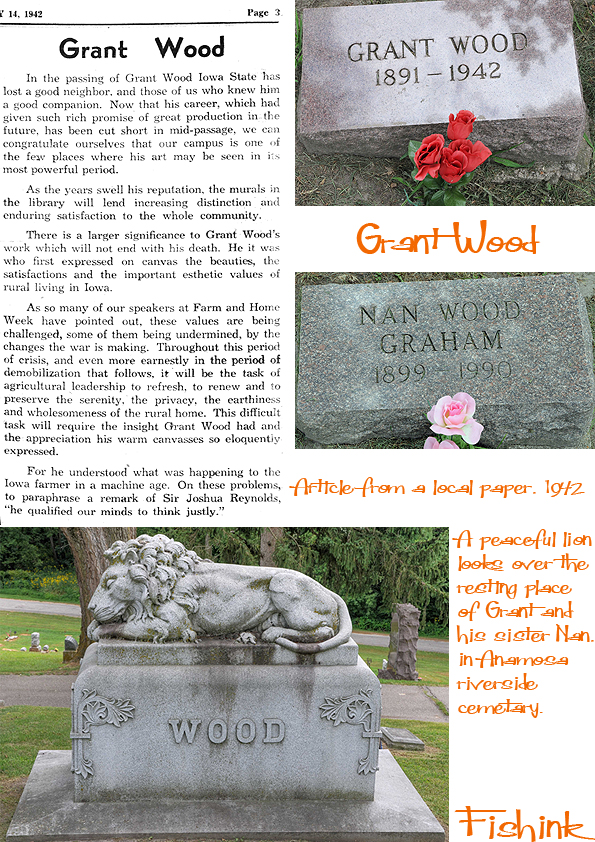
Wood was an active painter from an extremely young age until his death, and although he is best known for his paintings, he worked in a large number of media, including ink, charcoal, ceramics, metal, wood and found objects. He understood the land and the people who worked on it.
Here’s an unusual nature study I came across, a great photograph of Nan and the dentist who posed for ‘American Gothic’, presumably they were asked not to smile to look more like their portraits !

Thanks to Wikipedia for some of the information here. A wonderful view of a bygone era. Steinbeck’s The Grapes of Wrath also comes to mind.
All said and done it still feels pretty ‘fresh’ to me for being over 80 years old. Any thoughts ?
News updates on The York Open Studios, Mark Hearld, Emily Sutton. Freehand Book and Kate Bush.
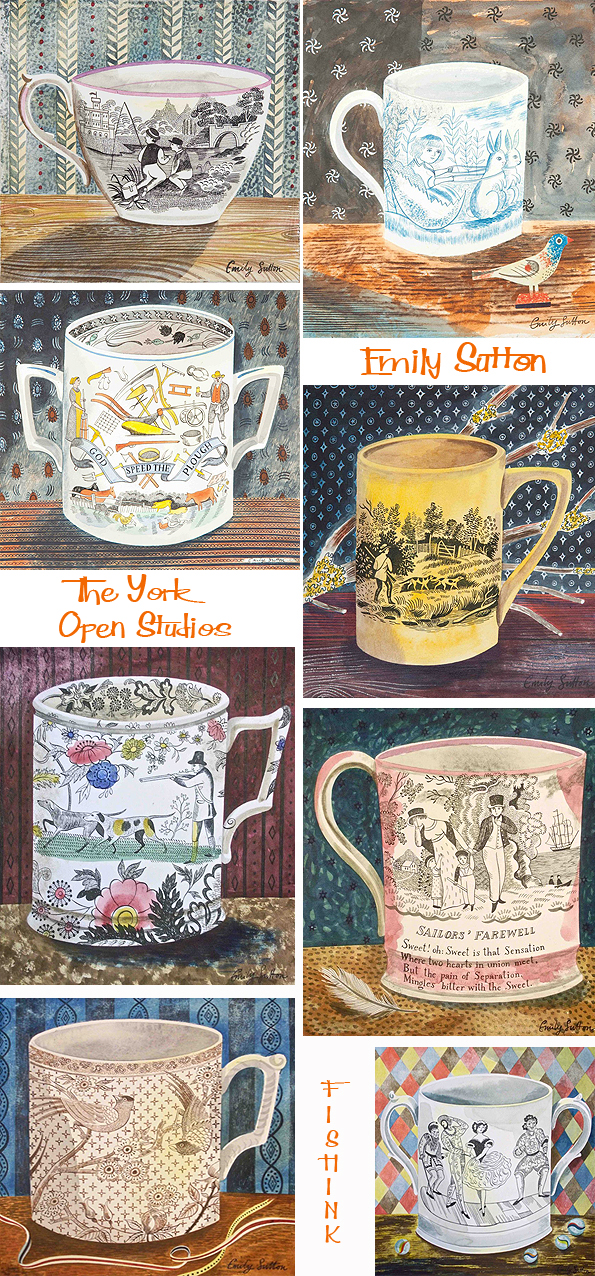
Happy Monday to one and all. Weather permitting I shall be moving the contents of my house from one side of Manchester to the other today so looking forward to having a bad back and a sore head tomorrow Woo hoo ! In the meantime here’s a few snippets of press that had nearly slipped by me recently. Starting with the fact that it’s the York Open Studios this weekend (just gone) and next weekend too. So if you want to see the wonderful work of the likes of Mark Hearld and Emily Sutton in the beauty of their own studios, amongst many other talented makers, then it’s the place to head for. Visit on 20th/21st April (from 10am-6pm on the Saturday and from 10am -5pm on the Sunday). Here’s a taster of some of the work Emily will be showing.
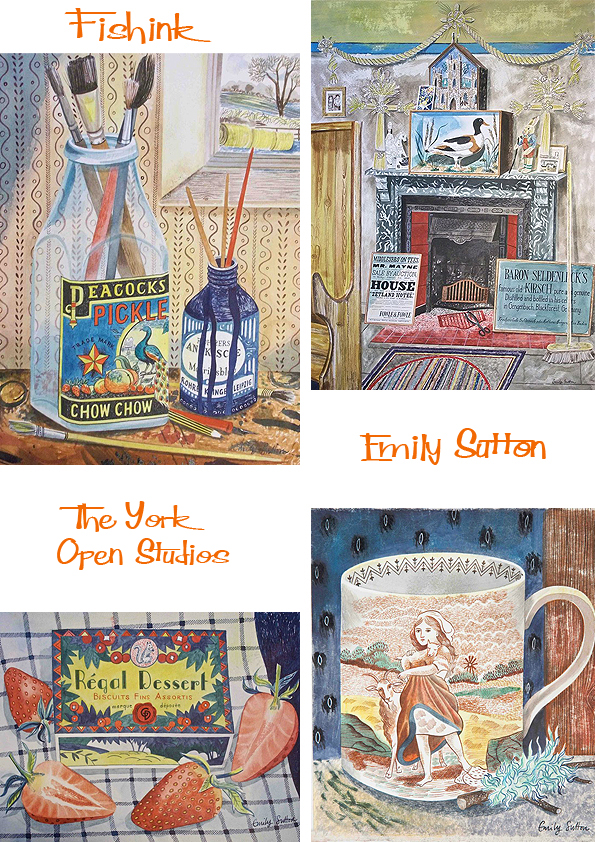
Along with a fine collection of Cup and Mug related watercolours. Such an eye for detail.
My good friend Helen, who is a Lecturer at Bradford School of Art and who runs many great sites about drawing like draw draw draw and on Pinterest, has a following of over seven hundred thousand people ! She’s recently written a book on the subject and my work was chosen to grace the cover.. how exciting ! Knowing what I know about Helen, the book will be an excellent and invaluable informative source for anyone who draws and is available to buy here from Amazon.
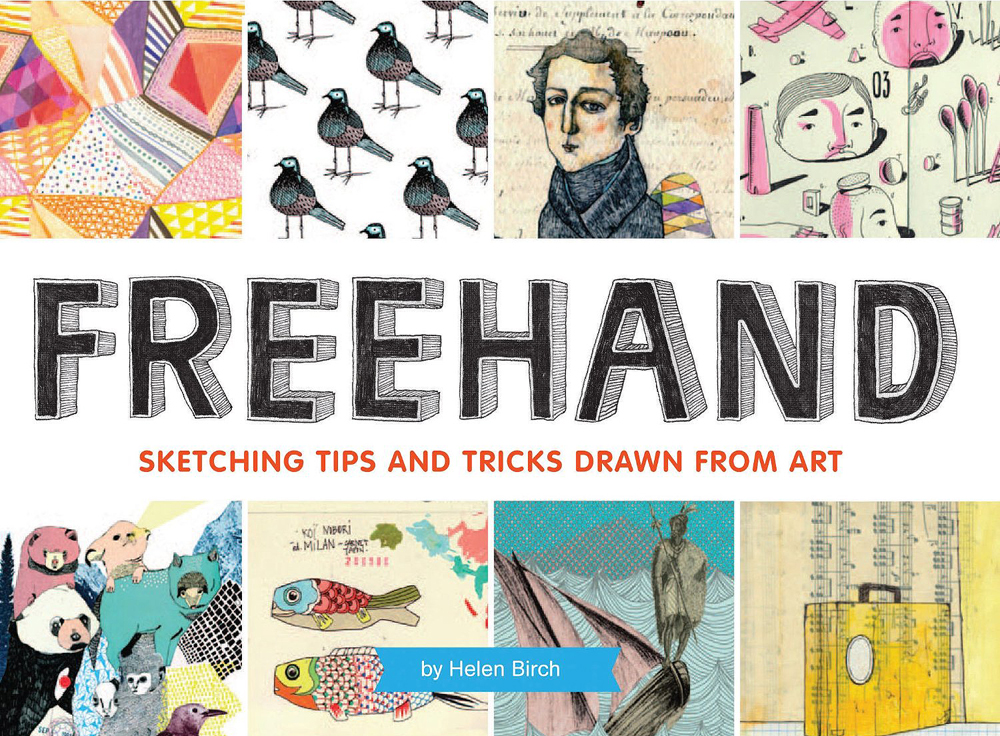
Incase you’re wondering, mine is the little bird repeat which I sell as notebook covers here. Why not treat yourself to a copy and a notebook to sketch in too !
Finally last week, a wonderful songstress named Kate Bush received received a CBE for services to music from the Queen at a ceremony at Windsor Castle. She said ‘I feel incredibly thrilled to receive this honour which I share with my family, friends and fellow musicians and everyone who has been such an important part of it all. Now I’ve got something special to put on top of the Christmas tree’ !

On Kate’s official site katebush.com she speak to her fans by saying ‘ The ‘everyone’ in the quote above of course includes all of you. Thank you so very much for all your fantastic support and encouragement. I feel extremely privileged to still have an audience. It’s you that have made my work, which would otherwise have just been creative projects, into a success. Many, many thanks to the best fans ever, Kate x P.S. I hate the term ‘fans’ but couldn’t think of how else to word it.’
A great chance for me to share a few favourite images of Kate with you.
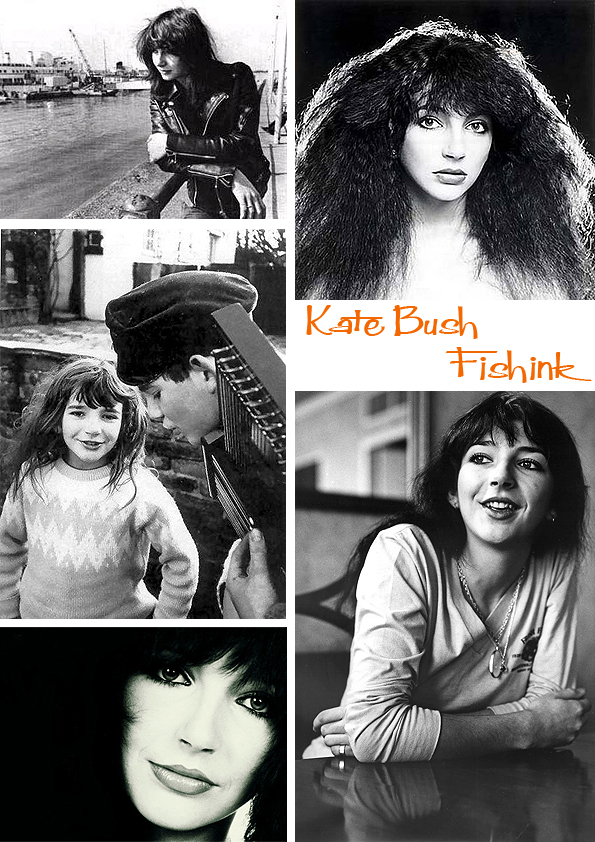
What a beautiful, sexy woman with such a talent for expressing meaning through her music and lyrics. I still get goosebumps listening to The Kick Inside, her first LP and was thankful (or they were thankful) that my parents bought me a fine set of headphones to use, when I played it about 8 times daily back in 1978 !

Well done indeed Kate, you’ve made it such a pleasure to follow your work. I feel it only appropriate to include a video tribute and what better song than This Woman’s Work.
Back to the house move boxes (sighs). Catch you in a few days.
Kate Lycett Painting Hebden Bridge

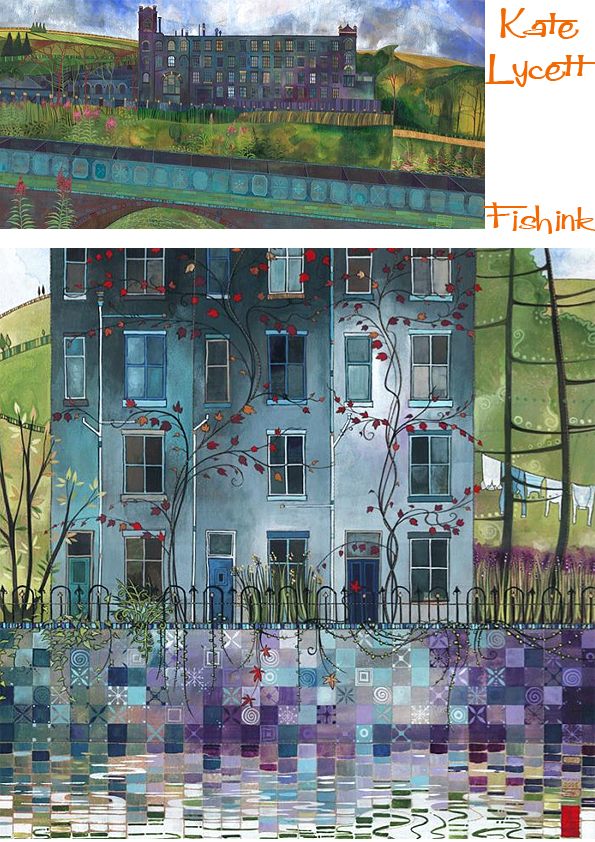
For the past several years, Kate Lycett has lived and painted life in and around Hebden Bridge. Looking at her work it’s not surprising that she trained and worked as a textile designer prior to her life as an artist and you can see echoes of Kate’s former career enhancing her artworks.

Her style has grown in richness and texture and her colours have become more opulent, with a beautiful subtle harmony between her love of pattern and the landscape she is surrounded by, which forms the basis of her work.

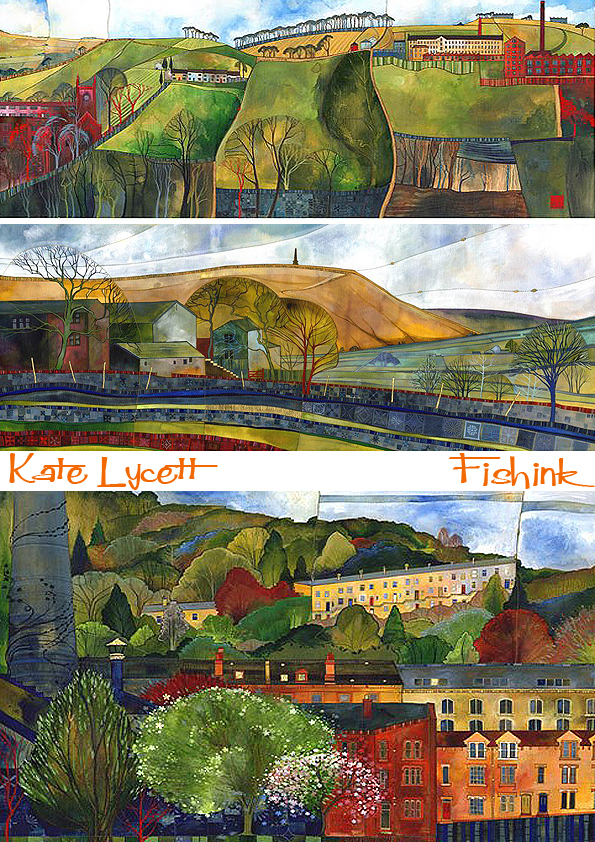
Her observations of the local area are captivating and I love her use of layering colour upon colour and detail upon detail in the hills and streets of Hebden Bridge itself. I perhaps sense the influences of Gustav Klimt from Kate’s flickering golds and rich tones and the structure and detail in the paintings of Charles Rennie Mackintosh, but essentially Kate has made her style her own, allowing the textile elements to trickle through her paintings, adding relief and texture to her undulating town and landscapes.
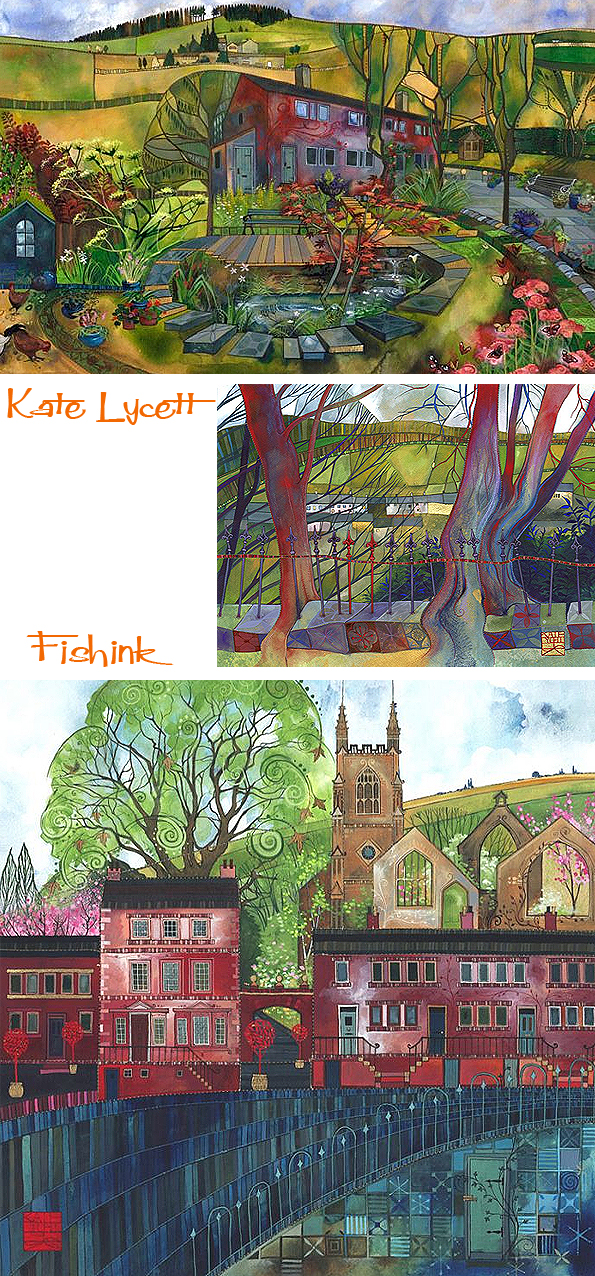
I love the way in which her pattern almost drips into the waters beneath these houses.

Also the way in which elements are repeated in Kate’s work, the cherry blossom, the birch trees, the dancing patterning, all features which enhance and enrich each painting.

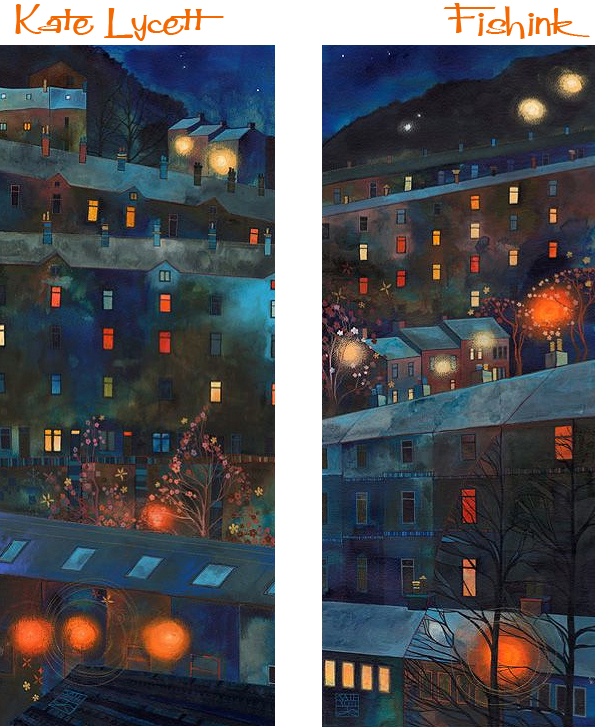
You can buy a card, print or a delicate Hebden light from Kate’s shop here or in Hannah Nunns’ lovely shop Radiance Lighting or from the Heart Gallery in Hebden Bridge who is featuring an exhibition of Kate’s work called ‘Tall Trees & Warm Stone’ from now until July 7th, do pop along and say where you heard about this. You can also contact Kate directly and follow her work through her Facebook page.

J.P. Miller Mid-Century Illustrator
John Parr Miller was a designer who worked at the Disney studio from 1934 to 1942 as part of Joe Grant’s elite Character Model Department working on characters and environments for Pinocchio (1940), Fantasia (1940) and Dumbo amongst other films. He mixed with co-artists such as Mary Blair, Martin Provensen and was also friends with children’s book illustrator Richard Scarry.


Miller seemed to impress Walt Disney, and Miller’s mother was surprised to hear that one day when Walt had walked into Miller’s workplace to find him ‘resting’ on the floor that he didn’t fire him on the spot ! But reading between the lines it seems that Miller got a little despondent with always drawing Mickey Mouse and backgrounds so after his service in WWII, he decided not to return there and instead he became a children’s book designer and author remaining in that field for the rest of his life.

Miller worked for Little Golden Books. These were sold for .25cents in supermarkets and drugstores as well as bookstores. Small and easy to hold for little hands, colourful and well bound with simple illustrations. They caught on. The librarians of the time disliked them, believing that books were a child’s first exposure to the world of fine art. They wrote book reviews and often left out Golden Books altogether. But Golden Books went directly to the public and into their homes, bypassing the usual route of libraries altogether so the librarians grew angry and shunned them. Fortunately the public loved them, and by 1953 some 300 million Little Golden Books had been sold. Millers’s popularity grew with the company in the late forties and throughout the fifties and because he started with them in their quite early days, he had a royalty clause in this contract which meant that as the company grew, so did J.P’s salary. As a point of interest in 2001, Random House acquired Golden Books for about $85 million !

I have tried to show a small cross section of the work Miller did here as I know what a firm favourite the Little Golden Books were especially in the lives of American Children. I bet a fair few of you readers remember them with fondness ?


Some superb colourful publications and illustrations.
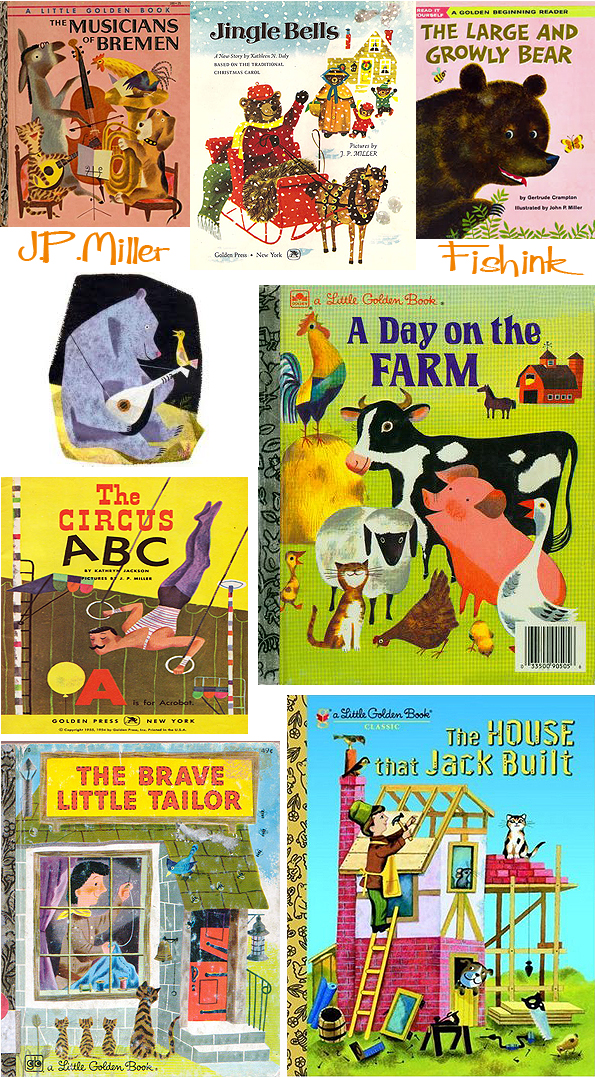


If you are interested to learn more about the life of J.P.Miller then John Canemaker has two wonderfully researched articles here and here.
Fishink in Liverpool. FACT and The Museum of Liverpool.
It was a few weeks ago now that we escaped to a very sunny Liverpool for a well earned day out. First stop was at F A C T (Foundation for Art and Creative Technology) is the UK’s leading media arts centre, based behind Dale Street and is 10 years old this year. Their award-winning FACT building, houses three galleries (hosting four exhibitions per year), a café, bar and four cinema screens, showing the best in independent and mainstream film. ‘Winter Sparks’ was the name of the exhibition and was an experience using light and sound. It was quite a show with electric sparks flashing before your eyes, loud cracking and fizzing electric sounds that you’d normally run a mile from if you heard them near to you. It was slightly unnerving, yet fascinating, being able to interact with light and the dramatic charges from Tesla coils. Scary stuff : )
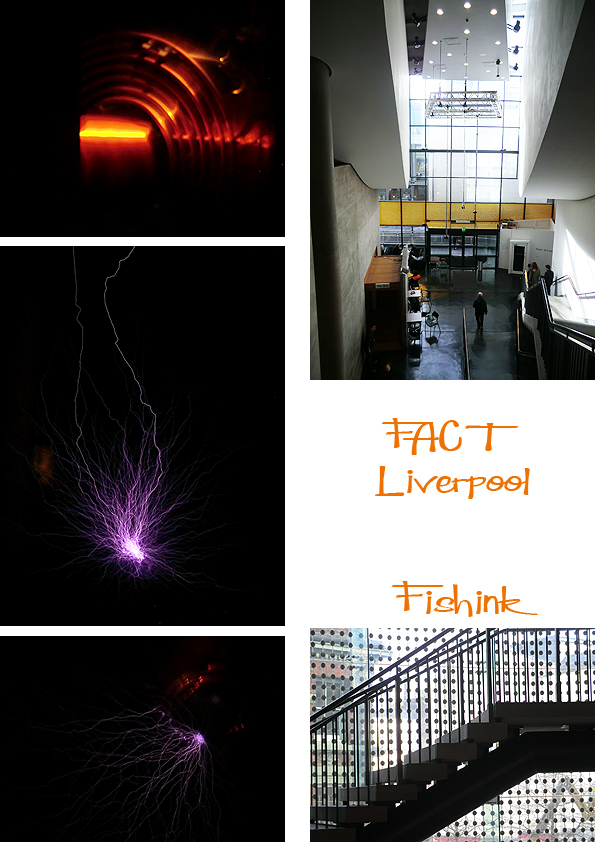
These images from the FACT site show better than mine what was going on. Through the ceiling lights, artist Edwin van der Heide creates performances and environments alive with the elemental. They immerse the viewer and play with their perception of space. His ‘Evolving Spark Network‘ consists of a grid of electric sparks that hovers above the whole exhibition space, flashing like stars in the dark winter sky. These sparks act as a metaphor for the electrical impulses by which our nerves communicate information: just like neurons that form links in our body, the spark bridges form an interconnected network.
The three-dimensional nature of the composition engages the visitors and makes them part of the spatial dialogue. The electric discharge produces both sound and light resulting in the distinct visual and sonic qualities of the generated patterns: the unmistakable, brief static flashes of energy. The sonic quality in this spellbinding display unifies and transforms the space and results in an absorbing, multi-sensory experience. It was quite a performance !

After all that energy we took a stroll through a beautifully sunlit Liverpool One and headed down to the Albert Docks for a great lunch in the Pump House followed by a two hour dip into the Museum Of Liverpool, as opposed to the Liverpool Museum, which is now called the World Museum. Renamed, I guess to stop any confusion between the two. (What ?).
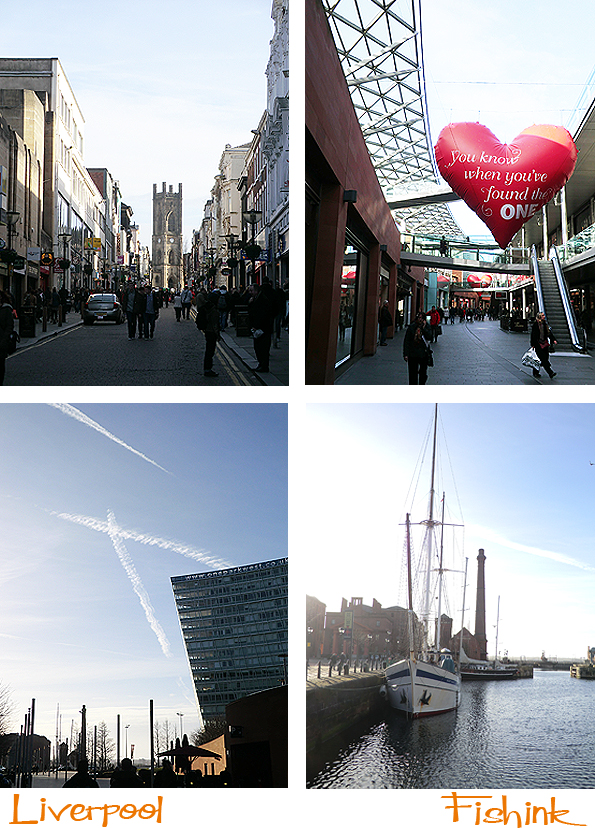
The architecture and tall ships looked quite splendid.

We even gave a nod to Billy Fury standing there looking like Elvis. According to the sign, Billy was one of the most famous stars of British Rock and Roll, born in 1940. He used to work on the mersey tug boats and taught himself to play the guitar and write songs. Apparently his total record sales were on a par with Cliff Richard and The Beatles ! Wow.
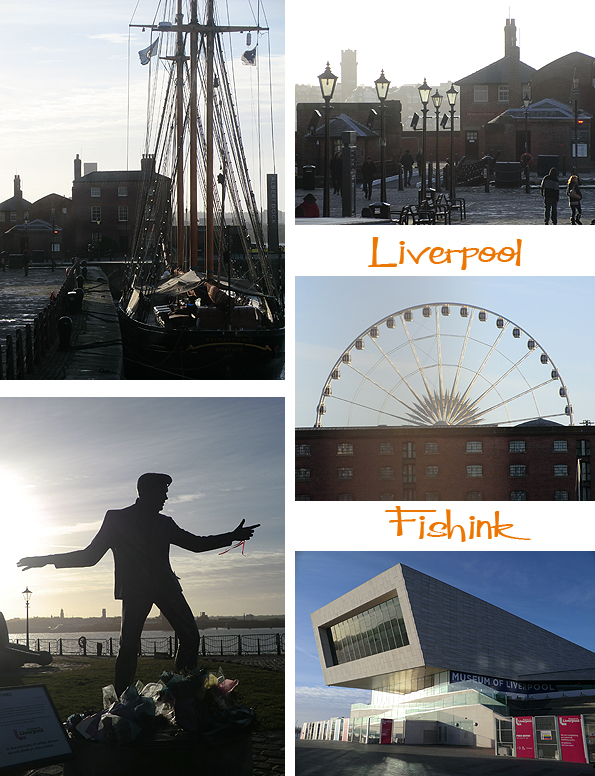
We took in the gleaming Liver Buildings and as always I can’t see the statues on top without singing (in my head) the theme tune to The Liver Birds.
The modern popularity of the bird symbol largely dates back to 1911, when the Liver Building was built. This prominent display of two liver birds rekindled the idea that the liver was a mythical bird that once haunted the local shoreline. According to popular legend, they are a male and female pair, the female looking out to sea, (watching for the seamen to return safely home) whilst the male looks towards the city (making sure the pubs are open). An alternative version says that the male bird is looking in to watch over and protect the families of the seamen. Local legend also holds that the birds face away from each other as, if were they to mate and fly away, the city would cease to exist.
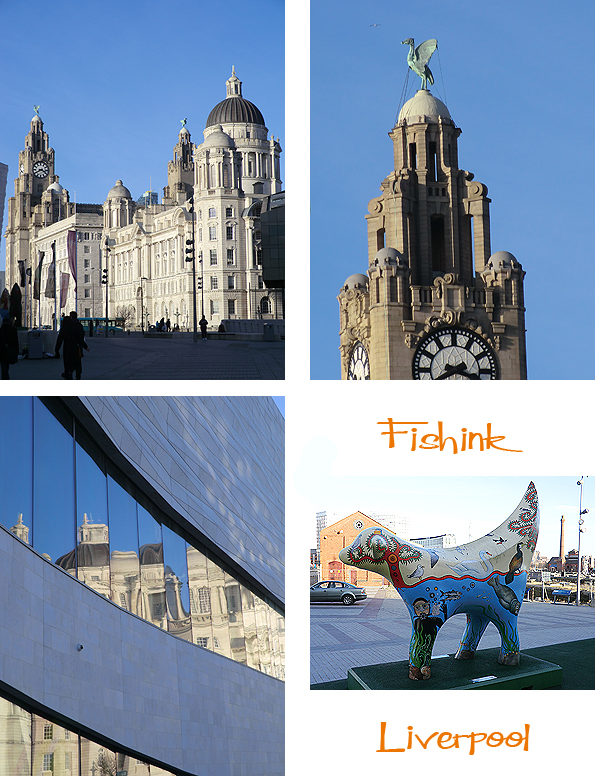
The Museum of Liverpool opened on 19 July 2011 in a purpose-built landmark building on Liverpool’s famous waterfront. Since then it has won a number of awards, most recently the Council of Europe Museum Prize for 2013. The council state that ‘The museum traces the social, economic and political history of a city which is one of the most socially diverse in Britain. It has an outstanding capacity to get people of all ages, backgrounds and abilities involved and promotes in a strong and convincing form Council of Europe core values and the importance of “living together in dignity”.
It certainly is a beautiful building, I like the bold, angular exterior which sharply contrasts with the smooth and curvaceous interior.

It talked about the Liverpool area and how it developed.

We looked at an exhibition about Liverpool’s trade links with Singapore and some artefacts that came to the city at that time. Not the Liverbird, which was saved from the old Sailor’s Home which provided seafarers with a cheap place to stay whilst they were in the city and ran from 1850 to 1969. Archaeologists found the plaque more recently before the Liverpool One shopping precinct was built.

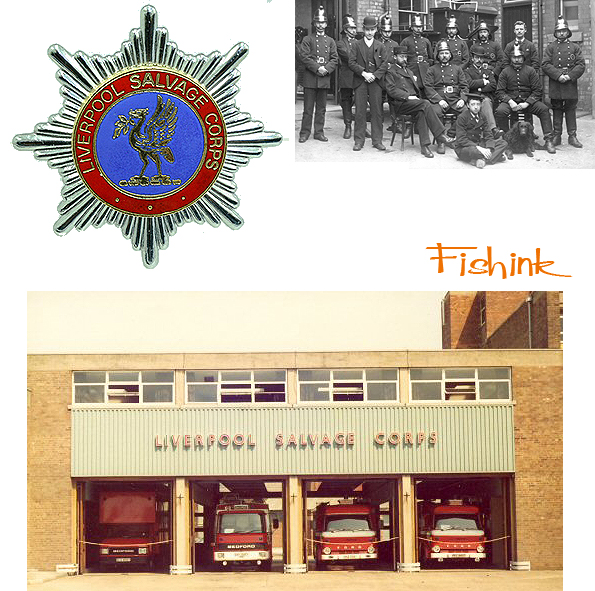
The Liverpool Salvage Corps were established in 1842, with a view to reducing the loss and damage of good held in the warehouses. They were like the local fire and police of the day.

The “Lion” is one of the world’s earliest surviving railway locomotives. Built in Leeds in 1838, to run on the recently opened Manchester to Liverpool Railway.
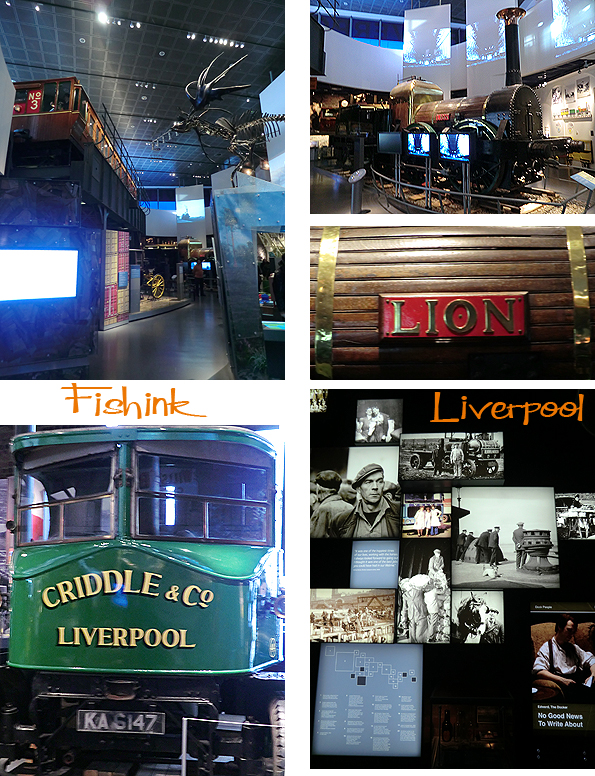
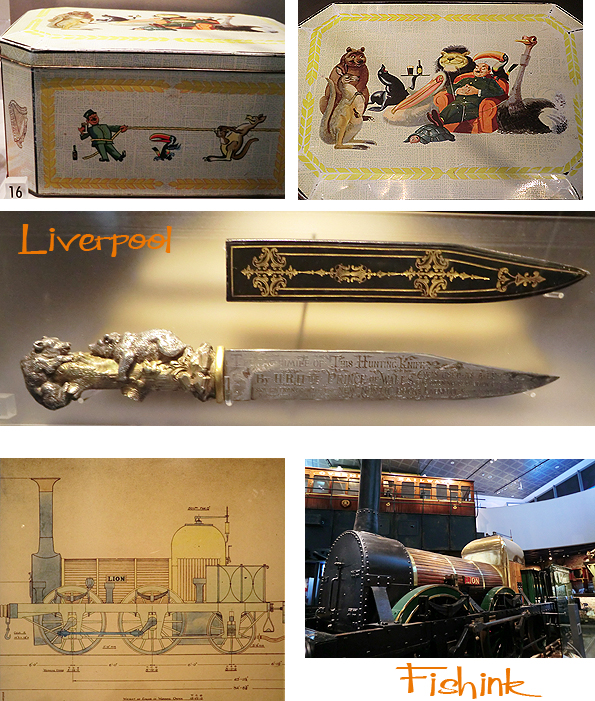
This exhibition concentrated on the type of goods that were being imported into the cities large and thriving port. Tea and sugar being two items. A great collection of old tins and ceramics to show the entrance to the Manchester and Liverpool Railway.


Also (above) some ‘Dockers hooks’ which were the main tools of the dockers. A cargo handling was a specialised job, different hooks were needed for different crates and cargos. For example ‘Scratcher hooks’ had a flat head with metal brads which allowed them to grip tightly packed cargo without damaging the packaging.
As we only had a couple of hours in the museum and briefly touched on what was displayed on the ground floor, we’ll definitely be heading back in the near future to see more of the other three floors. I hope this may also inspire you to visit. A beautiful space and a great day out.

Matt Kaufenberg Super hero Illustrator

I tracked down the wonderful contemporary illustrator Matt Kaufenberg currently living in Minnesota, and fired a few questions at him.
Can I ask your age and how you got into illustration in the first place ? I’m 30 and I’ve pretty much been drawing since I can remember.
What attracts you by the era and style that your work depicts ? I think the simplicity of designs from the 50’s and 60’s really speaks to me. The illustrations from that time period convey so much energy and playfulness and they do it with such minimal detail.
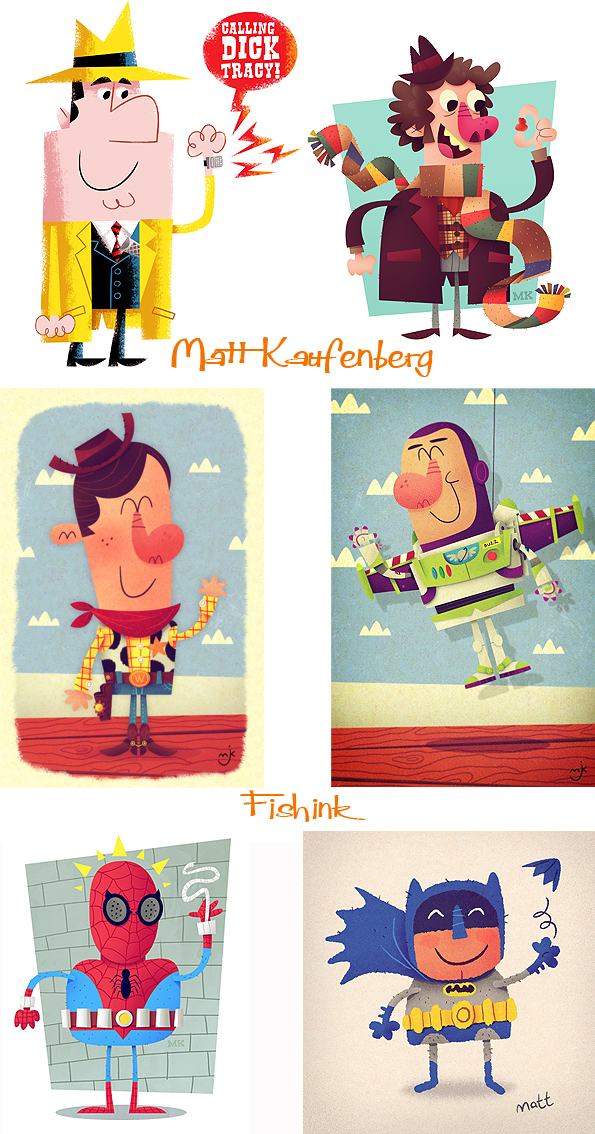
How long have you been drawing in this style ? I’ve been developing this style for about 2 years.
Is illustration your full-time profession, if not what else helps to pay the bills ? Freelance illustration is currently my full-time job.
I see that you’re attracted by super heros and well known characters Woody, Yogi, Spiderman etc have you ever thought to illustrate children’s comics or create animations of your own characters ? Although I loved animation growing up, I never really wanted to be an animator. That’s starting to change though and i’m starting to dabble in Flash and After Effects.
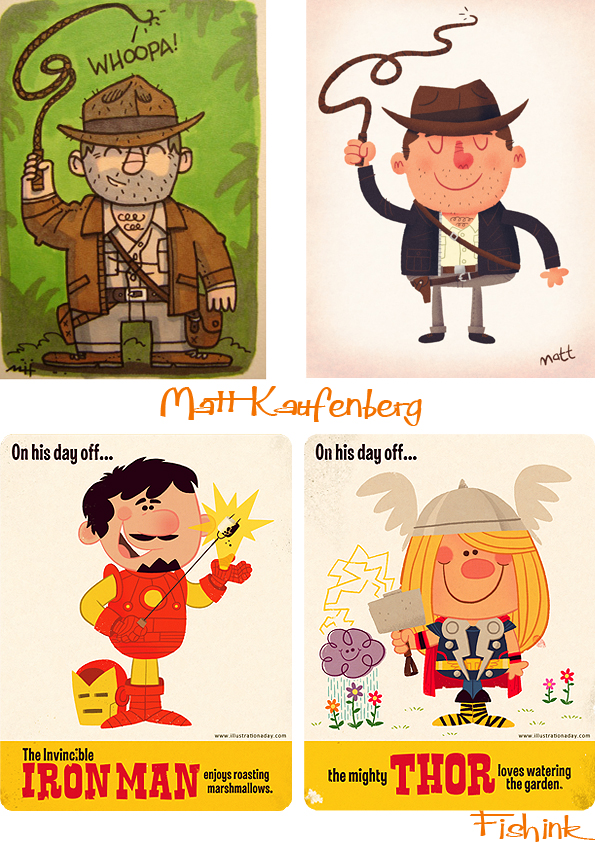

What is in the pipeline for new projects this year, any fresh illustration that we’ve not seen yet that I can reveal in my blogpost or new ideas that you’ve not previously mentioned ?
I’ve got a children’s book that I’m very close to finishing as well as the 3rd issue of the all-ages comic book, Team S.L.U.G. I also have a few other big things that I’m not allowed to talk about just yet.
How do you go about giving your characters the retro look ? what stages are most important, colour ? texture ? subject ? I think all of the stages are important, but I think it really comes down to simple, eye-pleasing shapes and color


Thanks Matt for giving us a quick insight into your illustrative world. Love the style keep up the great work. Thanks for having me as a guest, great to be included in your blog. You can learn a little more about Matt from another interview I came across from last year here.

If you like more of a’comic feel’ to your illustration. you might like The Autumn Society. There’s plenty of links there too.


 fishinkblog.com