Fishink in London. Graffiti, The Tate and Children’s Books.

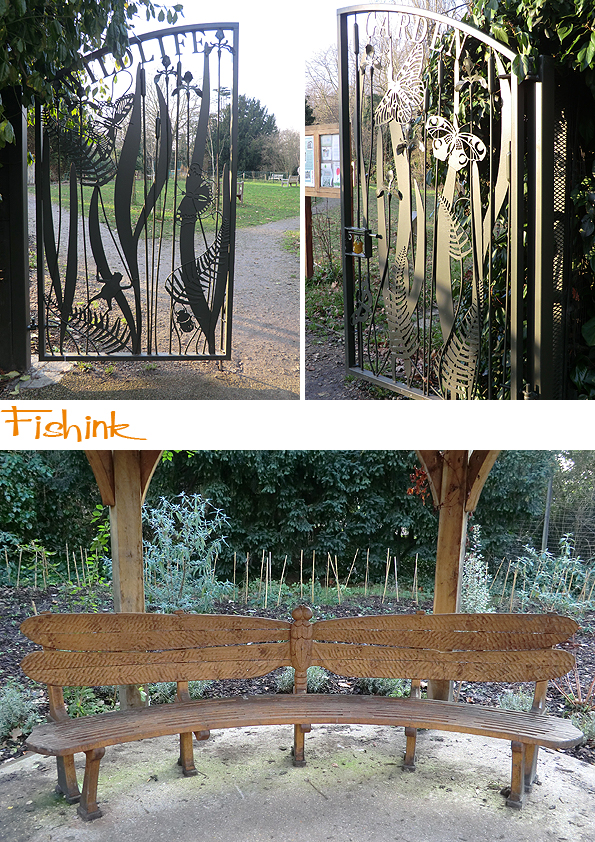
I was in London a couple of weekends ago to catch up with some friends and family and of course have a look around. I took these images walking around a park in East Dulwich, such a lovely (albeit frosty) space.
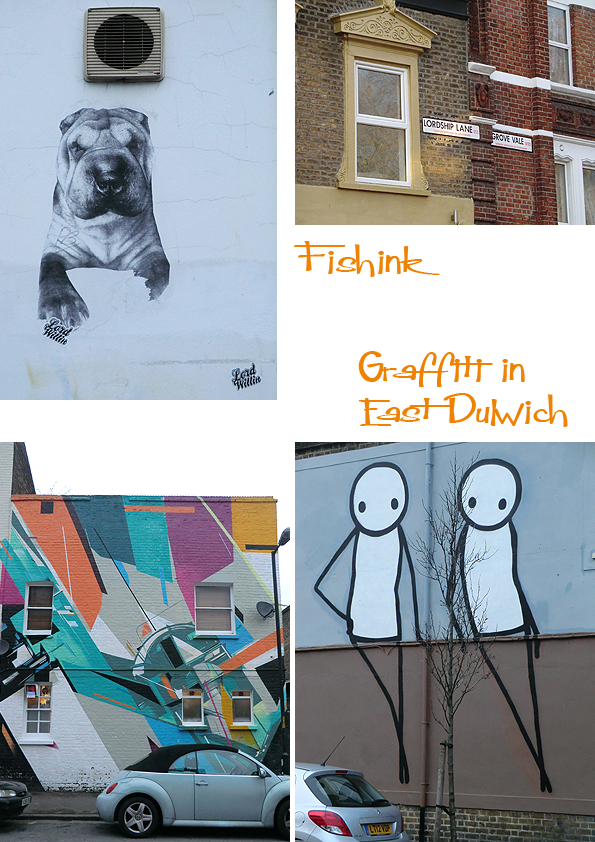
The graffiti was local too.
For an afternoon we headed into London and to The Tate Modern. I’d not seen the Tanks area before which opened in July last year.
The Tanks are the fruit of the first £90m spent on plans to enlarge the exhibition space of the already vast museum by 70%. The extension project, which is planned to cost £215m in total, is due for completion by 2016 – delayed from its previously projected opening of this year. Converted from vast chambers beneath the old Bankside Power Station which once held a million gallons of oil, the new public areas consist of two large circular spaces for performances and film installations, plus a warren of smaller rooms.

‘Light Music’ (above) is projected into a hazy room – the beams that traverse one another in the space between the two projections become ethereal sculptural forms comprised of light, shadow and theatrical smoke. This format is designed to encourage viewers to move between the screens, directly engaging with the projection beams, forming a set of social relations in which cinema is transformed into a collective event without a single point of focus. Liz Rhodes came up with the concept. Another room below, with metallic forms. I forget the name of the artist but the space, on this occasion, took precedence to the art.
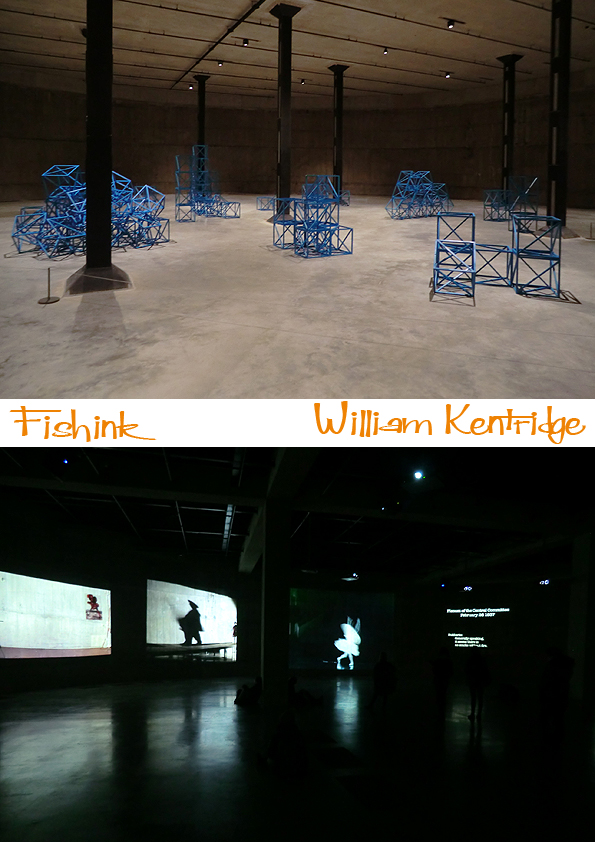
Unlike the work of South African artist William Kentridge’s eight-channel video installation ‘I am not me, the horse is not mine’ which was on in the final room. Projected simultaneously across the walls of the Tank, each film is played on a continuous loop to create an immersive audio-visual environment, which resists the establishment of a single narrative. Each short film contributes layers to a story that references Russian modernism, from Soviet film of the 1920s and 1930s to the calamitous end of the Russian avant-garde. Kentridge grew up and continues to live in Johannesburg, where his parents were lawyers involved in the anti-apartheid movement. Informed by this background, Kentridge often addresses the fraught legacy of apartheid and colonialism through innovative use of charcoal drawing, printmaking, collages, stop-animation, film and theatre. The effect of the large space and the different moving imagery was quite dramatic. This room was definitely my favourite area of the Tate on this occasion and I loved the little collaged people dancing and then coming apart before reforming differently.

Originally, the date for the expansion of the museum was set for the year 2025. But the success of the Tate Modern caused an acceleration of the plans. The opening is sheduled for 2016 now, or even earlier. The whole project costs around £200million (€253million). Most of the money coming in from donations.
Some traditional art and paintings that caught my eye upstairs in the Tate.

Especially these beautifully serene and calming portraits by Meredith Frampton. More info here.

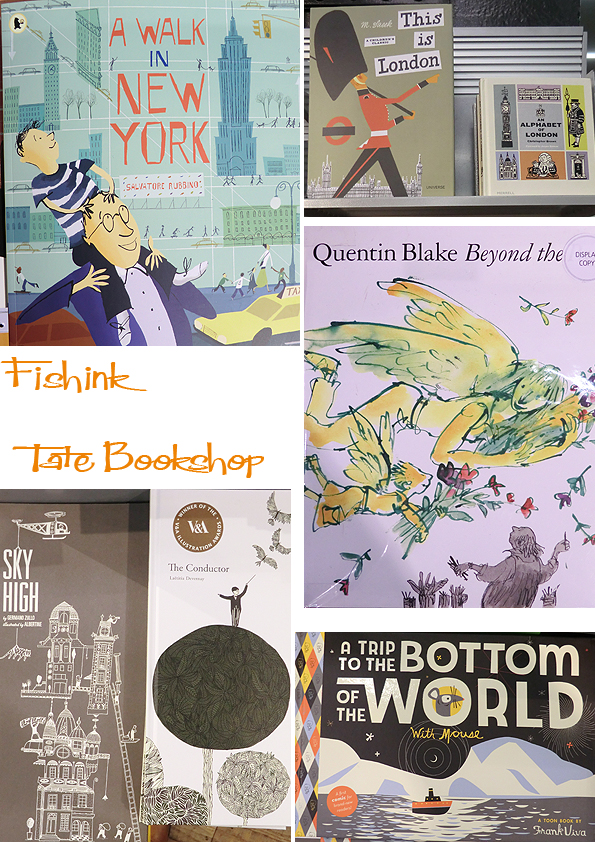
And as always I have to stop in the bookshop to discover many new things I can’t afford lol.

The walk back along the Thames, with the evening lights reflecting on the water, was truly stunning.

A great weekend.
Roger Duvoisin Mid-Century Illustrator Part 2

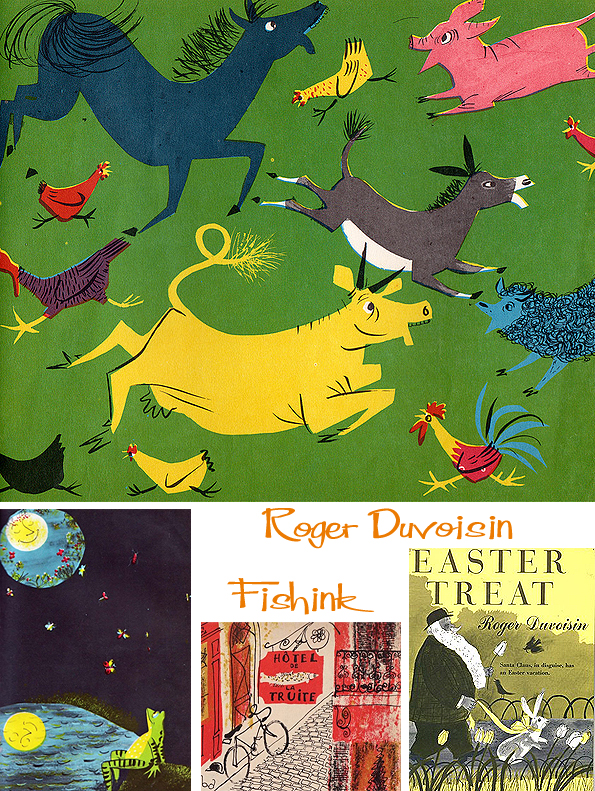
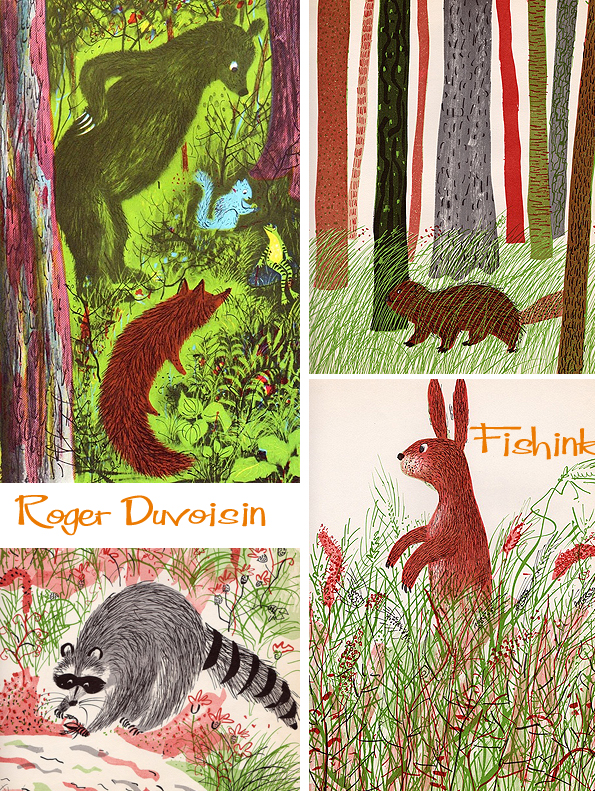
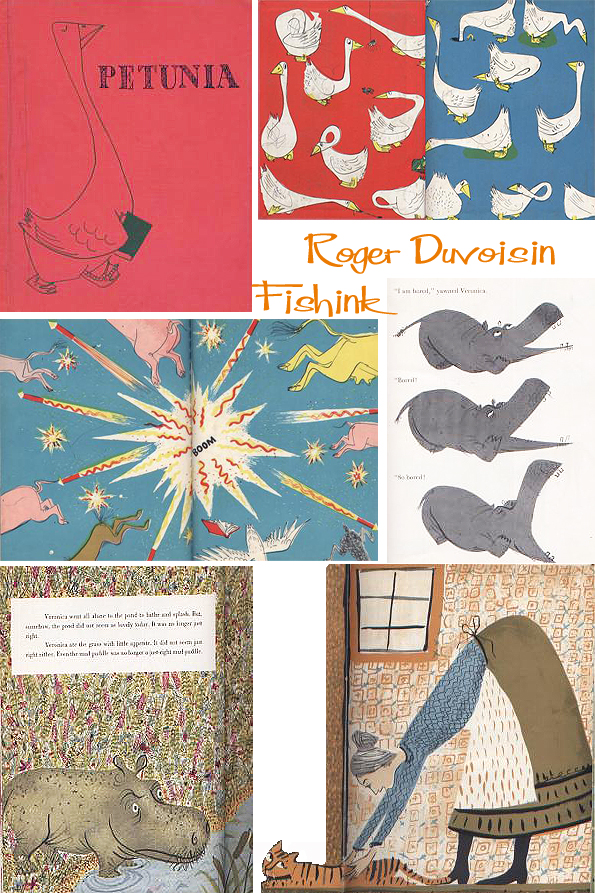
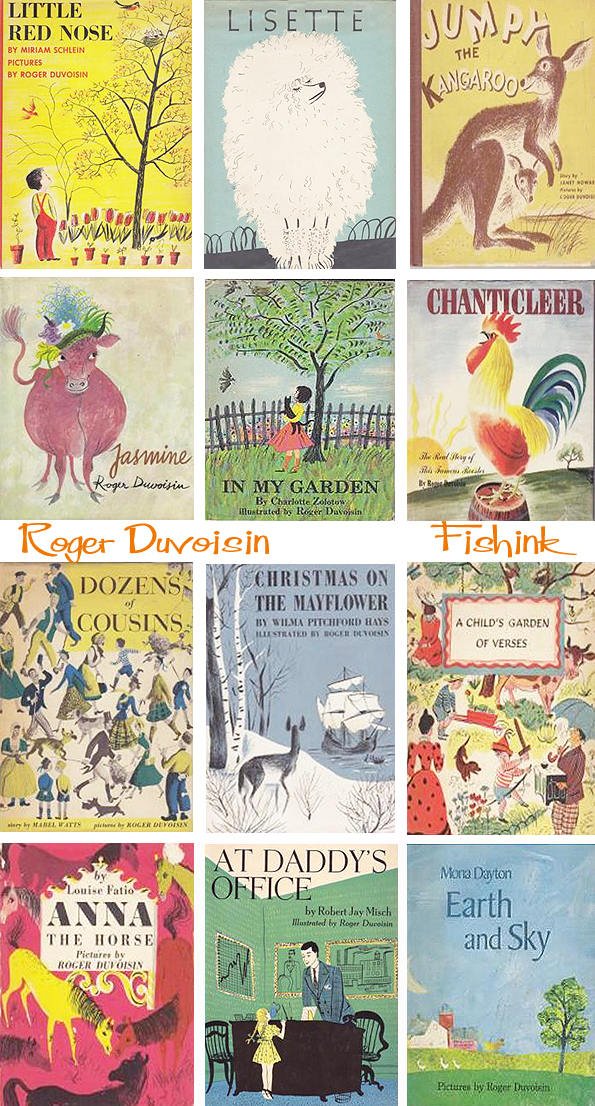
Welcome back to the amazing work of Roger Duvoisin. All of Duvoisin’s books are characterized by straightforward language and stories, but are always told with a good dose of gentle humor. Nothing slapstick, just straightforward funny. A mark of a great artist, perhaps, is his ability to make you like his work even if it is in a style which doesn’t usually appeal to you. Look at the way his animals prance, can’t you almost hear the clucking, mooing and general commotion going on lol.

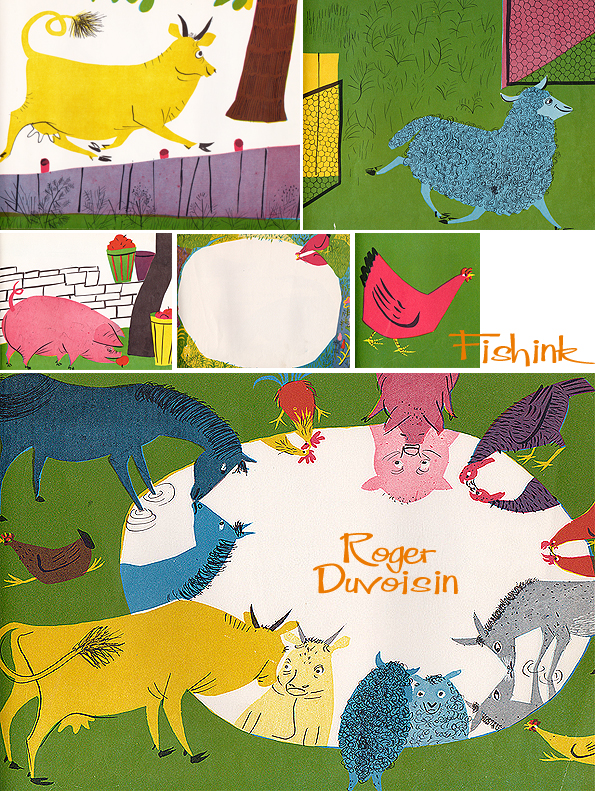
He has a great range of styles and I love his painterly illustrations with the defining strokes and lines on top.

His animals are great characters and full of spark and spirit.


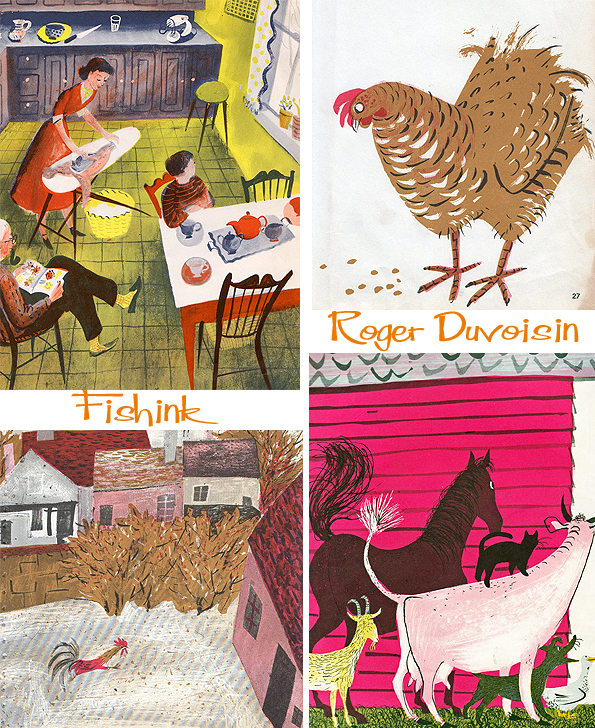
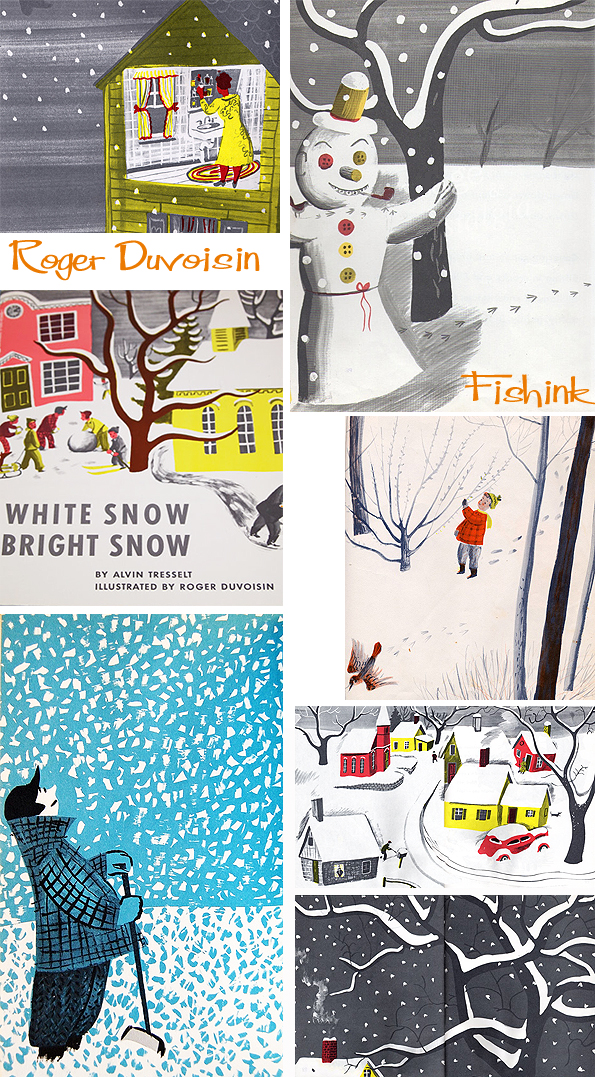
Duvoisin won the prestigious Caldecott Award for White Snow Bright Snow, written by Alvin Tresselt, in 1948, and the Caldecott Honor Award for Hide and Seek Fog, also by Tresselt, in 1966. Duvoisin continued to experiment artistically, exploring the medium of collage during the nineteen-sixties with the same robust enthusiasm he had shown for the bold designs of the twenties.
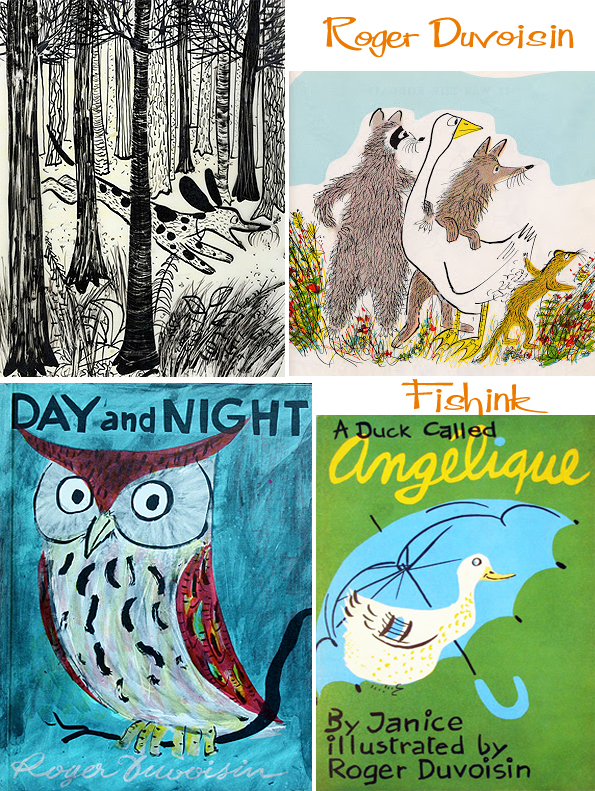
I’ve really enjoyed finding out more about this truly talented artist and illustrator and I hope you’ve enjoyed looking through my findings too. Here’s just a handful of the 200+ titles that Roger illustrated.
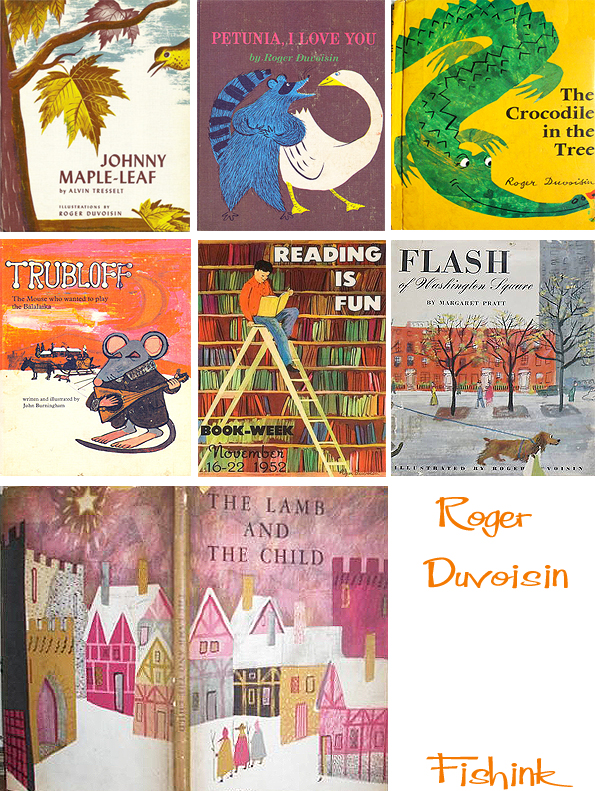

Roger Duvoisin understood and appreciated the child’s viewpoint as few adults do. It may well be that this rare quality, even more than his wit, warmth, humor, and artistic brilliance, shaped his unique contribution to American children’s book illustration. To physically show you how just how productive Roger was, take a look at a simple list of his work. Can you imagine all the illustrations that went into this comprehensive library. He should have a lifetime achievement award !
Roger Duvoisin’s Bibliography
A Little Boy Was Drawing written and illustrated by Roger Duvoisin 1932
Donkey-Donkey: The Troubles of a Silly Little Donkey written and illustrated by Roger Duvoisin 1933
All Aboard! written and illustrated by Roger Duvoisin 1935
Mother Goose written by William Rose Benet and illustrated by Roger Duvoisin 1936
The Pied Piper of Hamelin written by Robert Browning and illustrated by Roger Duvoisin 1936
Riema, Little Brown Girl of Java written by Kathleen Morrow Elliott and illustrated by Roger Duvoisin 1937
And There Was America written and illustrated by Roger Duvoisin 1938
Soomoon, Boy of Bali written by Kathleen Morrow Elliott and illustrated by Roger Duvoisin 1938
The Feast of Lamps written by Charlet Root and illustrated by Roger Duvoisin 1938
Jo-yo’s Idea written by Kathleen Morrow Elliott and illustrated by Roger Duvoisin 1939
Rhamon, a Boy of Kashmir written by Heluiz Washburne and illustrated by Roger Duvoisin 1939
Tales of the Pampas written by W.H. Hudson and illustrated by Roger Duvoisin 1939
Language Arts for Modern Youth written by Anonymous and illustrated by Roger Duvoisin 1939
Military French written by Anonymous and illustrated by Roger Duvoisin 1939
The Dog Cantbark written by Marjorie Fischer and illustrated by Roger Duvoisin 1940
Petits Contes Vrais written by Mary Riley and illustrated by Roger Duvoisin 1940
The Christmas Cake in Search of Its Owner written and illustrated by Roger Duvoisin 1941
The Three Sneezes, and Other Swiss Tales written and illustrated by Roger Duvoisin 1941
They Put Out to Sea: The Story of the Map written and illustrated by Roger Duvoisin 1943
At Our House written by John G. McCullough and illustrated by Roger Duvoisin 1943
Jumpy, the Kangaroo written by Janet Howard and illustrated by Roger Duvoisin 1944
A Child’s Garden of Verses written by Robert Louis Stevenson and illustrated by Roger Duvoisin 1944
Fair, Fantastic Paris written by Harold Ettlinger and illustrated by Roger Duvoisin 1944
The Christmas Book of Legends and Stories written by Elva Smith and illustrated by Roger Duvoisin 1944
The Christmas Whale written and illustrated by Roger Duvoisin 1945
The Happy Time written by Robert Fontaine and illustrated by Roger Duvoisin 1945
I won’t, Said the King; or, The Purple Flannel Underwear written by Mildred Jordan and illustrated by Roger Duvoisin 1945
Virgin With Butterflies written by Tom Powers and illustrated by Roger Duvoisin 1945
Bhimsa, the Dancing Bear written by Christine Weston and illustrated by Roger Duvoisin 1945
The Life and Adventures of Robinson Crusoe written by Daniel Defoe and illustrated by Roger Duvoisin 1946
At Daddy’s Office written by Robert Jay Misch and illustrated by Roger Duvoisin 1946
Daddies, What They Do All Day written by Helen Walker Puner and illustrated by Roger Duvoisin 1946
The Successful Secretary written by Margaret Pratt and illustrated by Roger Duvoisin 1946
Chanticleer, the Real Story of This Famous Rooster written and illustrated by Roger Duvoisin 1947
Moustachio written and illustrated by Roger Duvoisin 1947
White Snow, Bright Snow written by Alvin R. Tresselt and illustrated by Roger Duvoisin 1947
The Four Corners of the World written and illustrated by Roger Duvoisin 1948
Christmas Pony written by William Norman Hall and illustrated by Roger Duvoisin 1948
The Steam Shovel That Wouldn’t Eat Dirt written by Walter Retan and illustrated by Roger Duvoisin 1948
Johnny Maple-Leaf written by Alvin R. Tresselt and illustrated by Roger Duvoisin 1948
Sun Up written by Alvin R. Tresselt and illustrated by Roger Duvoisin 1949
Vavache, the Cow Who Painted Pictures written by Frederic Attwood and illustrated by Roger Duvoisin 1950
Petunia written and illustrated by Roger Duvoisin 1950
The Christmas Forest written by Louise Fatio and illustrated by Roger Duvoisin 1950
Hi, Mr. Robin! written by Alvin R. Tresselt and illustrated by Roger Duvoisin 1950
Follow the Wind written by Alvin R. Tresselt and illustrated by Roger Duvoisin 1950
Dozens of Cousins written by Mabel Watts and illustrated by Roger Duvoisin 1950
Love and Dishes written by Niccolo de Quattrociocchi and illustrated by Roger Duvoisin 1950
Petunia and the Song written and illustrated by Roger Duvoisin 1951
Anna, the Horse written by Louise Fatio and illustrated by Roger Duvoisin 1951
Autumn Harvest written by Alvin R. Tresselt and illustrated by Roger Duvoisin 1951
The Camel Who Took a Walk written by Jack Tworkov and illustrated by Roger Duvoisin 1951
Farm Wanted written by Hilles Helen and illustrated by Roger Duvoisin 1951
The Talking Cat and Other Stories of French Canada written by Natalie Savage Carlson and illustrated by Roger Duvoisin 1952
A for the Ark written and illustrated by Roger Duvoisin 1952
Petunia’s Christmas written and illustrated by Roger Duvoisin 1952
Amahl and the Night Visitors written by Gian Carlo Menotti and illustrated by Roger Duvoisin 1952
Busby and Co. written by Coggins Herbert and illustrated by Roger Duvoisin 1952
Chef’s Holiday written by Jones Idwal and illustrated by Roger Duvoisin 1952
Petunia Takes a Trip written and illustrated by Roger Duvoisin 1953
Follow the Road written by Alvin R. Tresselt and illustrated by Roger Duvoisin 1953
Tell Me, Little Boy written by Doris Van Liew Foster and illustrated by Roger Duvoisin 1953
Easter Treat written and illustrated by Roger Duvoisin 1954
The Happy Lion written by Louise Fatio and illustrated by Roger Duvoisin 1954
I Saw the Sea Come In written by Alvin R. Tresselt and illustrated by Roger Duvoisin 1954
The Night Before Christmas written by Clement C. Moore and illustrated by Roger Duvoisin 1954
Sophocles the Hyena written by James Moran and illustrated by Roger Duvoisin 1954
Flash of Washington Square written by Margaret Pratt and illustrated by Roger Duvoisin 1954
Two Lonely Ducks: A Counting Book written and illustrated by Roger Duvoisin 1955
One Thousand Christmas Beards written and illustrated by Roger Duvoisin 1955
The Happy Lion in Africa written by Louise Fatio and illustrated by Roger Duvoisin 1955
Little Red Nose written by Miriam Schlein and illustrated by Roger Duvoisin 1955
Wake Up, Farm! written by Alvin R. Tresselt and illustrated by Roger Duvoisin 1955
One Step, Two… written by Charlotte Zolotow and illustrated by Roger Duvoisin 1955
Ride with the Sun written by Harold Courlander and illustrated by Roger Duvoisin 1955
Trillium Hill written by E.L. Marsh and illustrated by Roger Duvoisin 1955
Bennie, the Bear Who Grew Too Fast written by Ferrin Beatrice and illustrated by Roger Duvoisin 1956
The House of Four Seasons written and illustrated by Roger Duvoisin 1956
Tigers Don’t Bite written by Jack Tworkov and illustrated by Roger Duvoisin 1956
Christmas on the Mayflower written by Wilma Pitchford Hays and illustrated by Roger Duvoisin 1956
The Sweet Pattotie Doll written by Mary Calhoun and illustrated by Roger Duvoisin 1957
The Happy Lion Roars written by Louise Fatio and illustrated by Roger Duvoisin 1957
A Doll for Marie written by Louise Fatio and illustrated by Roger Duvoisin 1957
Wake Up, City! written by Alvin R. Tresselt and illustrated by Roger Duvoisin 1957
Not a Little Monkey written by Charlotte Zolotow and illustrated by Roger Duvoisin 1957
Does Poppy Live Here? written by Gregor Arthur and illustrated by Roger Duvoisin 1957
Wait Till Sunday written by Susan Dorritt and illustrated by Roger Duvoisin 1957
Wobble the Witch Cat written by Mary Calhoun and illustrated by Roger Duvoisin 1958
Petunia, Beware! written and illustrated by Roger Duvoisin 1958
The Frog in the Well written by Alvin R. Tresselt and illustrated by Roger Duvoisin 1958
Winkie’s World written by William Norman Hall and illustrated by Roger Duvoisin 1958
The Little Church on the Big Rock written by Allen Hazel and illustrated by Roger Duvoisin 1958
Houn’ Dog written by Mary Calhoun and illustrated by Roger Duvoisin 1959
The Three-cornered Hat written by Pedro Antonio de Alarcon and illustrated by Roger Duvoisin 1959
The Three Happy Lions written by Louise Fatio and illustrated by Roger Duvoisin 1959
Favorite Fairy Tales Told in France written by Virginia Haviland and illustrated by Roger Duvoisin 1959
A Fish Is Not a Pet written by May Natalie Tabak and illustrated by Roger Duvoisin 1959
The Pointed Brush written by Martin Patricia Miles and illustrated by Roger Duvoisin 1959
The Three-Cornered Hat written by de Alarcón Pedro Antonio and illustrated by Roger Duvoisin 1959
Please Pass the Grass! written by Leone Adelson and illustrated by Roger Duvoisin 1960
Day and Night written and illustrated by Roger Duvoisin 1960
Angelique written by Janice and illustrated by Roger Duvoisin 1960
Timothy Robbins Climbs the Mountain written by Alvin R. Tresselt and illustrated by Roger Duvoisin 1960
In My Garden written by Charlotte Zolotow and illustrated by Roger Duvoisin 1960
The Children Come Running written by Elizabeth Coatsworth and illustrated by Roger Duvoisin 1960
The Nine Lives of Homer C. Cat written by Mary Calhoun and illustrated by Roger Duvoisin 1961
Veronica written and illustrated by Roger Duvoisin 1961
The Happy Hunter written and illustrated by Roger Duvoisin 1961
The Happy Lion’s Quest written by Louise Fatio and illustrated by Roger Duvoisin 1961
The Wishing Well in the Woods written by Priscilla Friedrich and illustrated by Roger Duvoisin 1961
The Miller, His Sons, and Their Donkey written by Aesopus and illustrated by Roger Duvoisin 1962
The Hungry Leprechaun written by Mary Calhoun and illustrated by Roger Duvoisin 1962
Our Veronica Goes to Petunia’s Farm written and illustrated by Roger Duvoisin 1962
Under the Trees and through the Grass written by Alvin R. Tresselt and illustrated by Roger Duvoisin 1962
Lisette written by Adelaide Holl and illustrated by Roger Duvoisin 1962
Spring Snow written and illustrated by Roger Duvoisin 1963
Lonely Veronica written and illustrated by Roger Duvoisin 1963
The April Umbrella written by Priscilla Friedrich and illustrated by Roger Duvoisin 1963
The Lamb and the Child written by Dean Frye and illustrated by Roger Duvoisin 1963
Veronica’s Smile written and illustrated by Roger Duvoisin 1964
Red Bantam written by Louise Fatio and illustrated by Roger Duvoisin 1964
The Happy Lion and the Bear written by Louise Fatio and illustrated by Roger Duvoisin 1964
The Poodle Who Barked at People written by Charlotte Zolotow and illustrated by Roger Duvoisin 1964
Teddy written by Grete Janus Hertz and illustrated by Roger Duvoisin 1964
Petunia, I Love You written and illustrated by Roger Duvoisin 1965
Days of Sunshine, Days of Rain written by Dean Frye and illustrated by Roger Duvoisin 1965
The Rain Puddle written by Adelaide Holl and illustrated by Roger Duvoisin 1965
Hide and Seek Fog written by Alvin R. Tresselt and illustrated by Roger Duvoisin 1965
Nubber Bear written by William Lipkind and illustrated by Roger Duvoisin 1966
Around the Corner written by Jean B. Showalter and illustrated by Roger Duvoisin 1966
The Missing Milkman written and illustrated by Roger Duvoisin 1967
The Happy Lion’s Vacation written by Louise Fatio and illustrated by Roger Duvoisin 1967
Poems from France written by William Jay Smith and illustrated by Roger Duvoisin 1967
The World in the Candy Egg written by Alvin R. Tresselt and illustrated by Roger Duvoisin 1967
The Old Bullfrog written by Berniece Freschet and illustrated by Roger Duvoisin 1968
The Remarkable Egg written by Adelaide Holl and illustrated by Roger Duvoisin 1968
Nubber Bear written by TBD and illustrated by Roger Duvoisin 1968
Earth and Sky written by Mona Dayton and illustrated by Roger Duvoisin 1969
What Is Right for Tulip written and illustrated by Roger Duvoisin 1969
It’s Time Now! written by Alvin Tresselt and illustrated by Roger Duvoisin 1969
The Beaver Pond written by Alvin R. Tresselt and illustrated by Roger Duvoisin 1970
The Owl Book edited written by Shaw Richard and illustrated by Roger Duvoisin 1970
Veronica and the Birthday Present written and illustrated by Roger Duvoisin 1971
The Happy Lion’s Treasure written by Louise Fatio and illustrated by Roger Duvoisin 1971
The Crocodile in the Tree written and illustrated by Roger Duvoisin 1972
The Web in the Grass written by Berniece Freschet and illustrated by Roger Duvoisin 1972
Jasmine written and illustrated by Roger Duvoisin 1973
Hector Penguin written by Louise Fatio and illustrated by Roger Duvoisin 1973
The Happy Lion’s Rabbits written by Louise Fatio and illustrated by Roger Duvoisin 1973
See What I Am written and illustrated by Roger Duvoisin 1974
Marc and Pixie, and the Walls in Mrs. Jones’s Garden written and illustrated by Roger Duvoisin 1975
Petunia’s Treasure written and illustrated by Roger Duvoisin 1975
Periwinkle written and illustrated by Roger Duvoisin 1976
Which Is the Best Place? written by Mirra Ginsburg and illustrated by Roger Duvoisin 1976
What Ever Happened to the Baxter Place? written by Pat Ross and illustrated by Roger Duvoisin 1976
Heinz Hobnail and the Great Shoe Hunt written by Anne Duvoisin and illustrated by Roger Duvoisin 1976
Crocus written and illustrated by Roger Duvoisin 1977
Hector and Christina written by Louise Fatio and illustrated by Roger Duvoisin 1977
Mr. and Mrs. Button’s Wonderful Watchdogs written by Janice and illustrated by Roger Duvoisin 1978
What Did You Leave Behind? written by Alvin R. Tresselt and illustrated by Roger Duvoisin 1978
Snowy and Woody written and illustrated by Roger Duvoisin 1979
The Happy Lioness written by Louise Fatio and illustrated by Roger Duvoisin 1980
The Importance of Crocus written and illustrated by Roger Duvoisin 1980
Petunia the Silly Goose Stories written and illustrated by Roger Duvoisin 1987
Autumn harvest written by Alvin R. Tresselt and illustrated by Roger Duvoisin 1990
More images on the wonderful site of My Vintage Book Collection.
Again many thanks to ‘Eclipse‘ and ‘ Through the Magic Door ‘ for their biographical details, helping to make this blog posting possible and I hope you enjoyed taking this journey with me. Do leave leave a comment if you did. If anyone has any images of Rogers’ Textile designs from his time in Paris, I’d love to see them too. Please pass this site to your friends who may also appreciate it.
I thought it might be fun to create some Duvoisin inspired designs. So I took some elements of his work and put them into repeat.
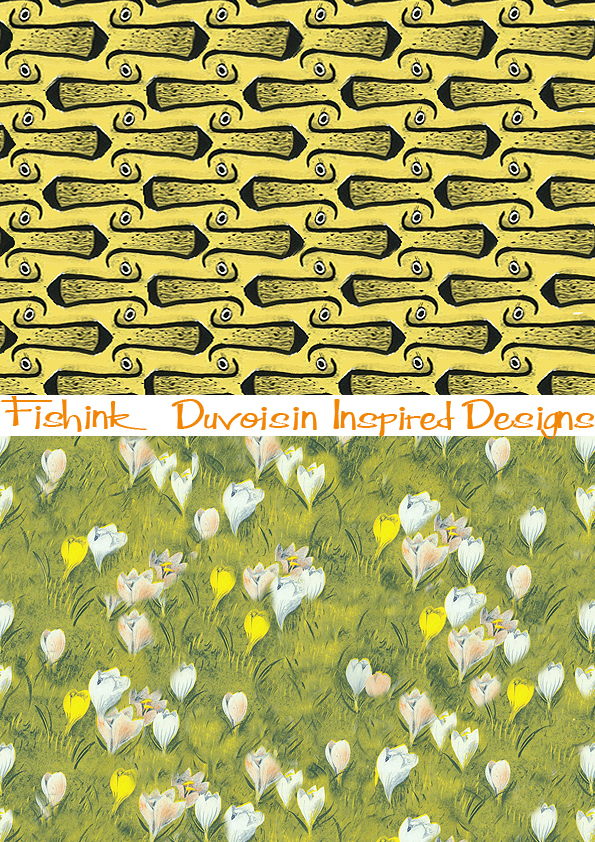
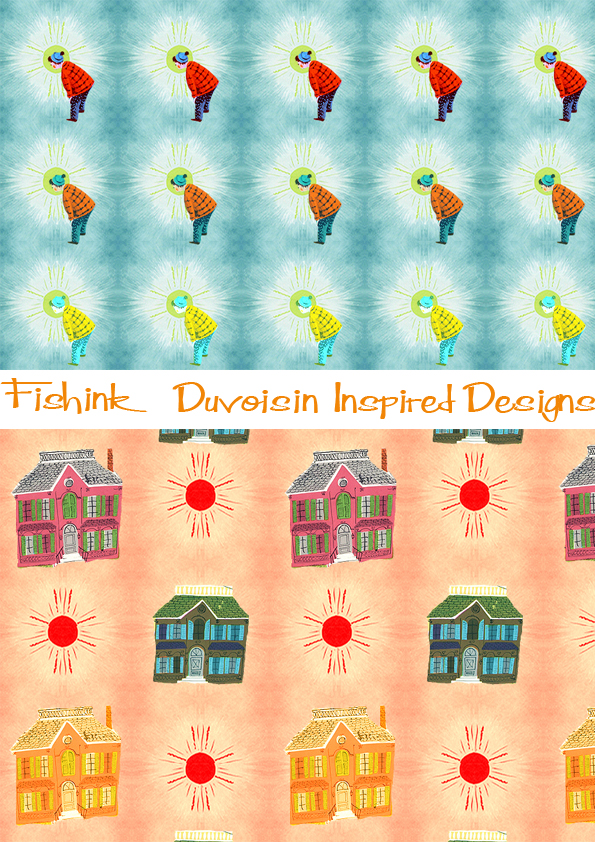
And one of my own ideas taking inspiration from cars of his day. Hope you like it.

Roger Duvoisin Mid-Century Illustrator Part 1
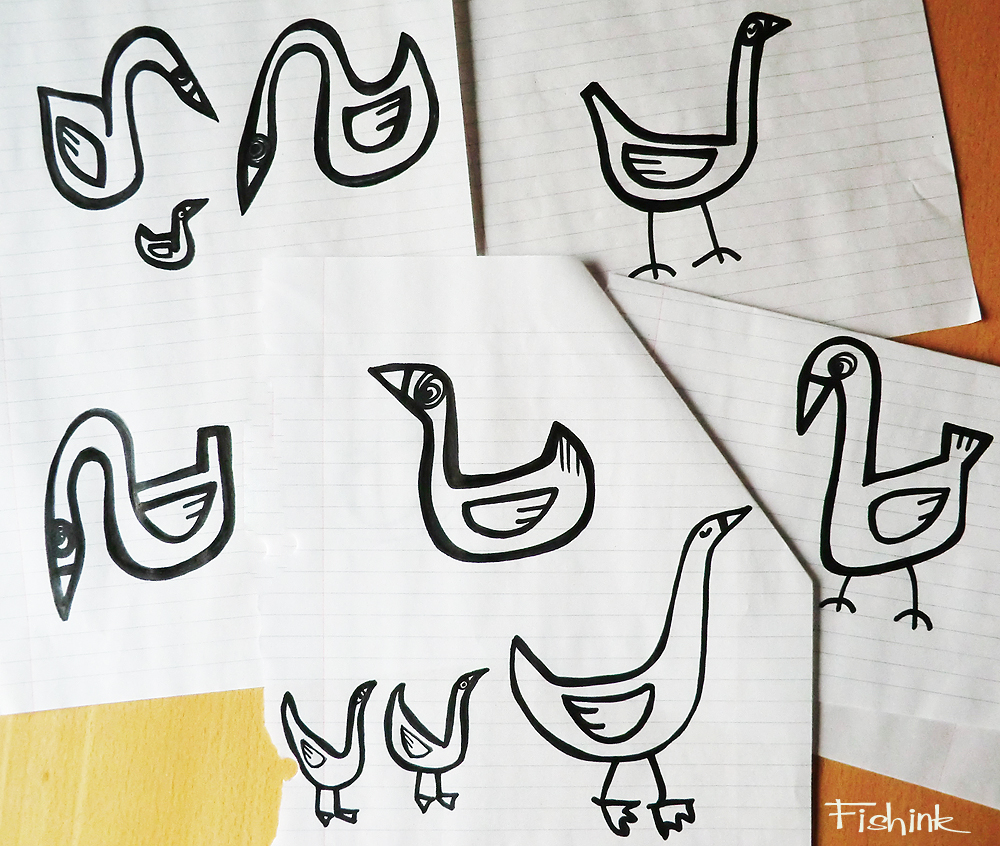
There was a small chain of events that prompted me to write today’s blog. Firstly I started drawing geese (for no reason in particular) but I guess just enjoying creating their twisting shapes and their smooth curving lines.
The very next day, I came across three copies of ‘The Happy Lion’ books,whilst on my travels. Of course when I saw the illustrations, I realised that I needed to know more about the fantastic work of Roger Duvoisin. Through my research, I came across his drawings of Petunia (a goose) and soon it all seemed to fit into place ! So here we are.
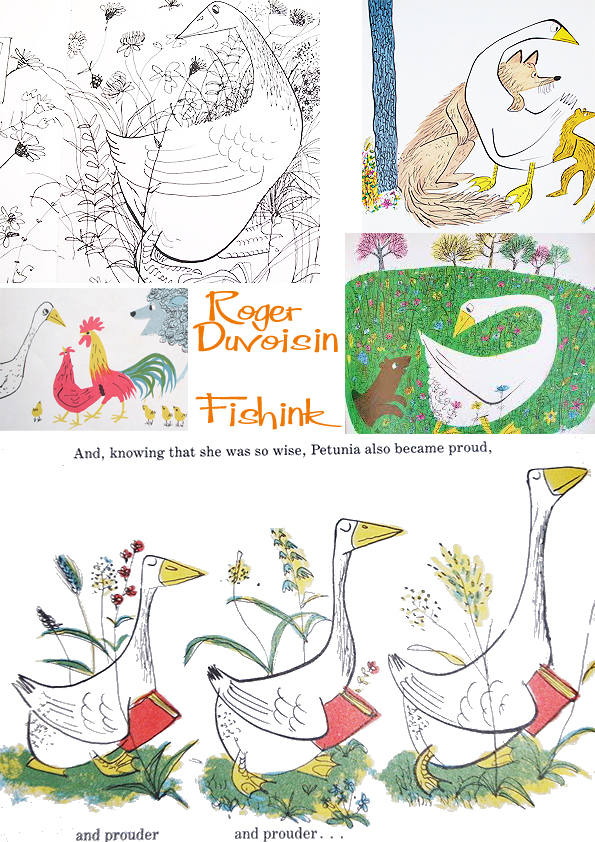
But before we get too excited about the work, let’s introduce you to Roger.
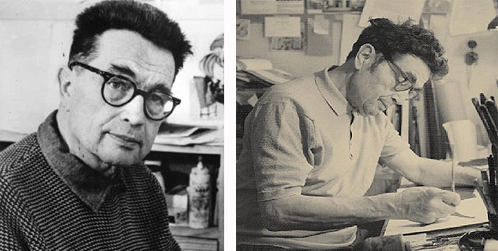
Roger Duvoisin was born in Switzerland, August 28th, 1904 into a family with a strong orientation towards the arts. His father was an architect and his godmother was a famous enamel painter. While Duvoisin showed early interest in the arts, there was some energetic familial discussion as to his education.
Roger explains ‘Like most children, I loved to draw. Galloping horses were my favorite subject. But I labored in vain trying to draw the hoofs; they always looked like oversized shoes. Fortunately an uncle of mine had a special talent for drawing horses and I looked forward to his visit with great expectation as I always made him fill sheets of paper with magnificent horses, prancing on their elegant hoofs. Trees were also my despair. They have so many leaves that I lost hope of drawing them all. I was sad when I looked at my trees whose leaves hung from the branches like Christmas tree ornaments. But I got help there too. My godmother, who was a well-known painter of enamels, said she knew a trick that would help me and she showed it to me. After that my trees were really not as bad.’
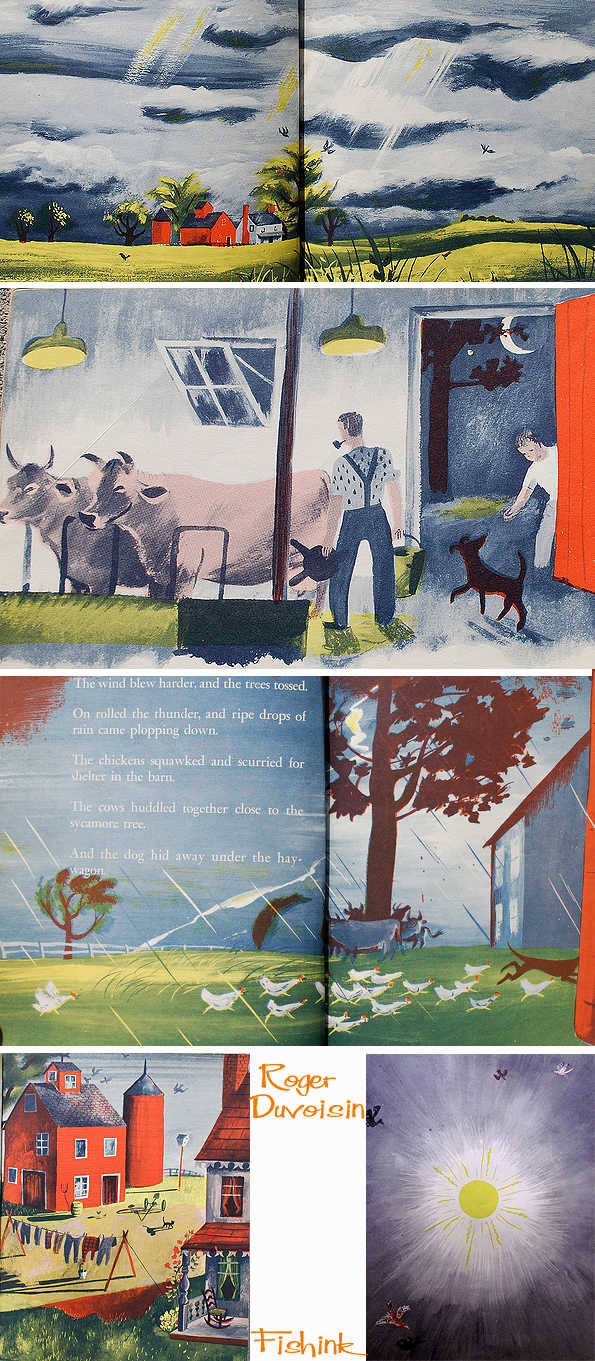
Roger did go on to master illustrating trees as you can see below ‘Sun Up’ in 1949.

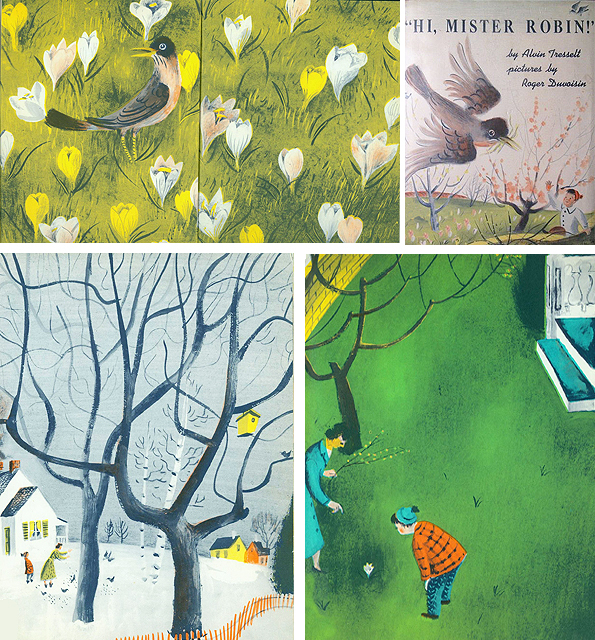
Again in 1950 with ‘Hi Mister Robin’
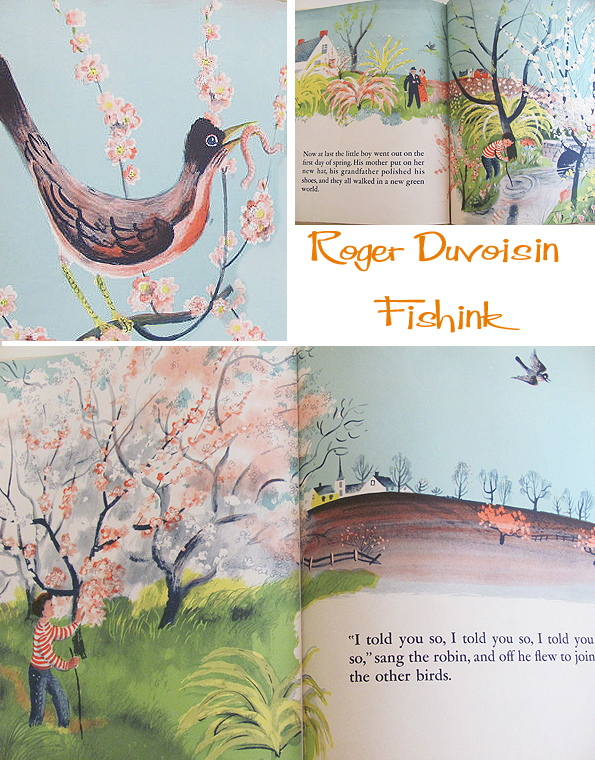
and also in the 1956 book ‘ The House of Four Seasons’.

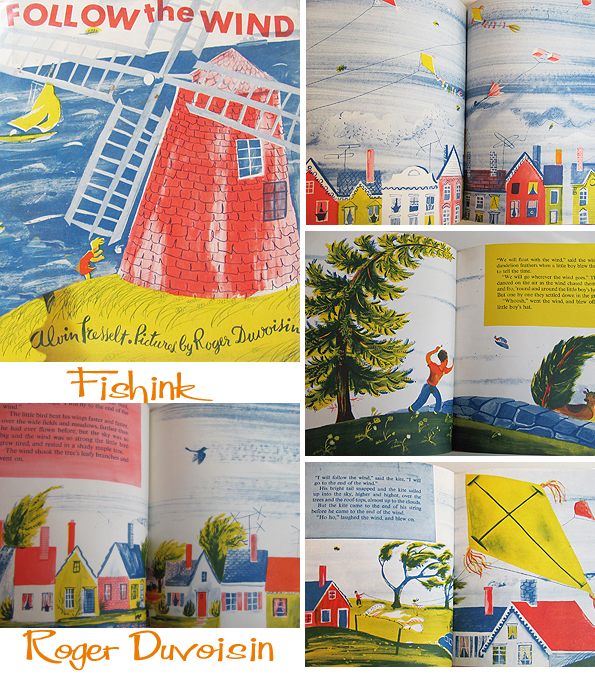
Graduating from art school Roger Duvoisin first turned his hand to designing stage scenery, theatre sets and posters for adverts.
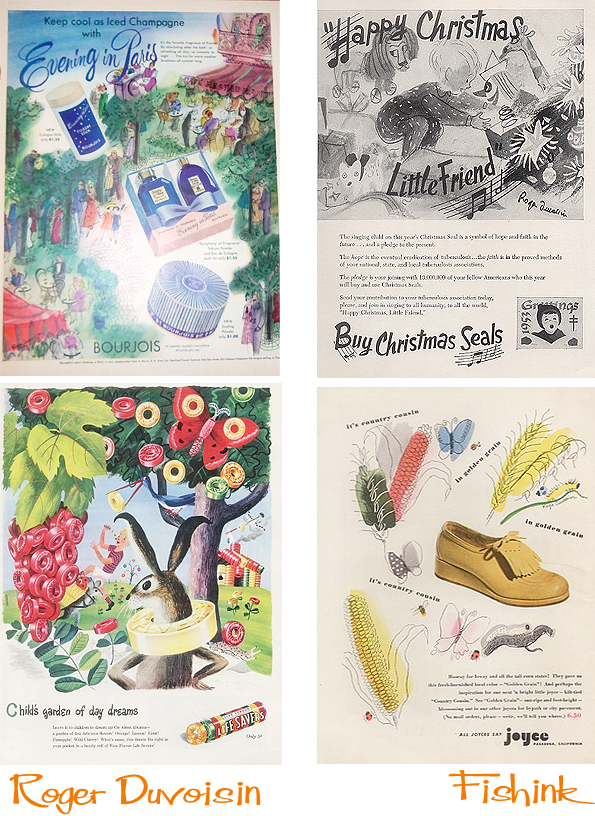
Next he became the manager of a French pottery plant. It was in this time, in 1925, that he married Louise Fatio. He was recruited into designing textiles which took him to Paris. In 1927, he was recruited by an American textile firm in New York to come and work for them. He made a commitment to relocate for a minimum of four years and he and Fatio moved to New York.
The company he worked for went bankrupt in 1931, and he found himself, at the height of the Great Depression with a wife and two young sons, in a foreign land, and with no job. However, he loved living in America and had no desire to return to Europe (he became a citizen in 1938). Looking around for what to do next, he decided to publish a book that he had written and illustrated for his son. ‘A Little Boy Was Drawing’ was published in 1932. While his first effort did not make much of an impact, he was headed in the right direction. His next book, Donkey, Donkey (1933) was a big hit and has been in print ever since. With the success of Donkey, Donkey, Duvoisin was off and running.
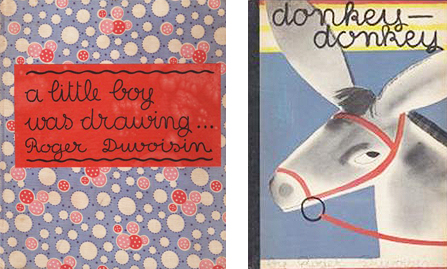
Here’s a few other covers from the 1940’s to 1960’s.
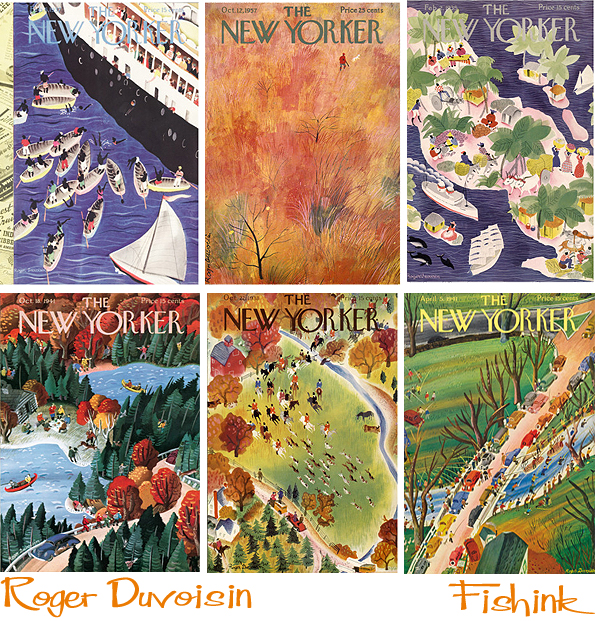
He also worked for the New Yorker magazine doing a number of covers for them in the forties and fifties.
Duvoisin was a big collaborator. While he wrote plenty of his own books, he also had long productive relationships with other authors. The Happy Lion series was a collaboration with his wife Louise Fatio as the author , eleven books in the series of sixteen, they worked on together. Other authors with whom he worked were Alvin R. Tresselt, (nineteen books), Mary Calhoun (five books), Charlotte Zolotow (four books), Kathleen Morrow Elliott (three books), and Adelaide Holl (three books). As Duvoisin told Lee Bennett Hopkins, “There are problems and great pleasures in collaborating. Louise has a sensitive eye. Her criticism is very valuable but sometimes difficult to accept, especially when she tells me that I should do particular illustrations over again. She is usually right, though!”
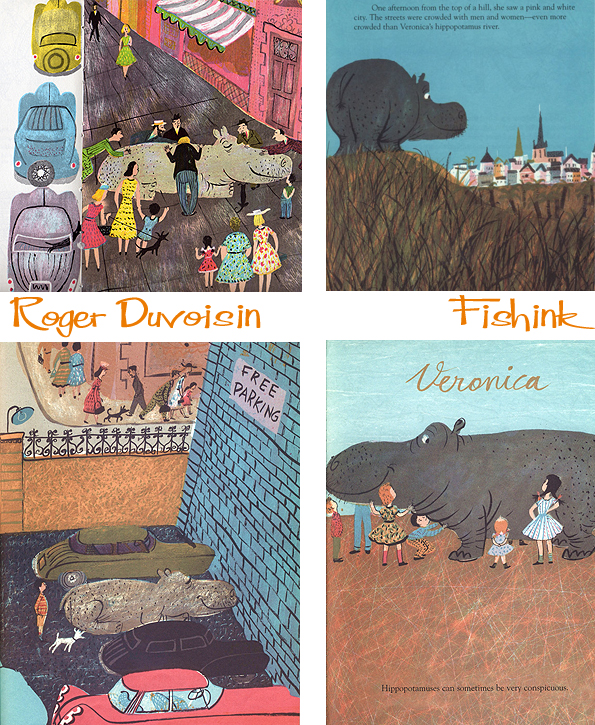
Duvoisin’s work has a number of characteristics. One theme is the role that animal protagonists play in many if not most of Duvoisin’s work. He loved animals and in 1939 he purchased a farm in New Jersey from whence he could work in New York but spend as much time as he wanted close to nature and animals. Petunia (the goose), Veronica (the hippo), and the Happy Lion are three of the animal characters for which he is most famous but there are also ducks, crocodiles (as in Crocus the . . .), whales, roosters and others. He often would write a story about an animal and then find that he had another story and then another to tell until he had fallen accidentally into a series. Duvoisin had a lot of happy accidents.
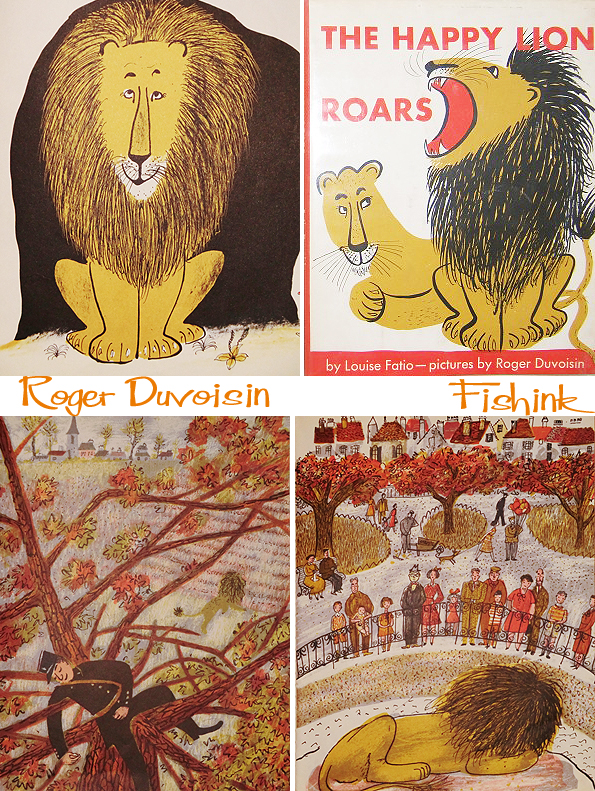

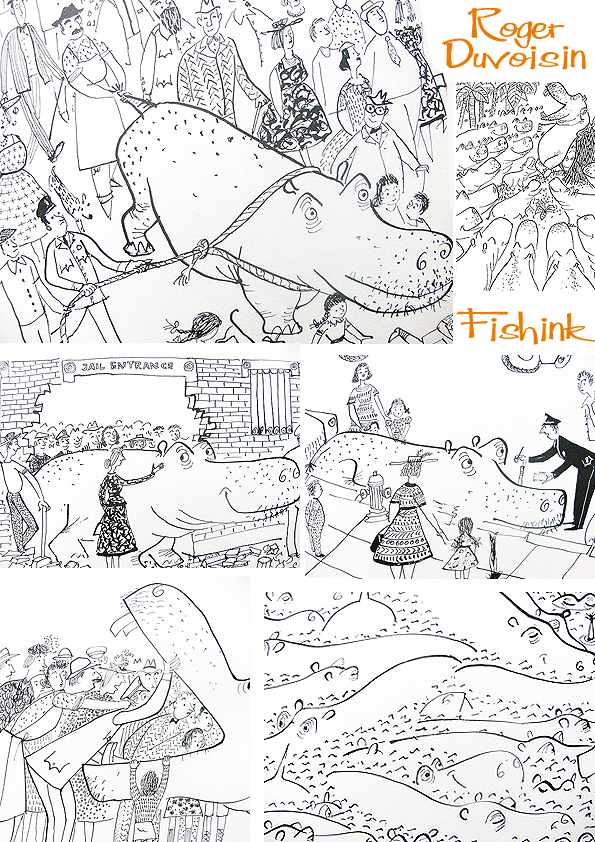
Veronica the Hippo.
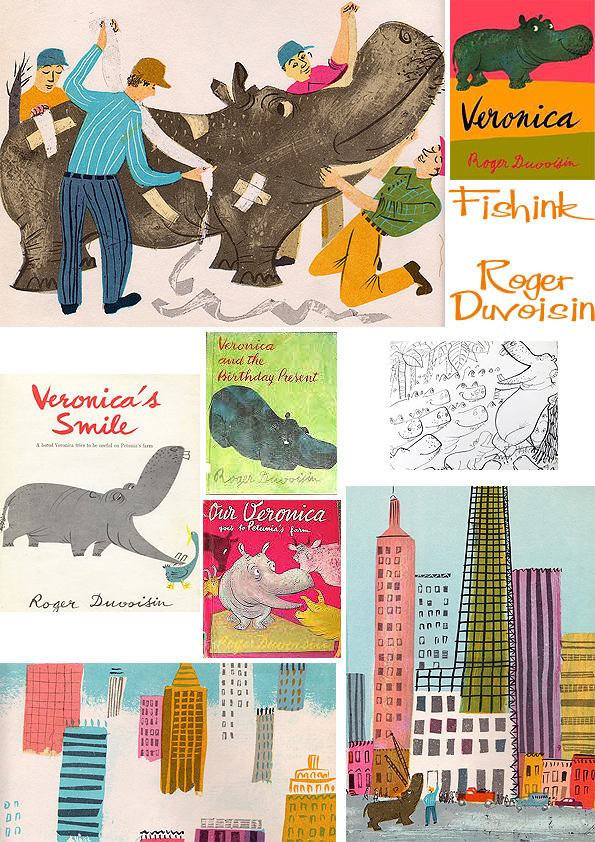
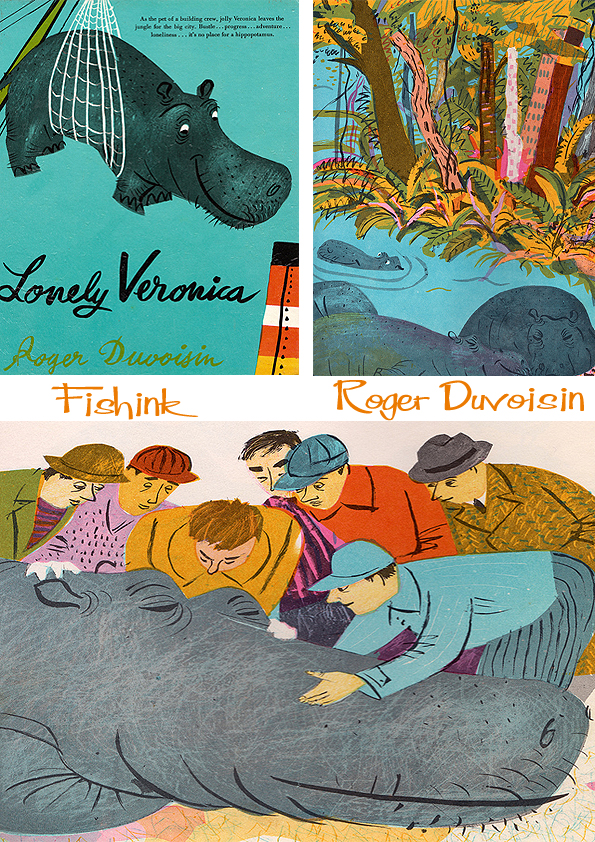
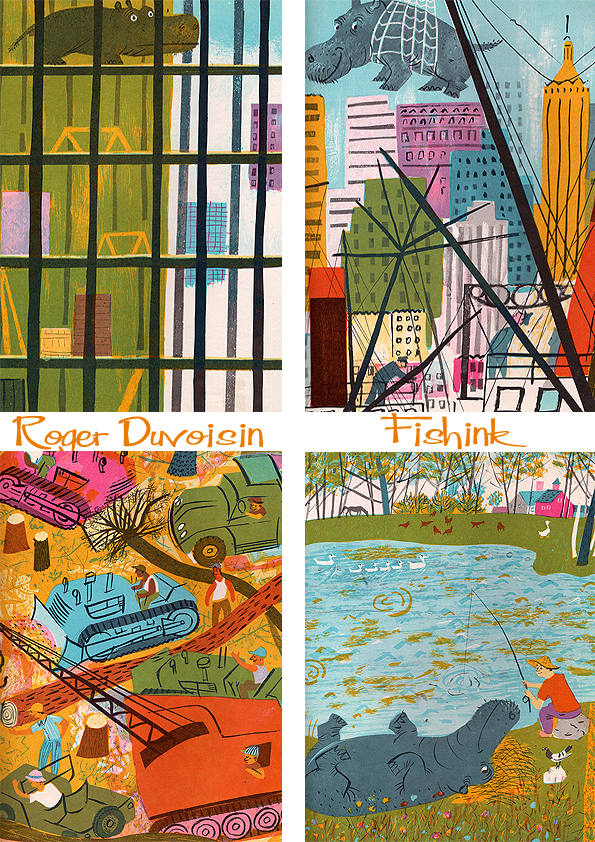
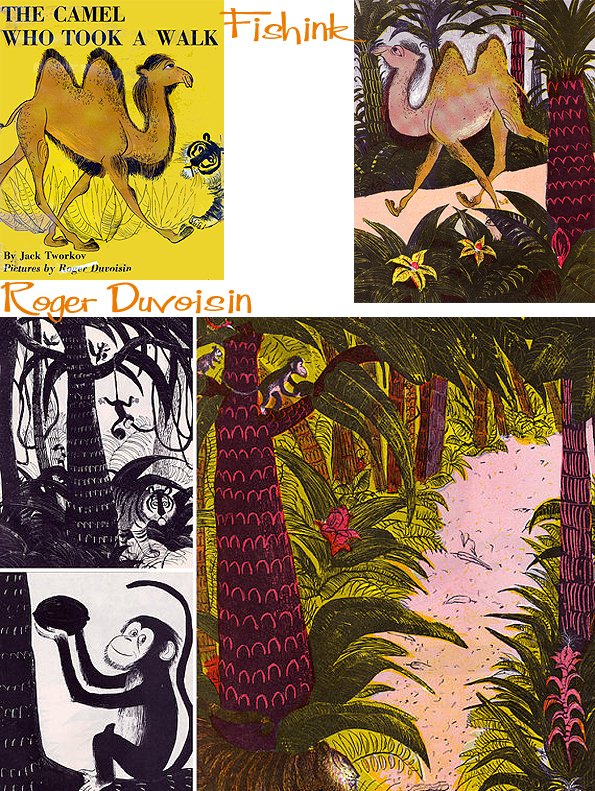
His work equally looks beautiful in black and white as it does in colour.
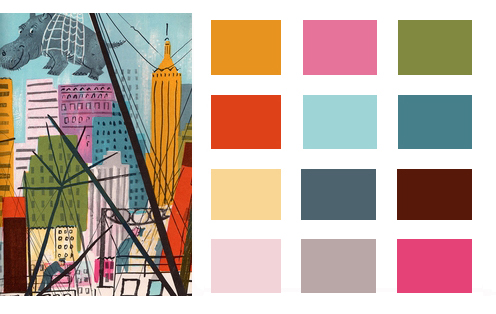
Roger had a great control of line and colour, for instance just look at his palette here. Superb !
More about Mr Roger Duvoisin and his incredible work in a couple of days. Many thanks to ‘ Through the Magic Door ‘ for their biographical details, helping to make this blog posting possible.

Sadly this is the final of the Germany based blogs, I hope you’ve enjoyed seeing them as much as I have in compiling them. Today we’re not in Munich as we are off to Salzburg on a two hour journey into the tip of the Austrian Alps. I spent the journey listening to Russian tones, spoken by the couple sitting next to me and reading this book with such a great cover.

Salzburg is the fourth largest city in Austria. We walked from the station, finding a route along the banks of the Salzach river with the stunning view of the city and it’s towering spires getting nearer and nearer. Even better with a touch of wintery sunlight.

The tall narrow shopping streets compete for light as well as tourist trade, and the churches and mountains rise up at either end.

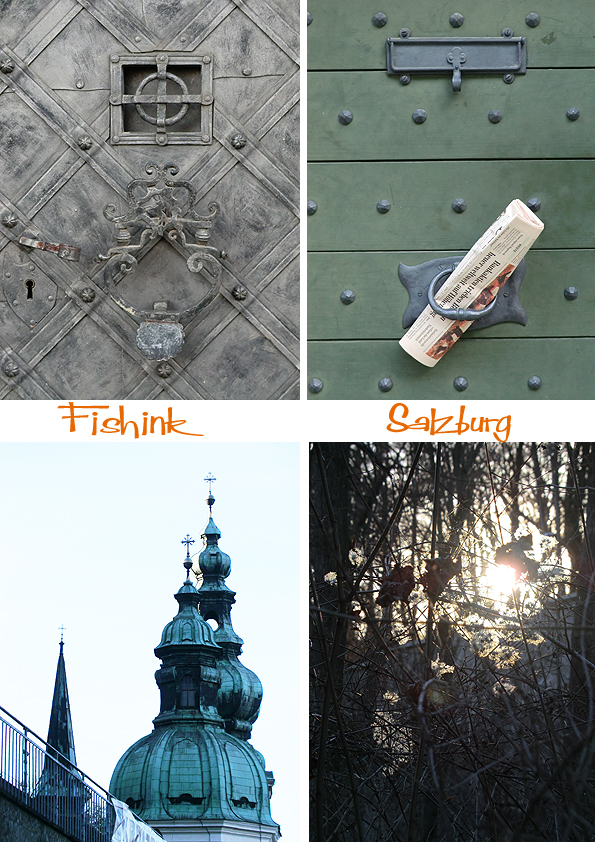
Some lovely details around the city streets.


Salzburg was the birthplace of 18th-century composer Wolfgang Amadeus Mozart. In the mid‑20th century, the city was the setting for parts of the musical and film The Sound of Music. Today it’s as much about MozartKugeln, chocolates, as it is about his tunes.
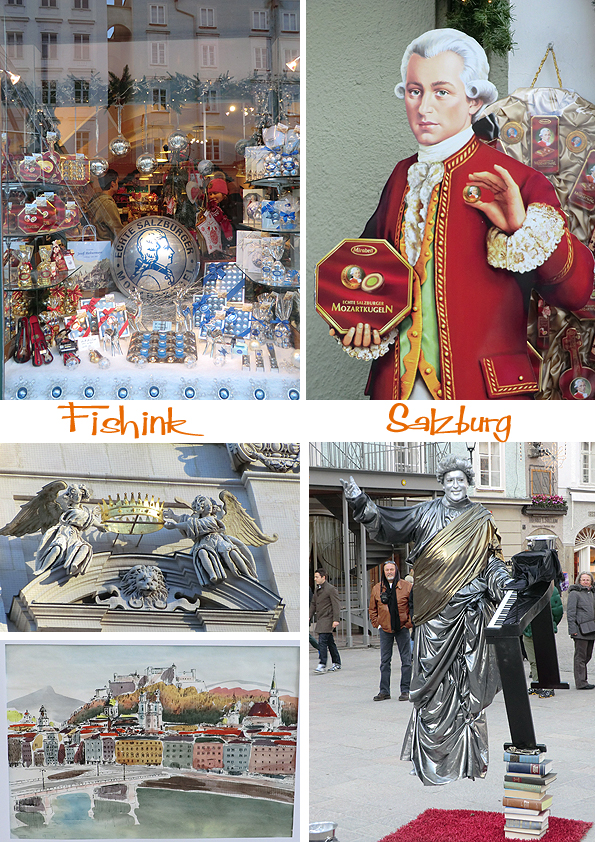
Rather than take the cable car to the view at the top we decide to walk up. You see so much more of the details that way.
You really get a feel for the great fortress Hohensalzburg Castle, which lies atop the Festungsberg mountain. Erected at the behest of the Prince-Archbishops of Salzburg, it is one of the largest medieval castles in Europe. Hohensalzburg was refurbished from the late 19th century onwards and became a major tourist attraction, with the Festungsbahn cable car, opened in 1892, leading up from the town to the Hasengrabenbastei. It stands today as one of the best preserved castles in Europe. During the early 20th century it was used as a prison, holding Italian prisoners of war during World War I and Nazi activists (before the Anschluss with Germany) in the 1930s.
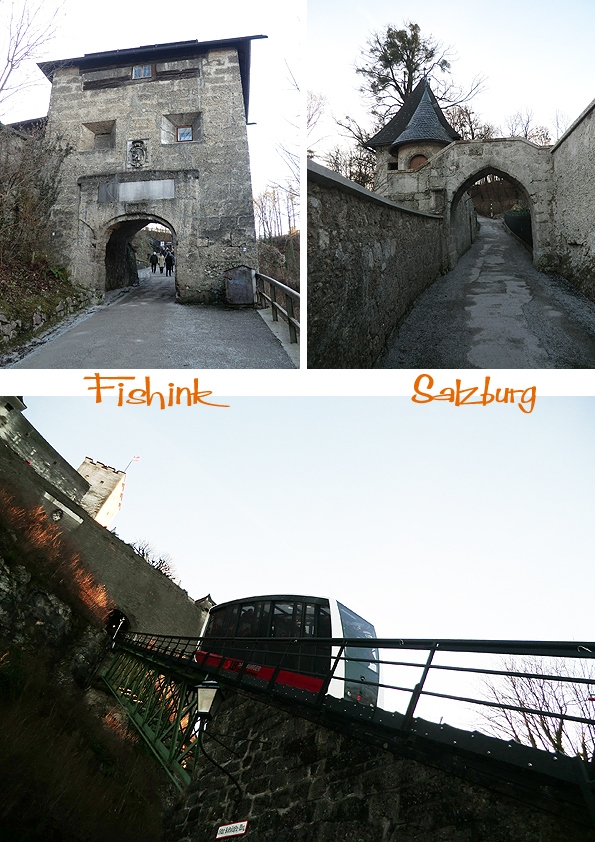

We didn’t go into the Castle, preferring to be outside on such a lovely day, and the views of it from the neighbouring hilltop and of the surrounding mountains were spectacular.

Of course like all good Alpine hill tops, after the walk up, when you’re thinking now wouldn’t it be great to just have a cup of something warm, you turn the bend and there’s a well stocked chalet style shop… wow, hot Gluwein in the hills and a lesson on how to to keep your tourists happy lol.
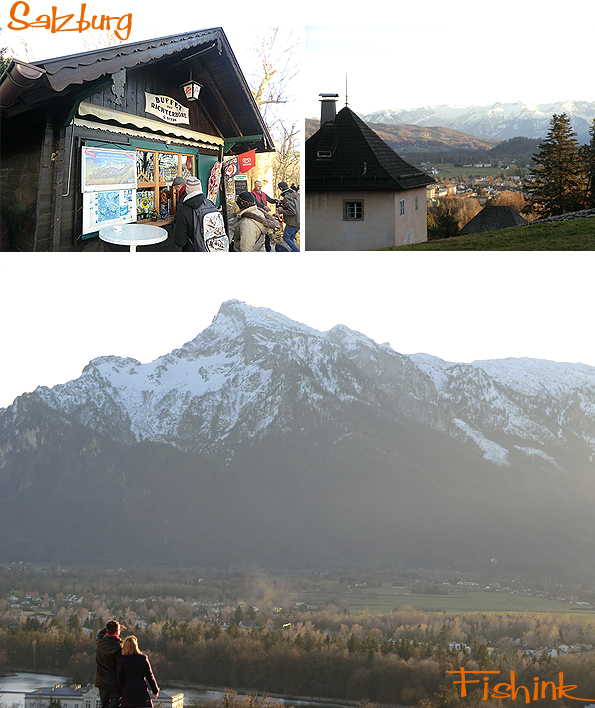
Not only are the views pretty amazing above the city, there’s also a modern art museum tucked away up there.


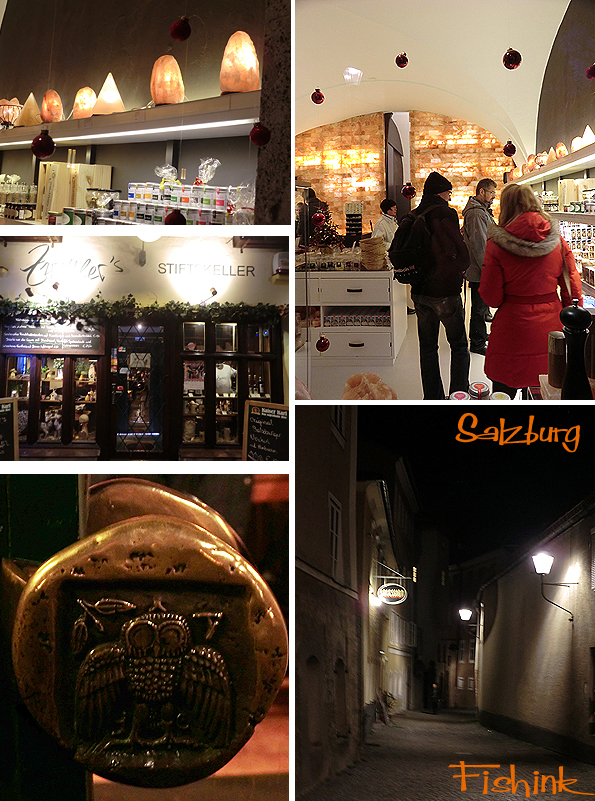
Of course I’d forgotten (until we saw this shop) that the name Salzburg literally means “Salt Castle”. It derives its name from the barges’ carrying salt on the Salzach River, which were subject to a toll in the 8th century. Salt rock lights are still popular the world over, this shop had a whole wall of salt bricks.

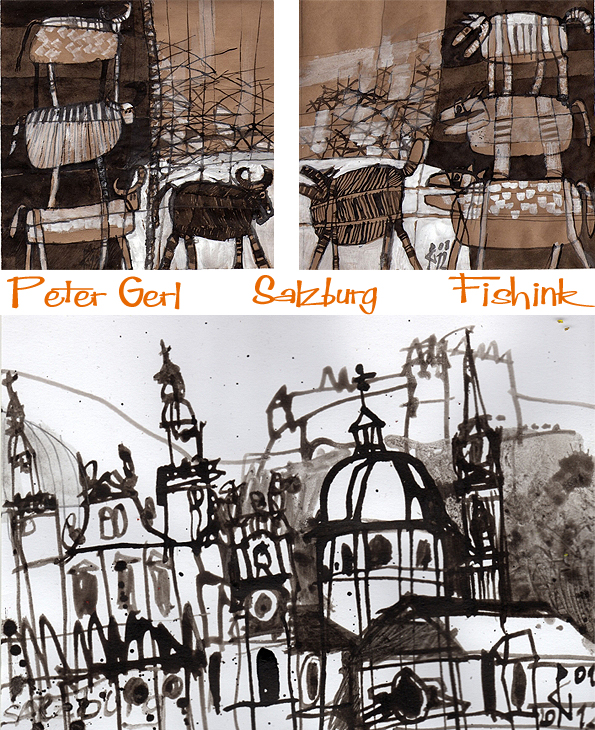
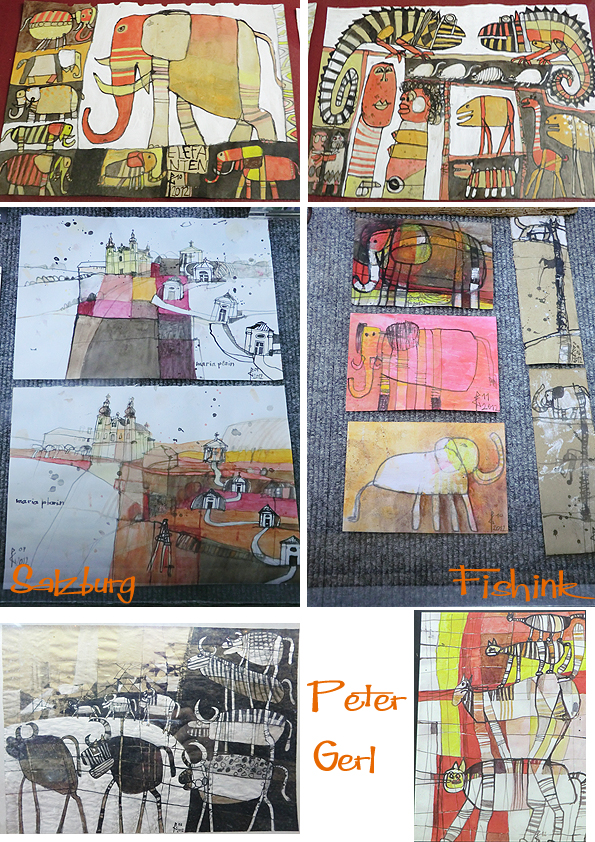
I stumbled across a closed gallery shop of the work of Peter Gerl.
The end of a wonderful day and a great 10 day tour of Munich and Bravaria. Hope you enjoyed the sights and delights of my trip too, Please let me know and pass on a link to this blog to your friends.

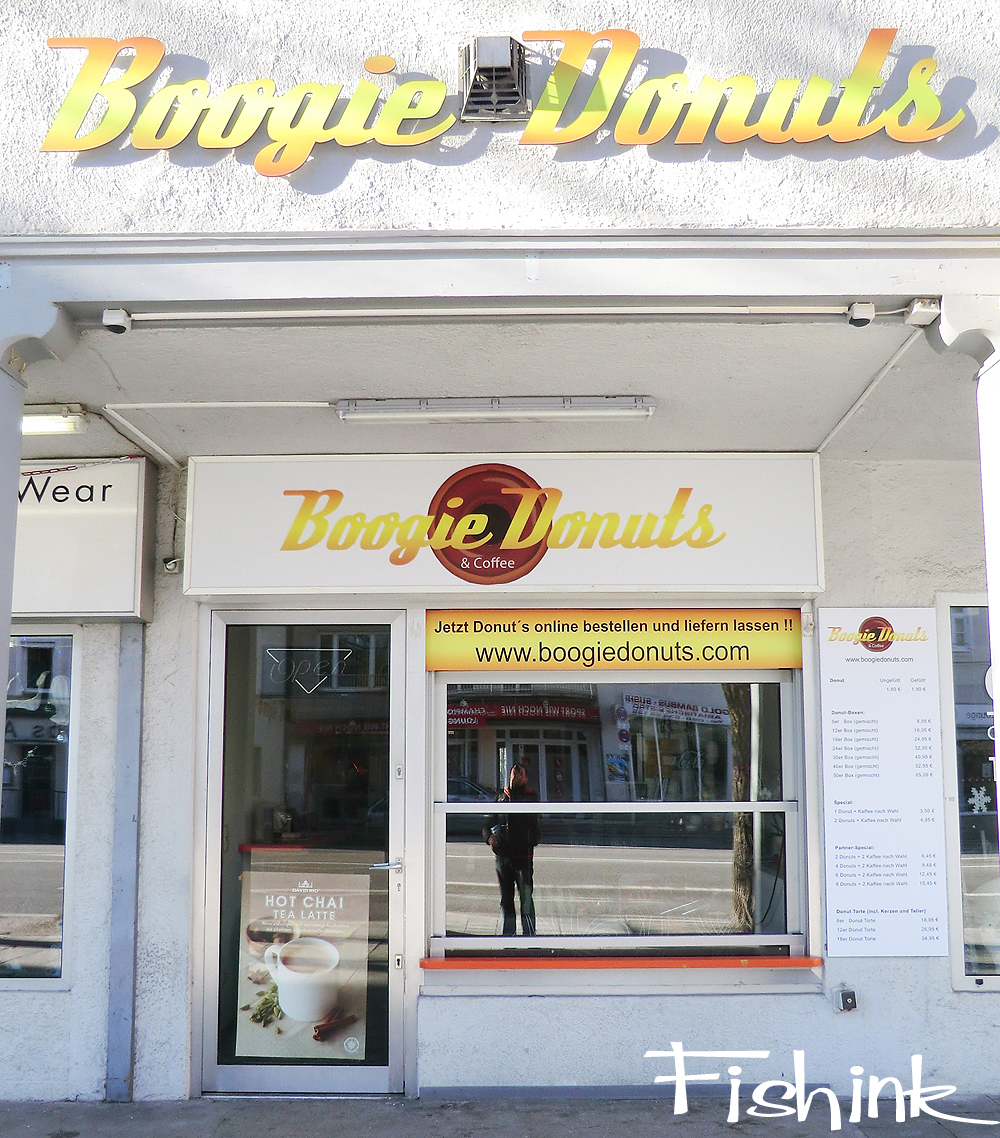
I came across this great shop in Pasing, near to where I was staying. Pity it was closed over Christmas, I was keen to check out a few dance moves whilst having a cake or two, shucks another time perhaps : ) .
Munich’s (Spielzeugmuseum) Toy Museum was on my list of places to see.
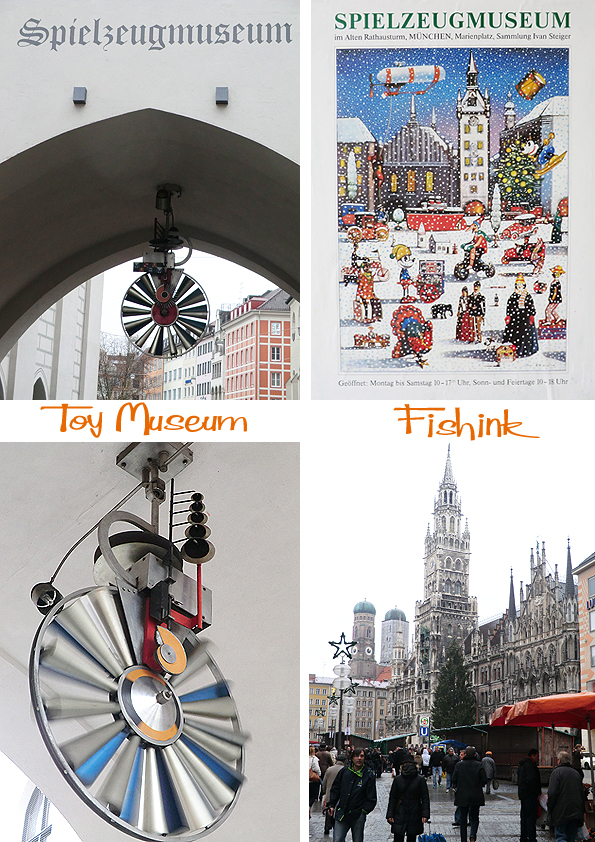
The “museum” is just next to the Marienplatz and Market and is located in a special and historical old building, the old City-Hall tower. Perhaps a little overpriced for the four euros per adult and you do have to climb the spiral staircase to access each small room that the cased toys are displayed in, but overall I did enjoy the half hour that it took to look around. There were old tin toys.
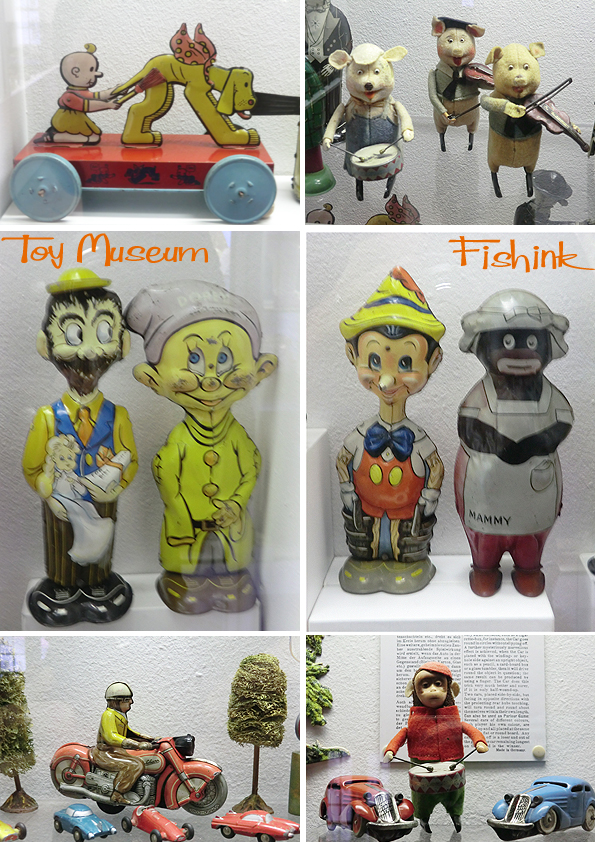

Toys for Boys.
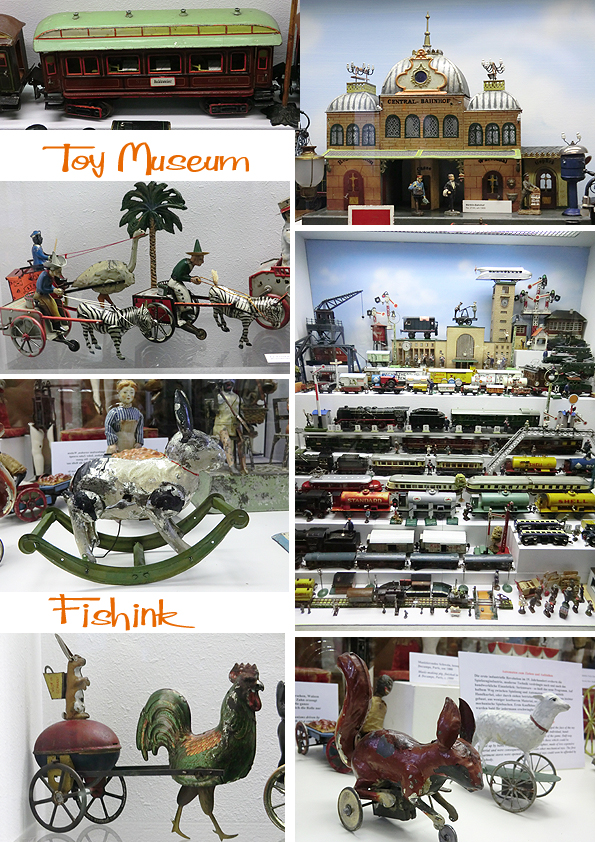


Toys for girls, ok the red Indians got a bit lost here amongst all those Barbie dolls !
 \
\
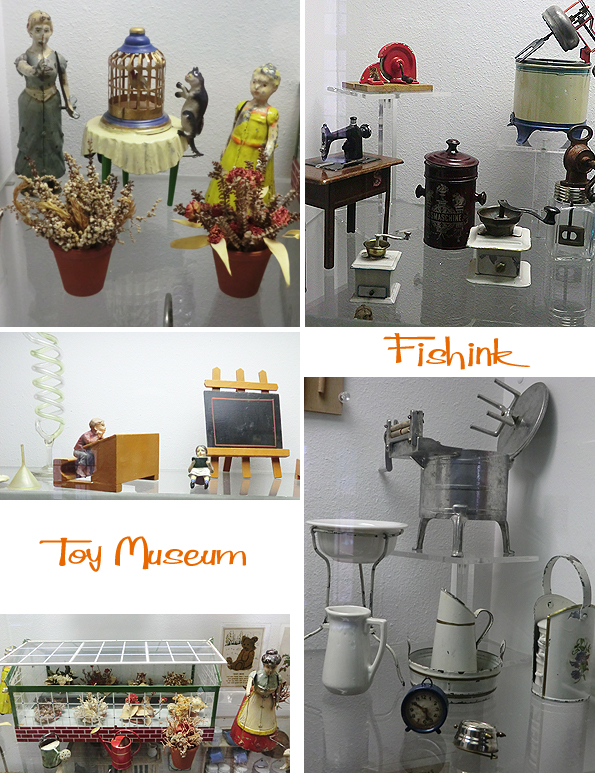
Toys about Space.
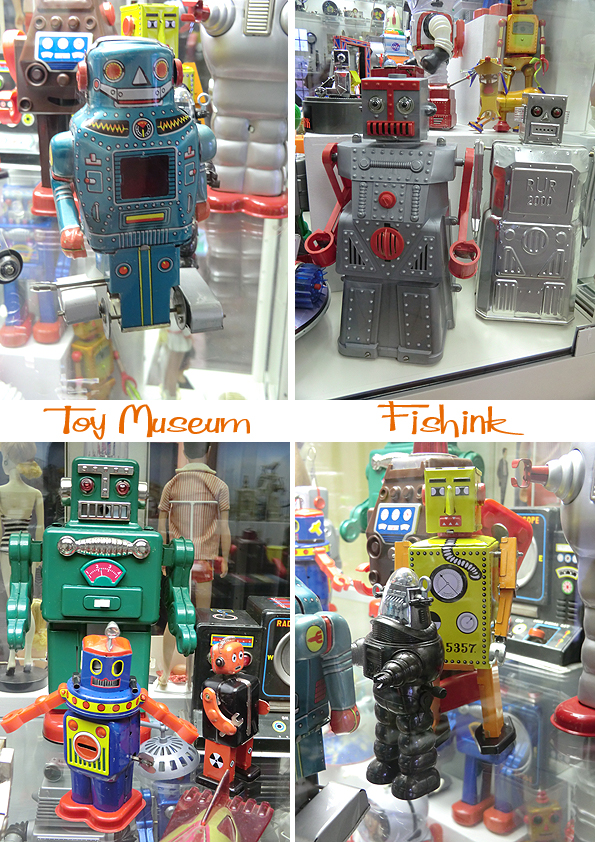
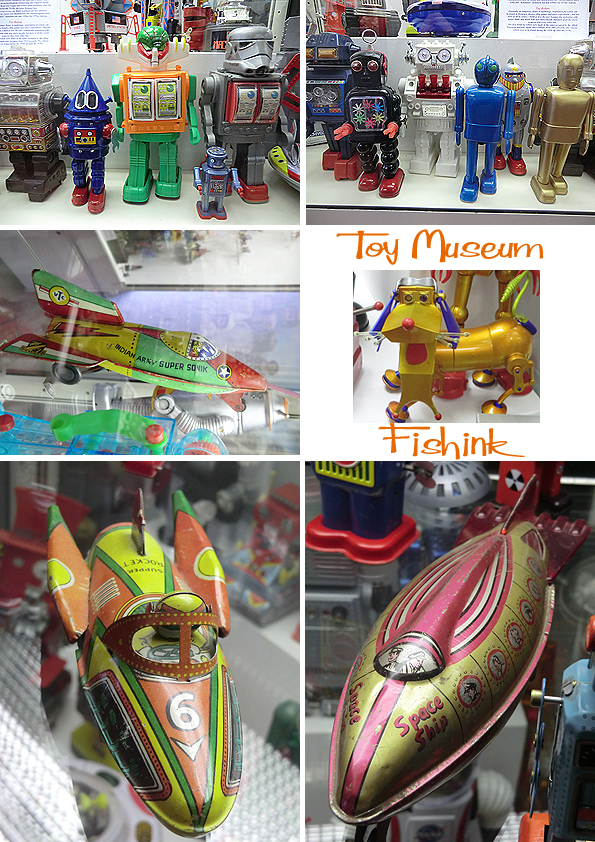
Toys for all ages, from all ages.
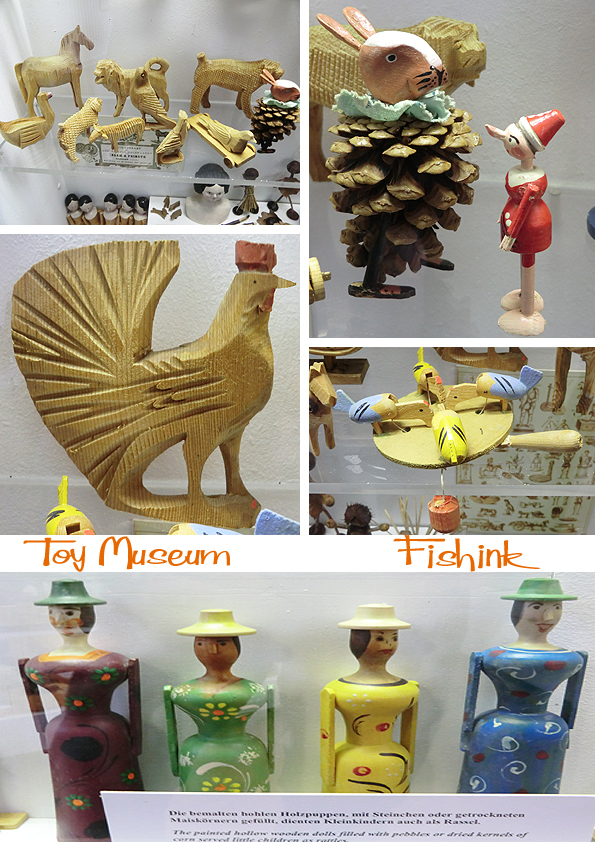
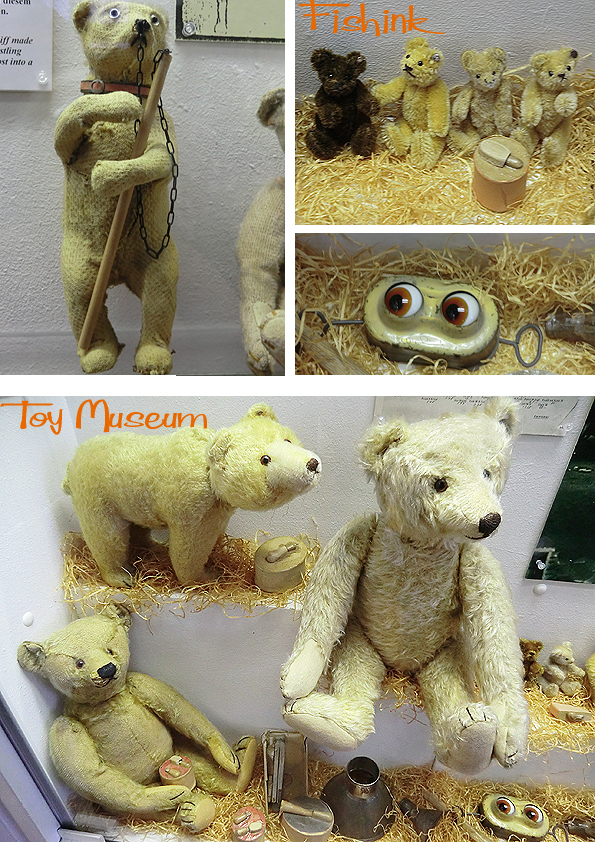
A few recognisable favourites too. I had to laugh when a couple came into one of the rooms with their small dog and it barked at the teddy bears in the glass case. They were so embarrassed they couldn’t make it stop, until they left the room. I did wonder what the dog was thinking.

Outside and just around the corner is the Viktualienmarkt or Food market, with some lovely fountains… and tasty food too !


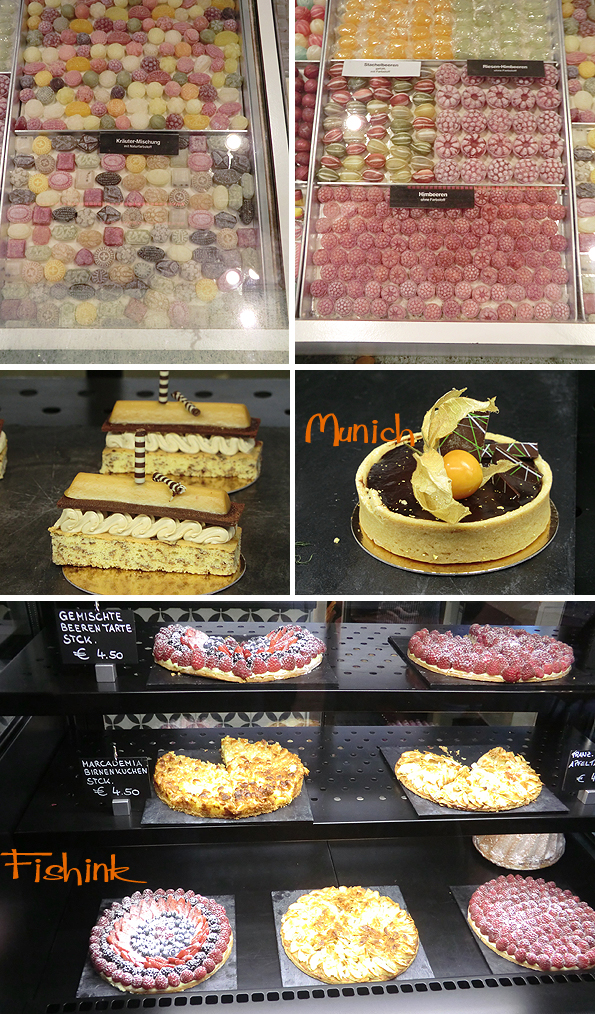
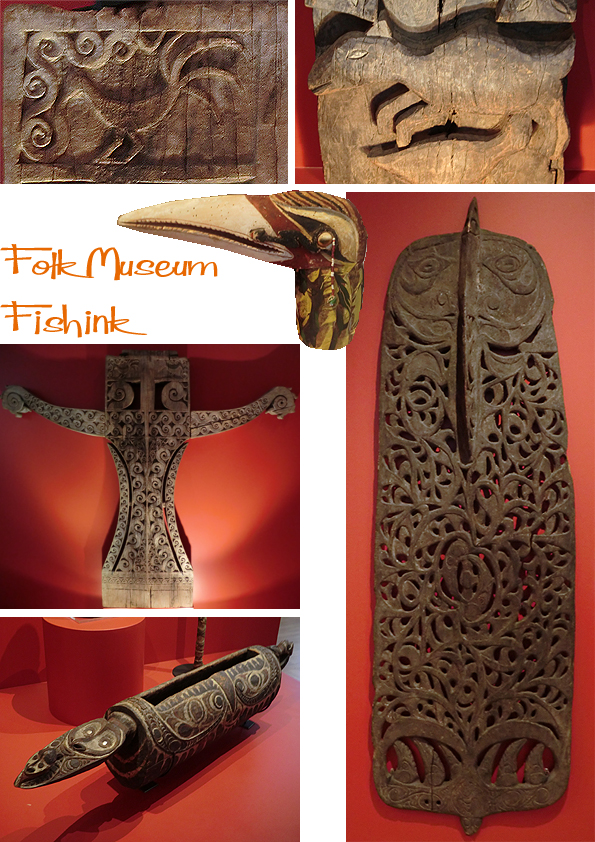
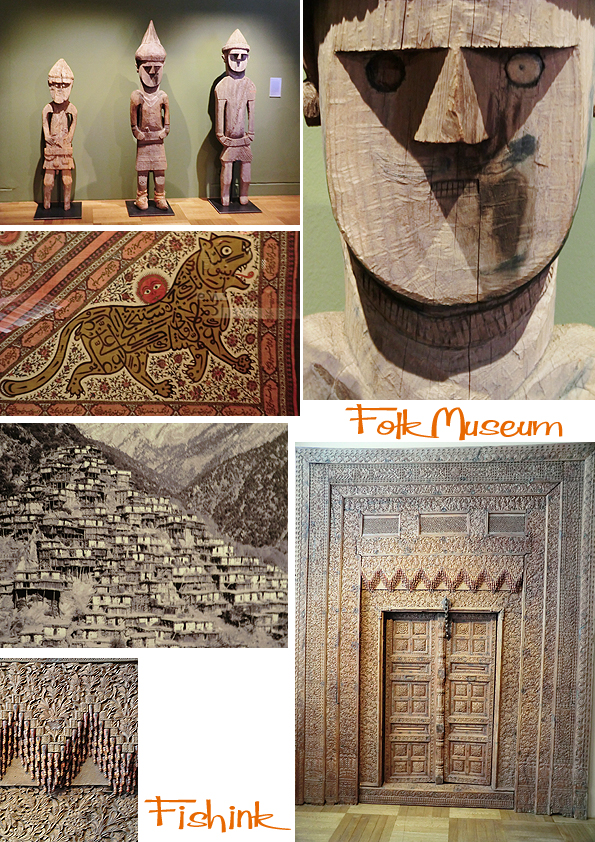
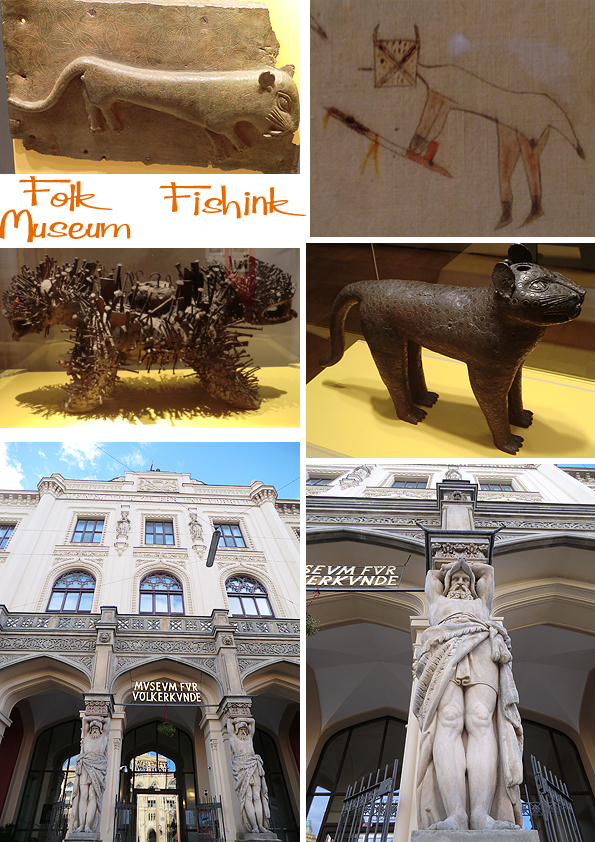
Another place on my ‘to do’ list was the Staatliches Museum for Völkerkunde (Ethnology). It shows the similarities and differences between cultures from Africa, America, Asia, Australia, the Near and Middle East, the South Seas and Europe.

It was quite inspirational to see such beautifully crafted and decorated artefacts from so many countries all in one place. Visiting on a sunday you get to enter most of the Museum for just 1 Euro, a real bargain. There was so much to see, I tried to concentrate on animal imagery in my photographs, but kept getting distracted by the wealth of other interesting objects on show.
I liked the ‘gritted teeth’ facial expressions on these wooden warriors and the amazing detail in these carved door frames.
These Vessels from around Peru were lovely. Such quirky figures too.


Beautifully carved pieces from the colder regions.


These african characters were wonderfully expressive.

Well worth a trip, I even wondered if Jim Henson who created the Muppets had been there too. Can you see the similarity between his Big Bird and this African mask lol

Joking aside, I thought this would be a great time to introduce to you the sculptural work of Robyn Gordon.

Robyn spends her time immersed in the culture and country of Africa, where she creates her wooden art pieces.

Robyn says ‘I am an artist living in KwaZulu Natal, South Africa. As a child on the farm I loved the outdoors. I loved to touch and feel nature in my hands. The smoothness of acorns and pebbles, the roughness of pine bark, the hollowness of birds nests …. anything tactile under my fingertips. At a young age I commandeered my mom’s unused carving chisels and I found that I could create many tactile qualities in the wood by chipping, gouging, whittling and sanding. This was a thrilling discovery! Now I carve wooden totems and panels, incorporating wire, beads and found objects. Through my work I tell the story of my life in South Africa. The niche carvings hold objects that are of the land, symbols of Africa and symbols of my British ancestry. The totems “speak” of legends that have been passed down from one generation to the next. They are meditative pieces which bring me a great sense of peace. It is an added joy when other people feel this quality in my work.’
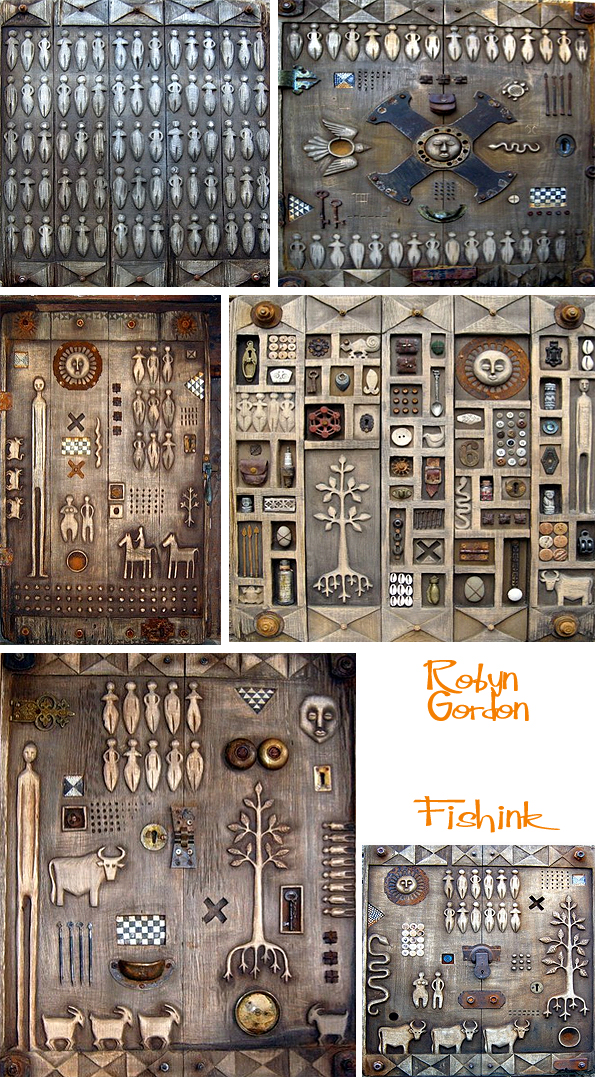
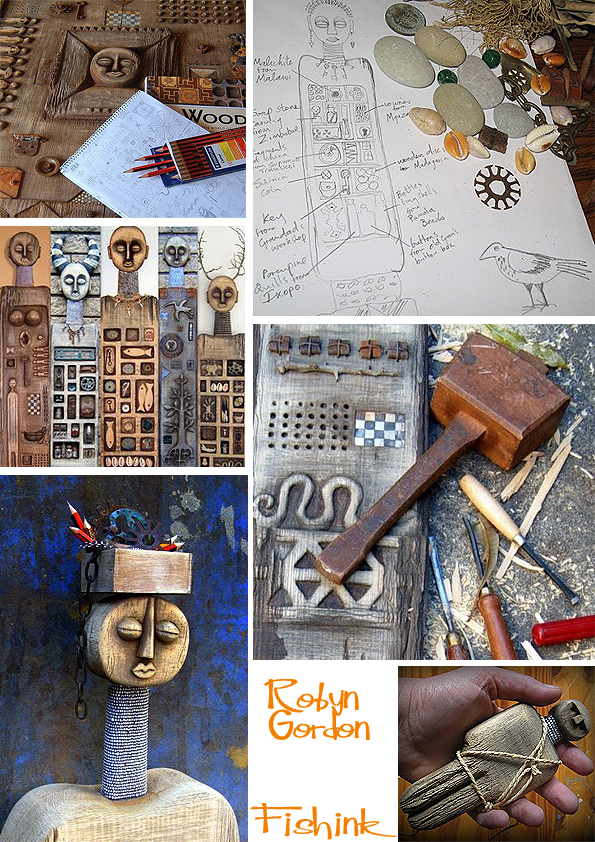
Art is Robyn’s passion and when she’s not creating art she’s thinking about it.

Proof of that comes in the form of Robyn’s great blog called Art Propelled or her site on Pinterest.

Robyn’s advice to anyone starting out as an artist today would be ‘ Experiment, Explore, Experiment, Explore! Don’t be afraid of making mistakes. Follow those inner nudges to do the art that calls out to you. If only I had had someone to tell me this when I was starting out. It took years before I lost (most of) the fear to create the art I wanted to create.’ Such beautiful and inspiring work.
The last part of the Munich posts following soon.
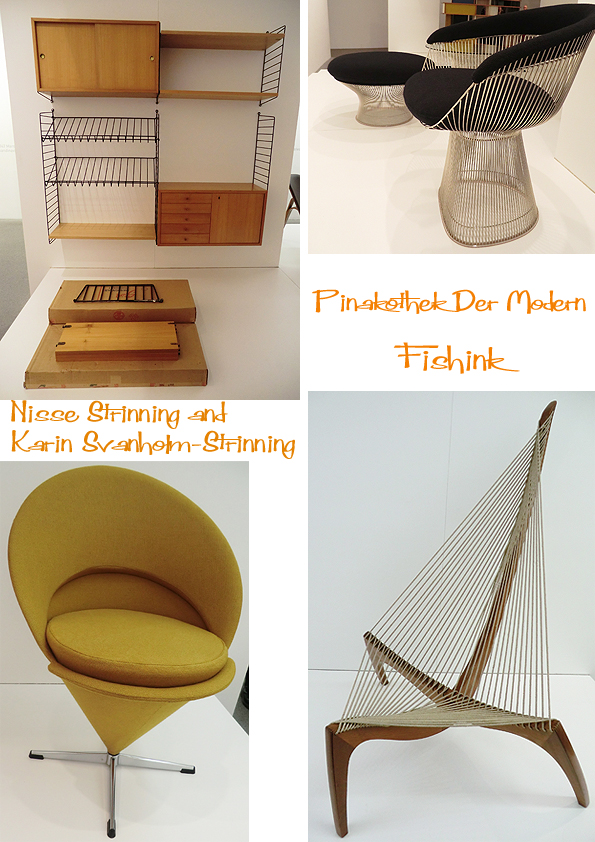
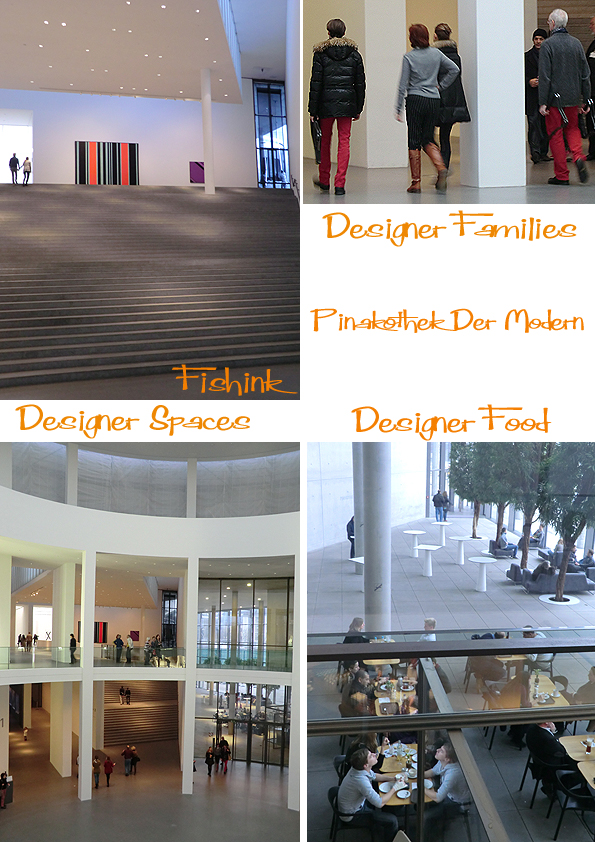
Designed by German architect Stephan Braunfels, the Pinakothek der Moderne was finished in September 2002 after seven years of construction. The $120 million, 22,000-square-metre building took a decade to finish because of bureaucratic objections to design and cost. It was worth the wait as the style and design of the building is truly stunning.

I liked the idea behind the Museum, there isn’t a lot to read, just the name of the designer, perhaps the year the item was created and the rest is left for you to view and appreciate. Some amazing views from room to room, as well as the collection itself.
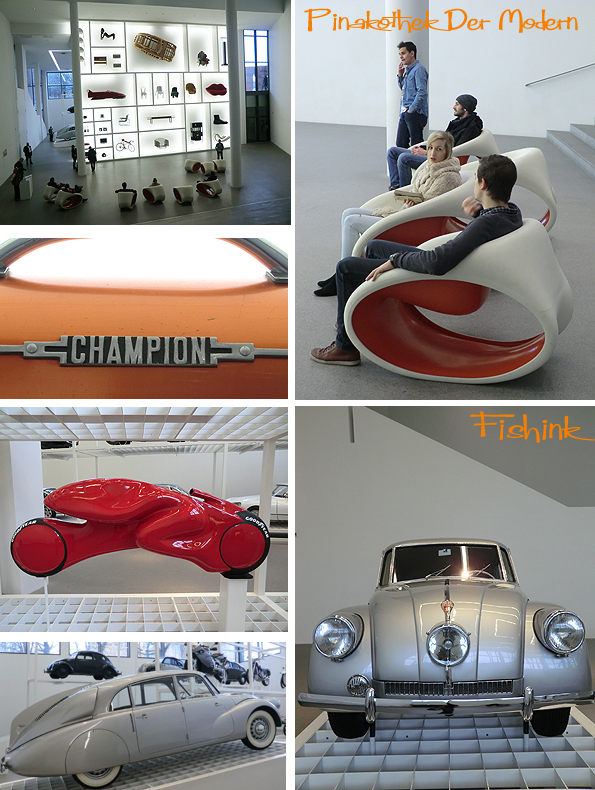
Even the staff have passed the design test, I’m sure this Jo Brand look-a-like was supporting a Minnie Mouse hairdo, superbly styled. The spacing between the items and their simplistic layout worked so well, giving you time to breathe and appreciate the beautiful design, whether a piece of furniture, ceramic, or perhaps a mode of transport.

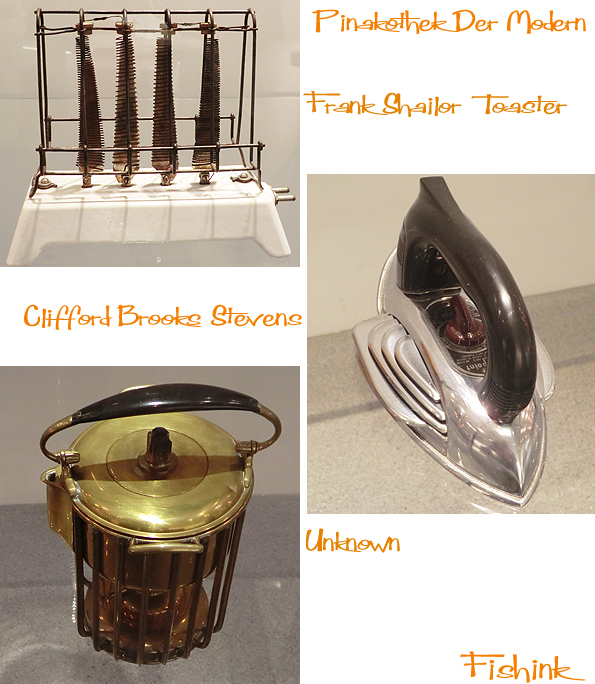
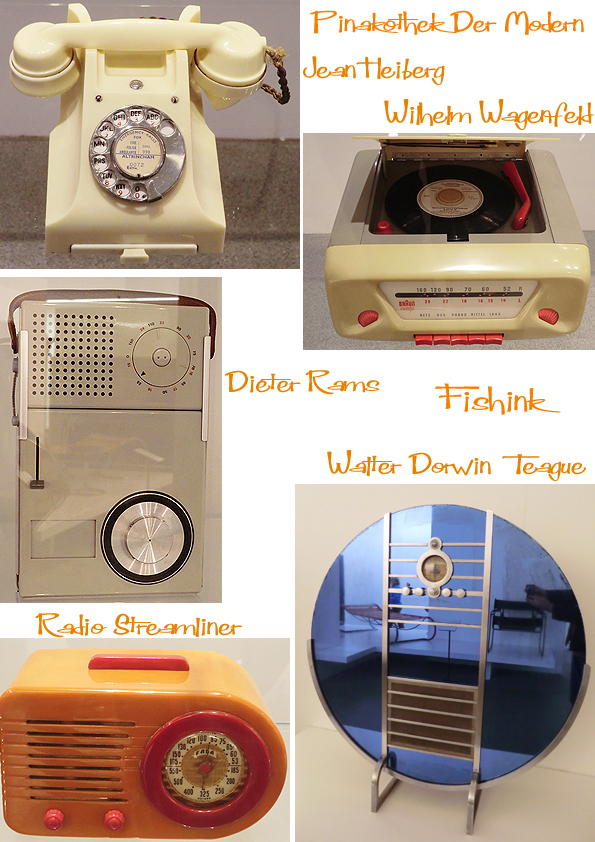
Some of these shapes, colours and styles of course appealed to the mid-century designer in me. Beautiful wooden seats and a very early version of flat pack shelving… those Swedes !


There was a whole room dedicated to jewellery alone.


Whilst walking around the Museum, I was constantly struck by it’s wonderful construction. The uncluttered, and often colossal viewing perspectives and the number of design-led devotees that it attracted.
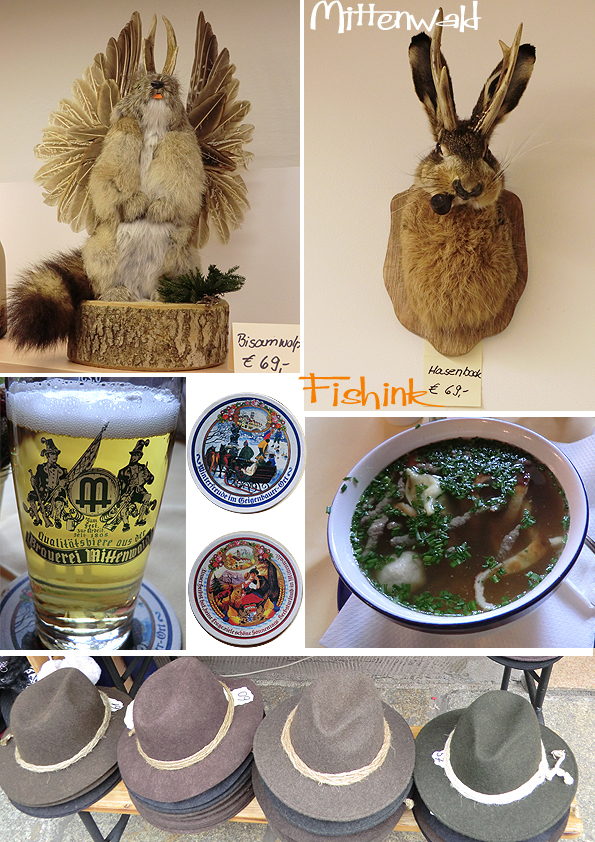
From the new to the old and an secondly in the blog today an amazing trip to Mittenwald, well known for it’s manufacture of violins, violas and cellos, which began in the mid-17th century.
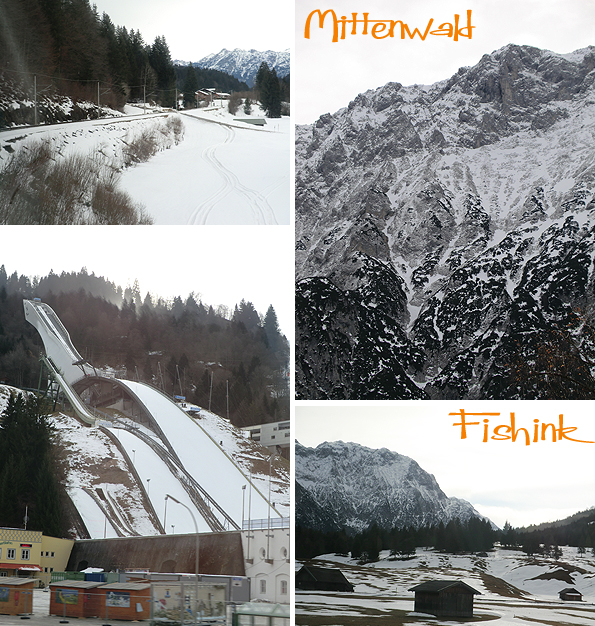
It was the first real sight of snow during my trip to Munich and viewing the Bavarian Chalets nestled together with the Alps forming a striking backdrop was quite a stirring sight. The centre is elaborately decorated with religious themed frescos. I loved the way that they made quite ordinary windows appear so grandiose, simply through the use of a painted surrounding frame.
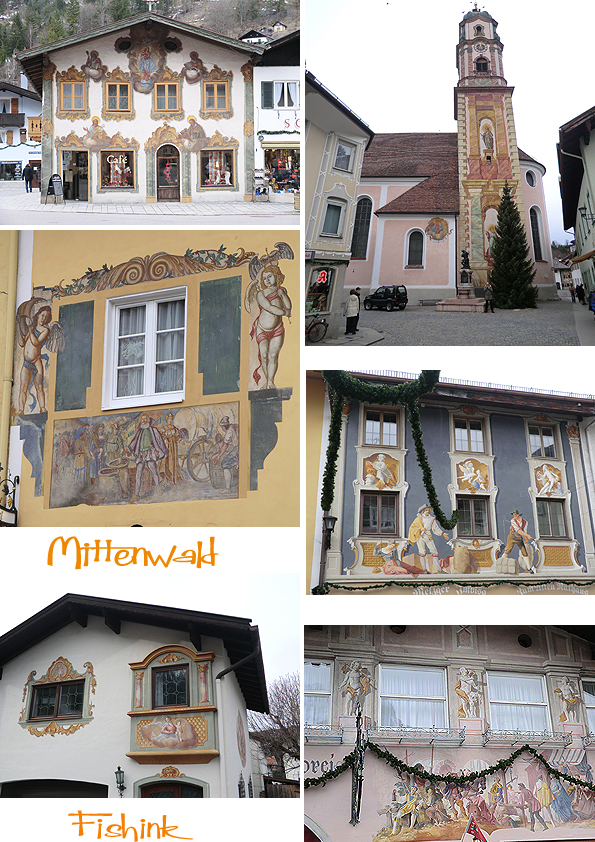

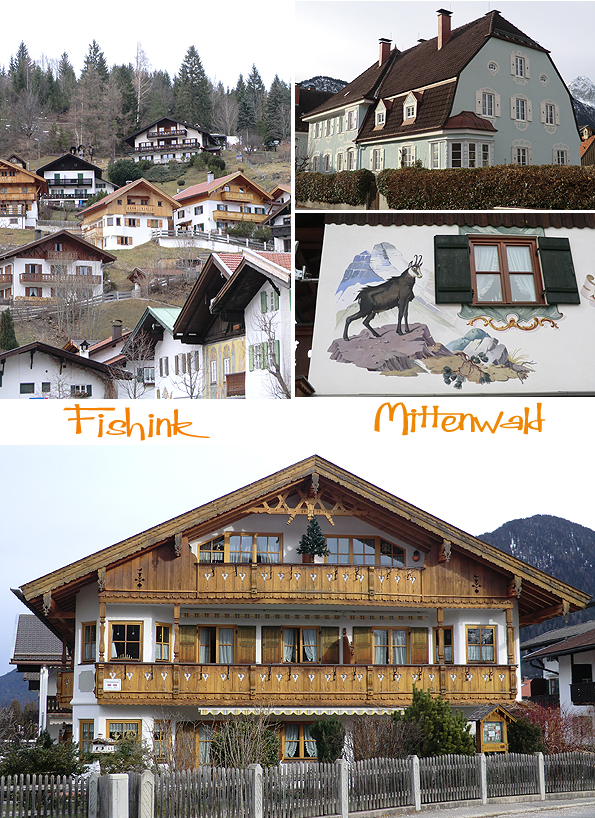
The Churches looked more like something you might find in Russia, than Germany, and the clean white walls and painted beams gave them a simplistic beauty of their own.

Elsewhere in the surrounding area, the creative wooden sculptures and self made christmas decorations, continued to catch and delight my eyes.
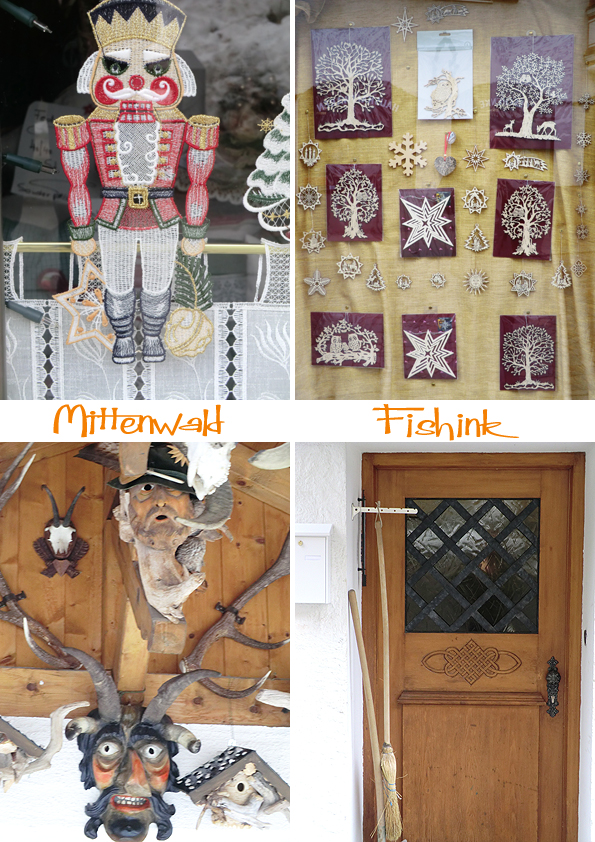

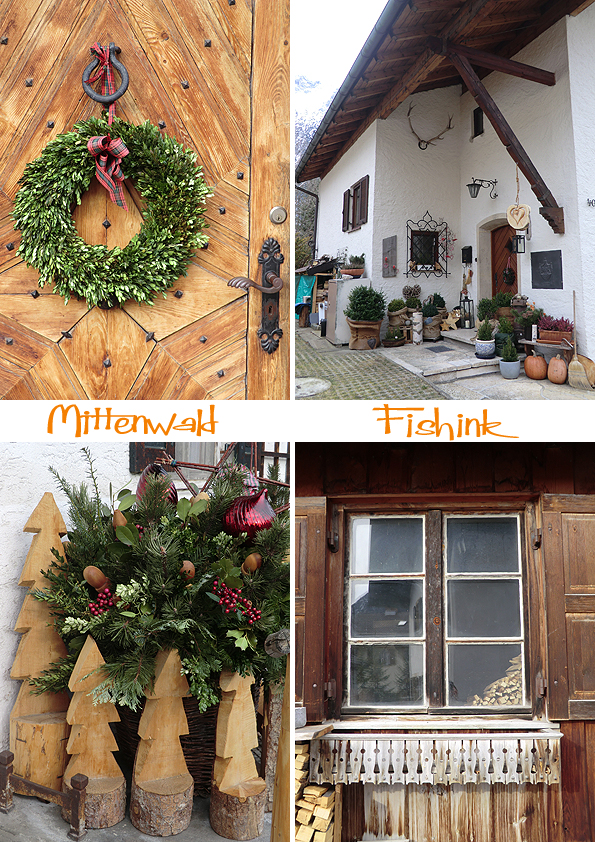
They do have some rather odd local species tho and the most bizarre soup I’ve ever had, consisting of a watery base, strips of pancake and meat with a cake like sponge in the bottom. Three courses in one bowl !
Walking a little further out of the centre, we discovered a beautiful track leading up through a snowy forest trail. We we’re so lucky to spot this deer and even luckier that it stopped and posed for long enough for me to get a photo of it … how kind.

The path turned into a metal trackway and spanned across the ice blue, watery canyon below. It was a little spooky moving on the walkways as you could see right through them, and (more importantly) down to the bottom of the valley, hundreds of meters below… gulp. The views however were worth risking our necks for.

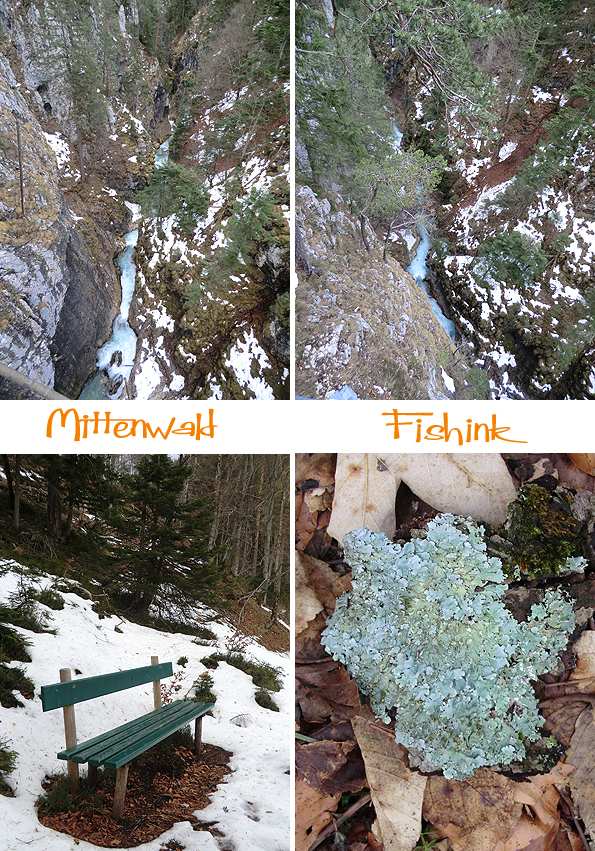
The Alps looked amazing captured in the frosty sunlight, Mittenwald was a definite highlight of the whole trip for me and well worth the picturesque hour and a half from Munich to get there.

Images from the Munich Toy Museum and Folklore Museum to follow soon.
Tollwood is a winter festival, centered around energy, recycling and world circus style acts. I was lucky to sample a morning of the huge display tents and stalls and there’s plenty to see and browse around for free.

The tents are pretty huge inside. It took me 30 mins of brisk walking, just to see the stalls in this one tent alone ! Plenty of quirky recycled goods and foodie treats from all over the globe.

A few random shots of travellers and colourful German folk.
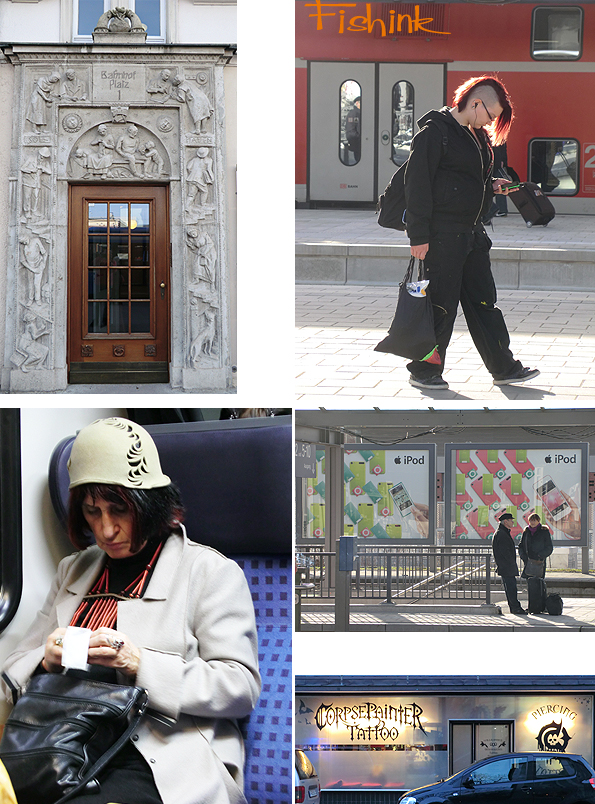
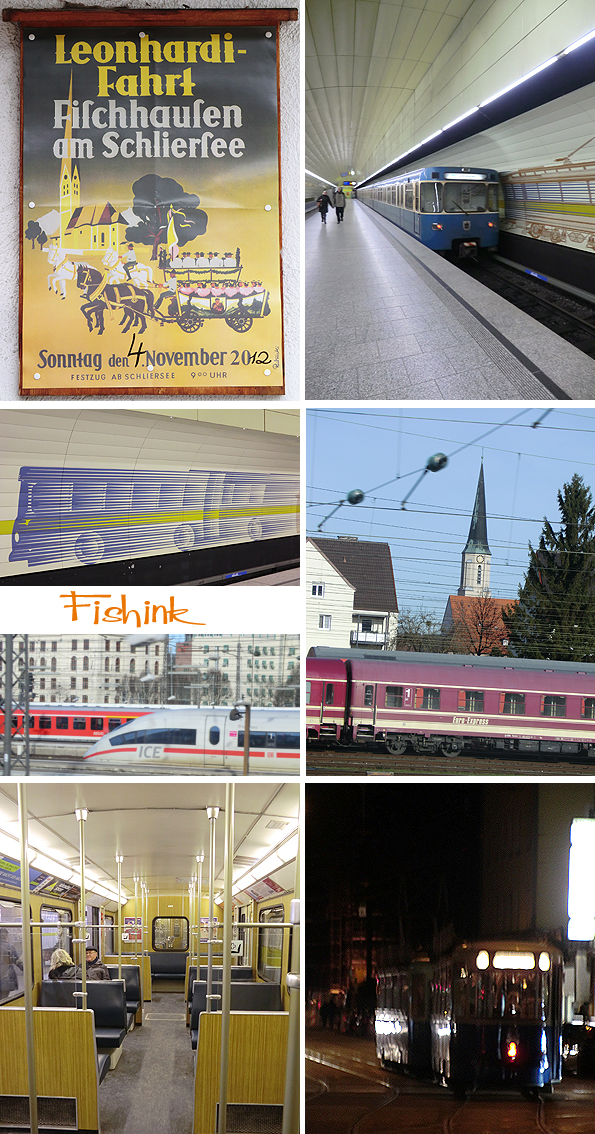
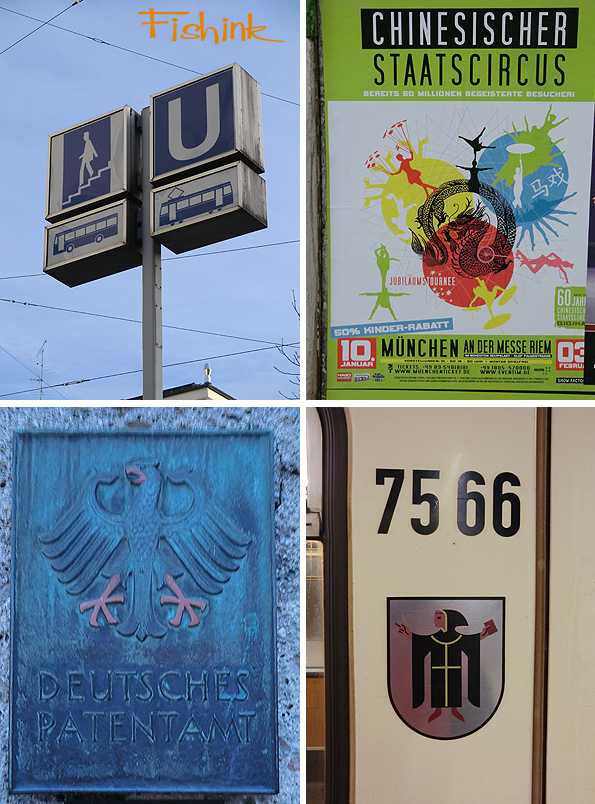
Fun times travelling on Trams, Buses, Trains and seeing all the decorated stations.
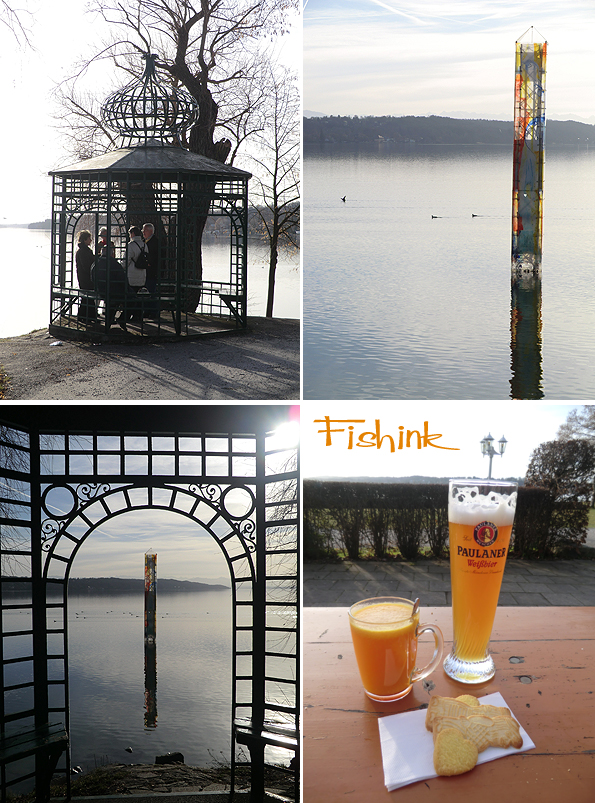
Another afternoon we went to Starnberg Lake, some 30 km south-west of Munich. ‘Crazy’ King Ludwig II of Bavaria mysteriously drowned in the nearby lake at Berg, on the evening of 13 June 1886. I’m glad to say that things looked pretty tranquil whilst we were there. The lake, or glacial hollow, was created by ice age glaciers from the Alps, and extends 21 km (13 miles) from north to south and has a width of 3-5 km. In 2007, Starnberg regained its status as the wealthiest town in Germany.

You can walk for miles around the lake, as the path squiggles inland and back to lakeside from time to time. It was frosty day so I stopped for an orange Gluhwein drink, it certainly warms you up as you gaze across to the snowy Alps.

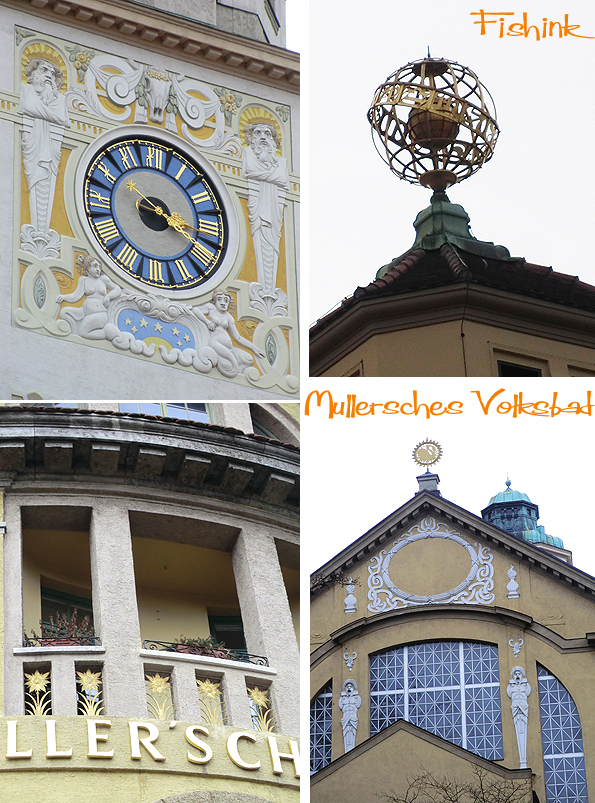
Finally, I wanted to share this great tip from a German friend of mine about a little known gem. The Müllersches Volksbad is a magnificent art nouveau swimming complex. This bathing temple on the Isar opened its doors in 1901. The engineer Karl Müller donated the building to the city of Munich on the condition that it built a pool for the poor. Almost all of the notable historic details have been preserved true to the original thanks to painstaking, elaborate craftsmanship.
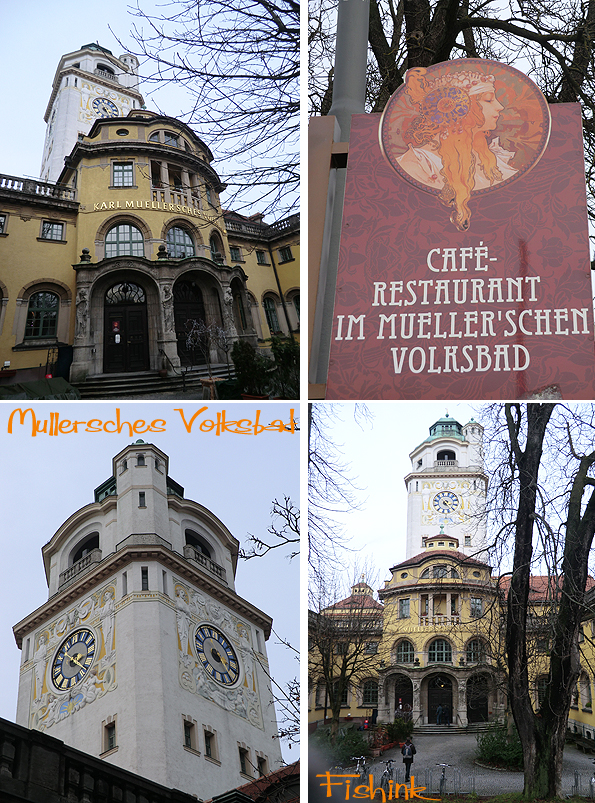
The detail is stunning and although you can’t look into the pool without going to swim, the building and cafe are well worth the walk along the river.
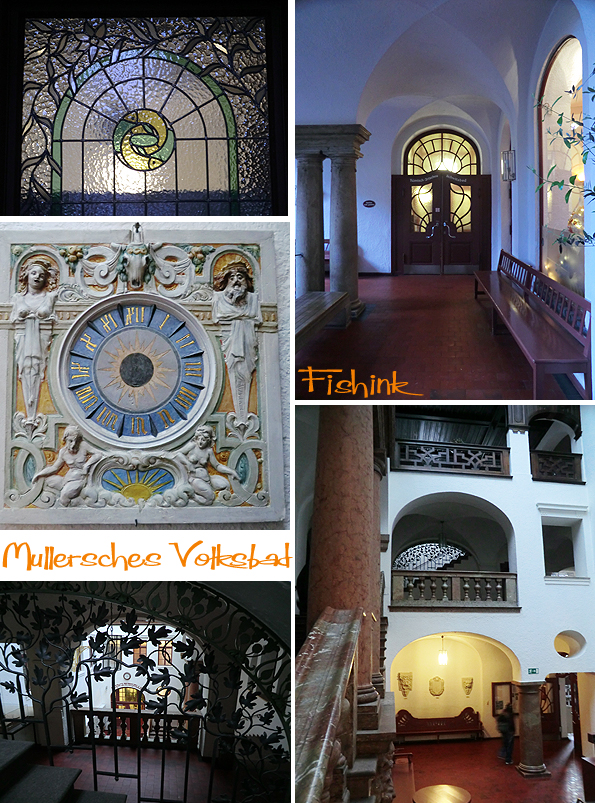
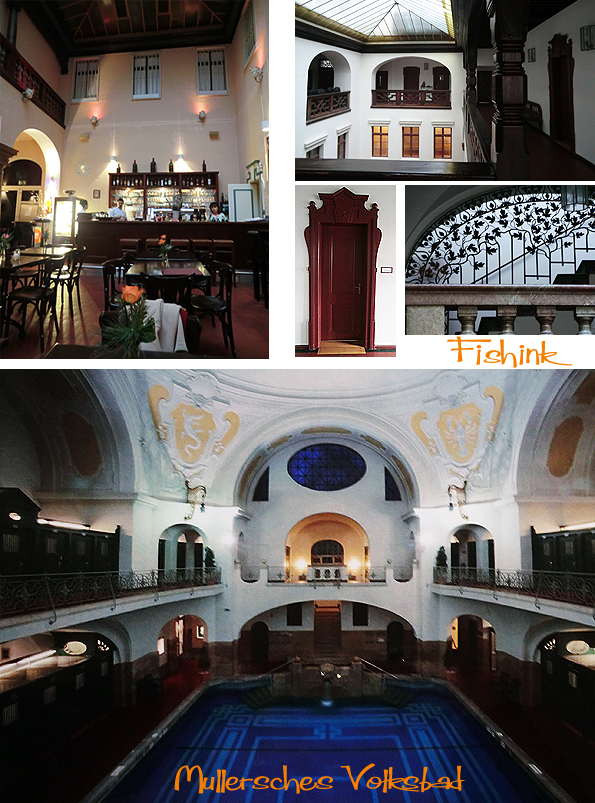
For more images of the interior, have a look here. More about Munich’s Museums coming soon.
Fishink in Munich Part 2 Doors, Churches, Walks and Graffiti

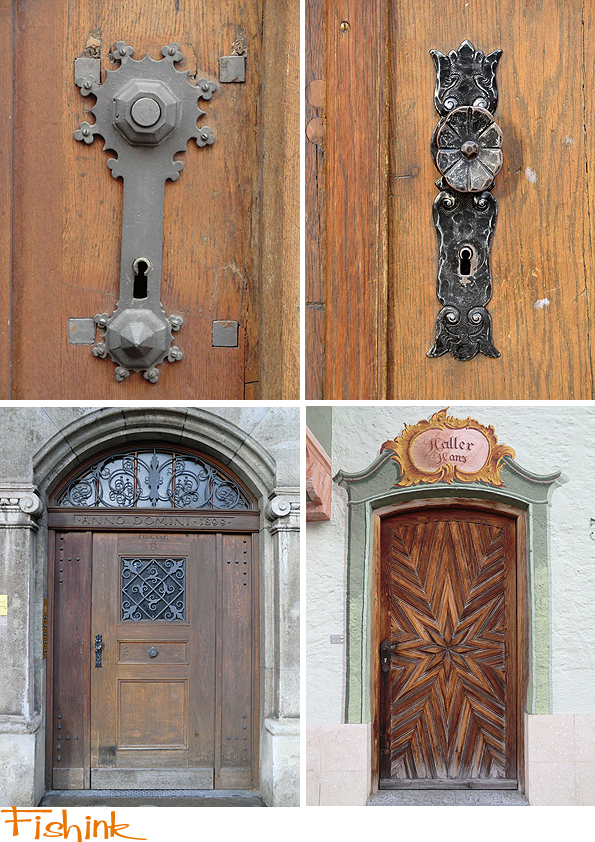
Having just spent ten days in Germany I captured many inspiring sights and objects that I thought I’d share with you. Like these lovely doors, locks and handles.

Being based near to Munich, it would have been rude not to pop into Munich’s Frauenkirche, whose two spires rise to almost 100 meters, built in a gothic style it is one of the largest hall churches in southern Germany.

The story behind the footprint (above) is that it was left in the church by the devil himself. Allegedly the architect, Jörg von Halsbach, made a pact with the devil in order to finance the construction of the church. The catch was that he wasn’t allowed to include windows. Well, upon seeing the church with its stained-glass windows, the devil got excited about acquiring his newest victim’s soul. But when he got inside, von Halsbach led him to a spot where, because of the design of the pillars, the devil couldn’t see the windows—despite being able to see light. The devil, in his frustration, stamped his hoof so hard that he left an imprint in the floor of the cathedral. The stained glass panels were colourful, and beautifully designed.
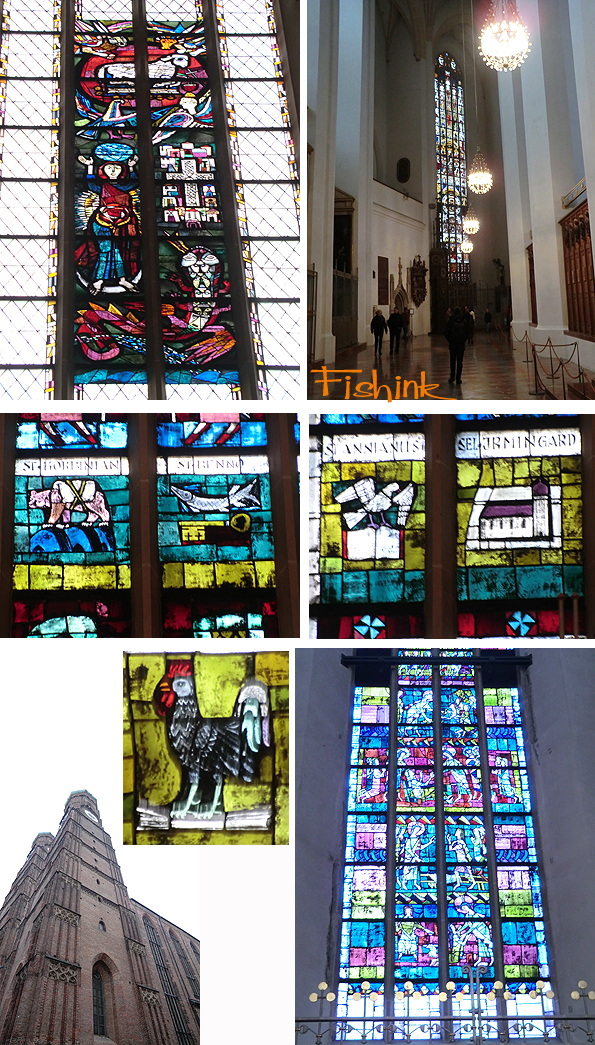
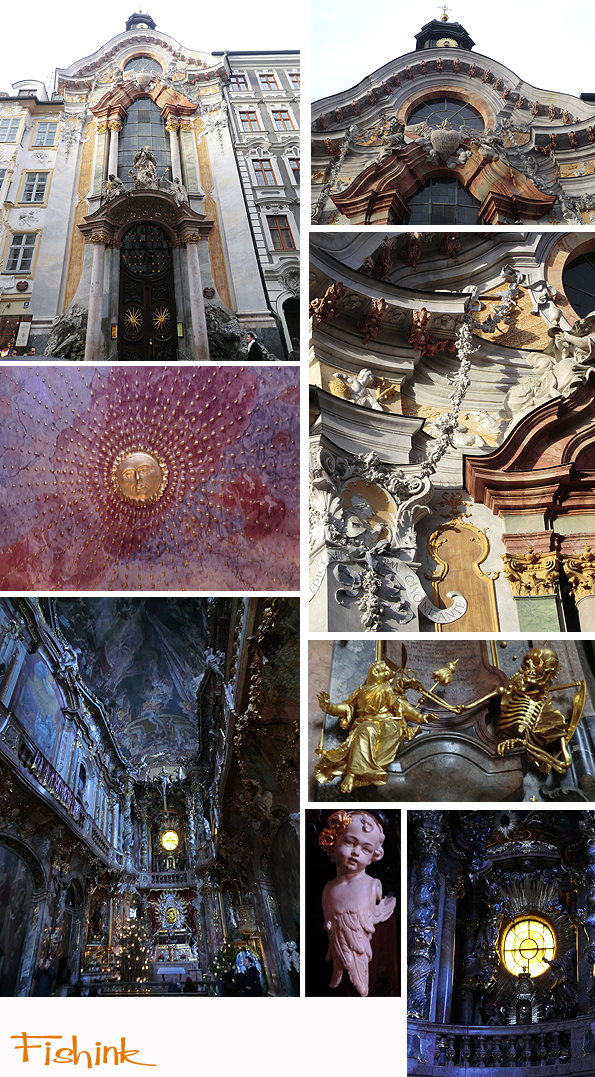
Continuing on the church theme, the church of St Anna and the Asam Church are featured below. The latter being one of the best examples of Baroque OTT that I’ve seen to date.

Here’s a few other stained glass pieces I saw in some of the more traditional drinking houses.

Whilst doing a few day walks, I discovered that there’s a small section of the Eisbach, (an artificial stream that runs through the English Garden, Munich’s largest public park), where it’s possible to surf. I kid you not, and took these images to prove it.

Another afternoon spent walking around the royal summer palace of Nymphenburg.

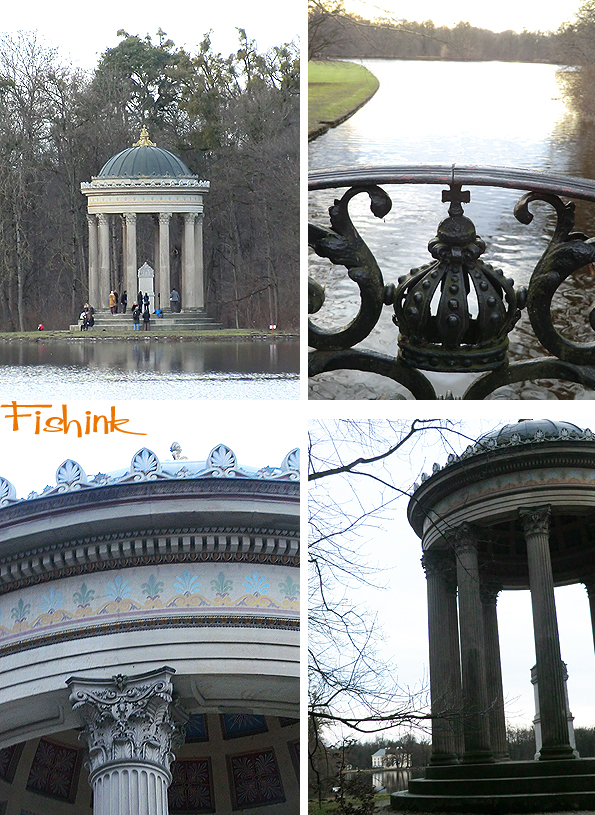
Lucky to see it in such a warm early evening light.

The apartment we stayed in had a lovely huge oak tree outside it’s windows and even though we were on the fourth floor it towered above the block. Allowing us to spot a whole host of furry and feathery friends. I’ve not seen this breed of squirrel before or a woodpecker this clearly.

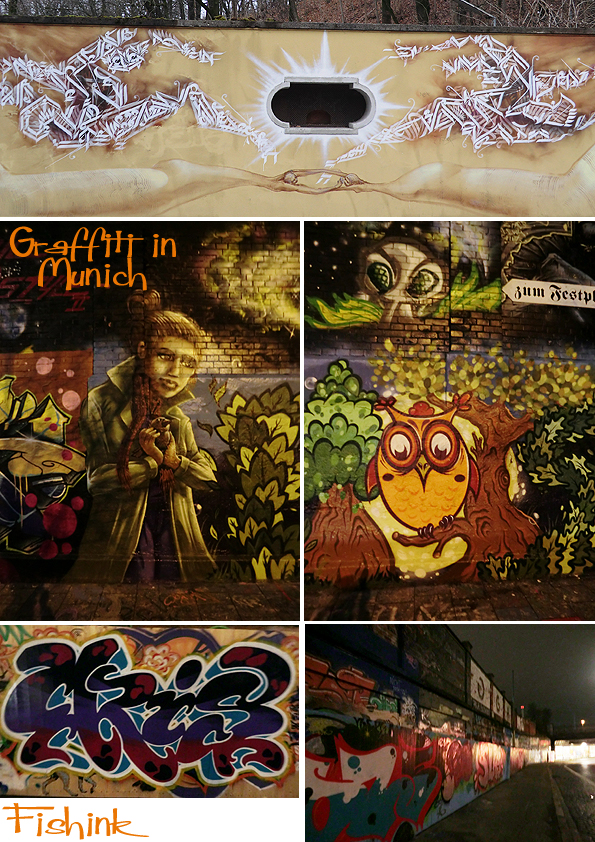
Here’s a little Graffiti imagery from Munich. Some captured around the Mullersches Volksbad (Art Nouveau Swimming Pool ) near Rosenheimer Str. 1, 81667 Munich

and the rest is on Tumblingerstraße, near the Schlachthofviertel. To get there take the U3/U6 to Poccistraße or Bus 131 towards Klenzestraße / St.-Maximilian, exiting at Tumblingerstraße. I would recommend seeing them in the daytime, as the light is better and the area feels a little ‘edgy’ in the evening. More Munich news to come.
Fishink in Munich Part 1

I’m not the sort of person who believes in making new year resolutions, partly because I feel that I should be setting myself new aims and goals at anytime of the year. I also think they’re probably more likely to be maintained and not forgotten about that way. However one thing I’d really like to do in 2013 is to bring Fishink Blog into the homes of even more like-minded folk, and you can all help me do this by sending a link to your friends, spread the word on your own blogs and twitter or Pinterest, Blogger sites and tell others about my blog that you think would like it. I’ve also just received my 1000th comment today which is great thanks and keep them coming, together let’s make this year the year of the Fish 🙂
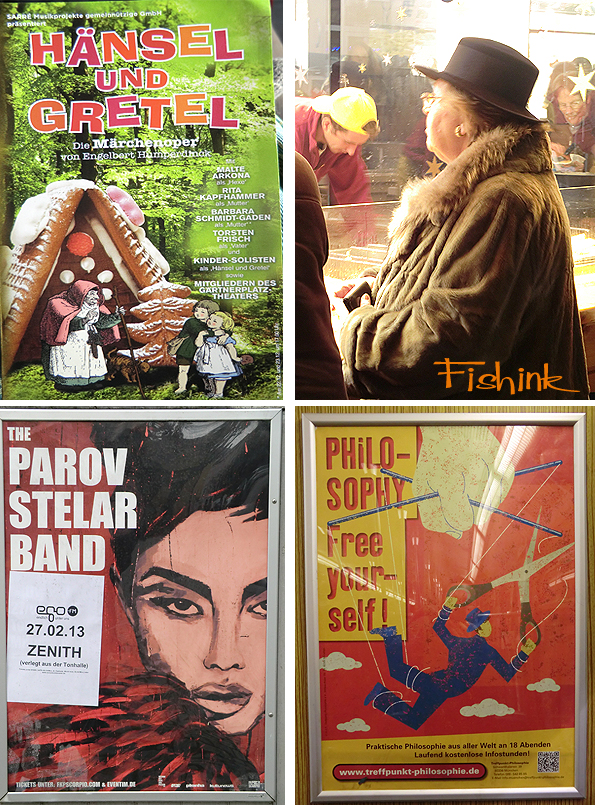
I found this retro styled poster in ‘Pasing’ shopping centre where we stayed, I like the colouration and simplicity of it.

Ok, I know you are possibly all christmassed out by now, but before you throw out the tree and pack away the baubles for another year, I’d just like to share a little of the sparkle I encountered in Munich with you. The main market is full of stalls selling all manner of things for your tree, crib and christmas decoration collection. You can get a pair of new wings for your angel or fairy, a new baby Jesus in all sizes or a ceramic rabbit for your tree top, whatever takes your fancy really. !
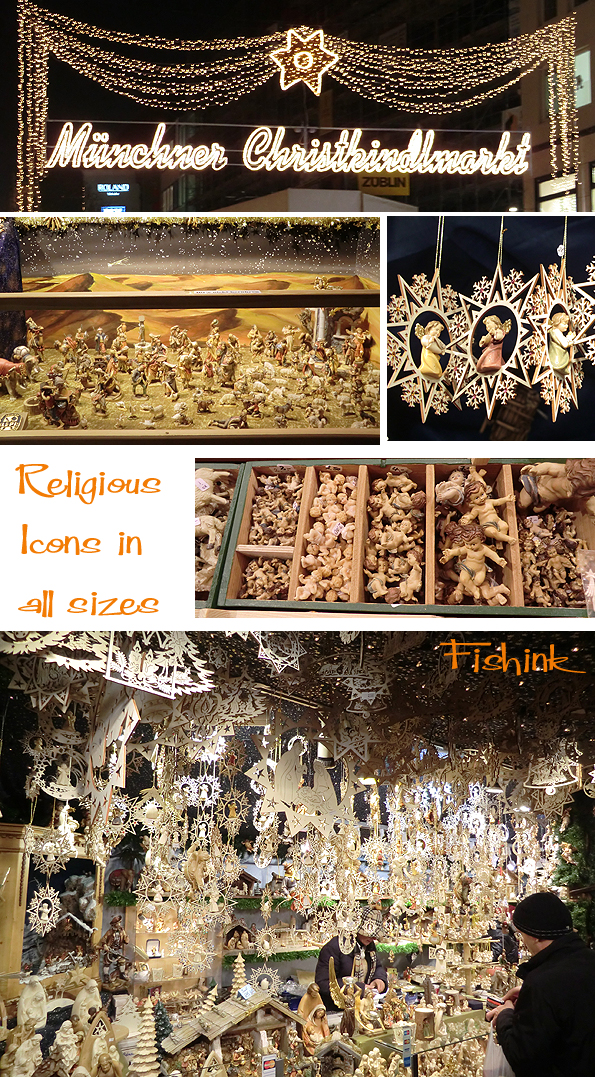
You can grab a Gluhwein, a pair of ice skates, or perhaps a skating bear comes in handy if you’re not confident on the ice, or just need a help steadying yourself after drinking too many mugs of spicy wine !

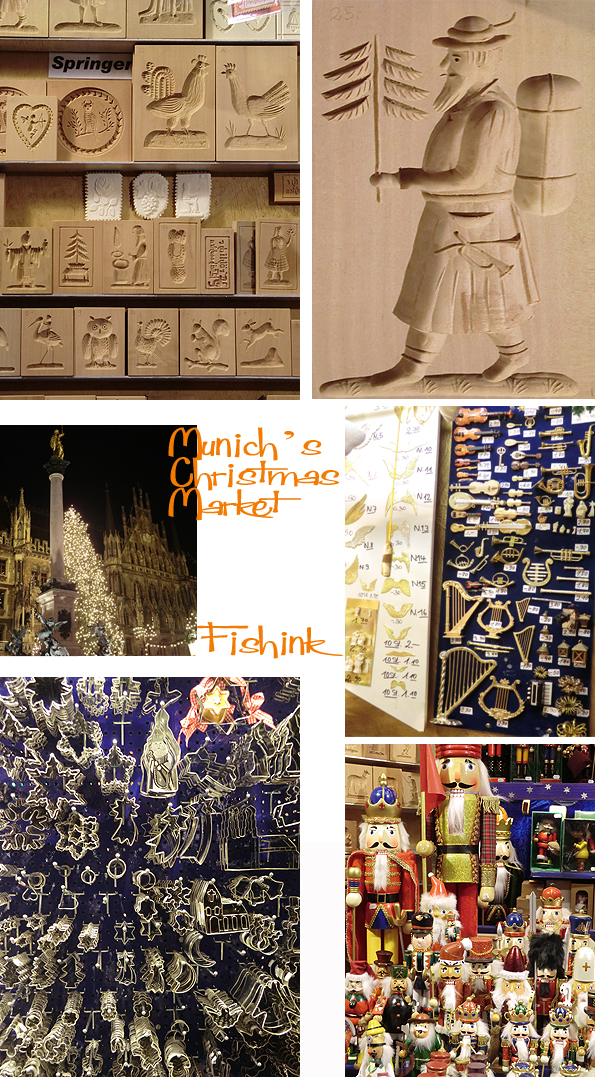
I loved these moulds for making salt-dough figures and the huge range of cookie cutters in all shapes of snowflake.
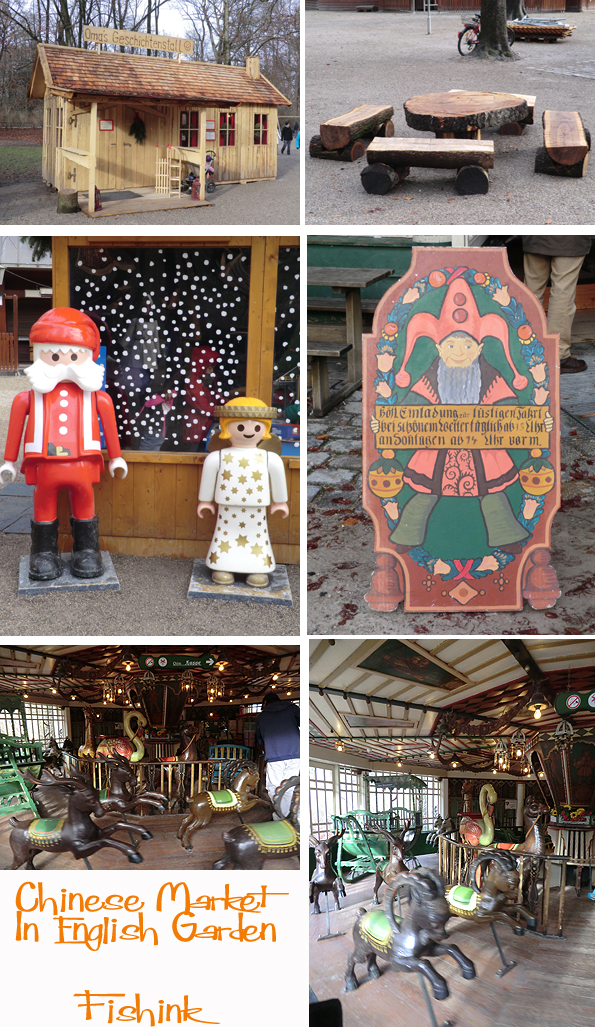
The Christmas Market by the Chinese Tower in the English Garden was a great discovery and St Nicholas was there amongst the gnomes and elves giving out gifts to the little people ! Talking of which I did get to see the 3-D version of The Hobbit whilst in Germany at a beautiful cinema specialising in English versions of films, and loved every minute. Fantasy escapism at it’s best.


A great idea was the hut for young kids where they could go and have a story read to them by grandma, whilst all tucked up in a snuggly bed covered by a warm fleece. Sadly they didn’t do adult sized beds. The old victorian merry go round was also enchanting and the larger than life Playmobil figures and play hut surely made the youngsters hearts beat a little quicker.
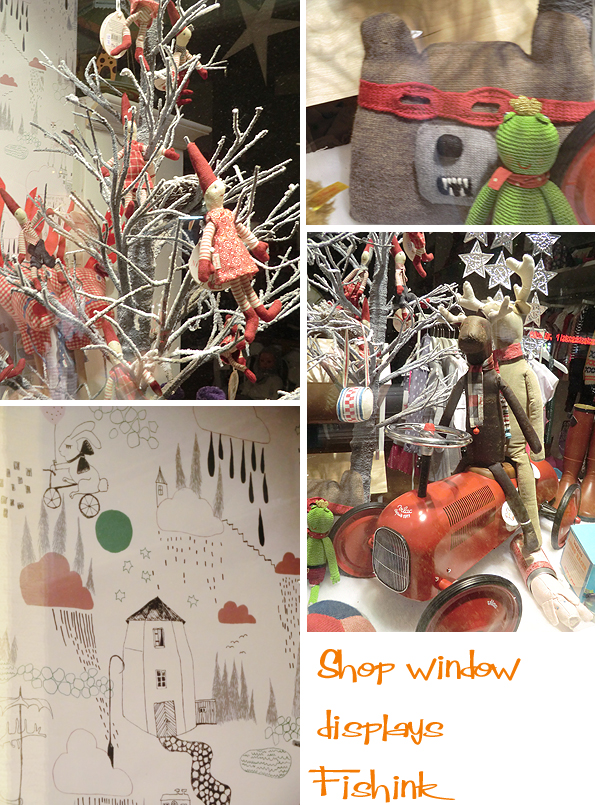
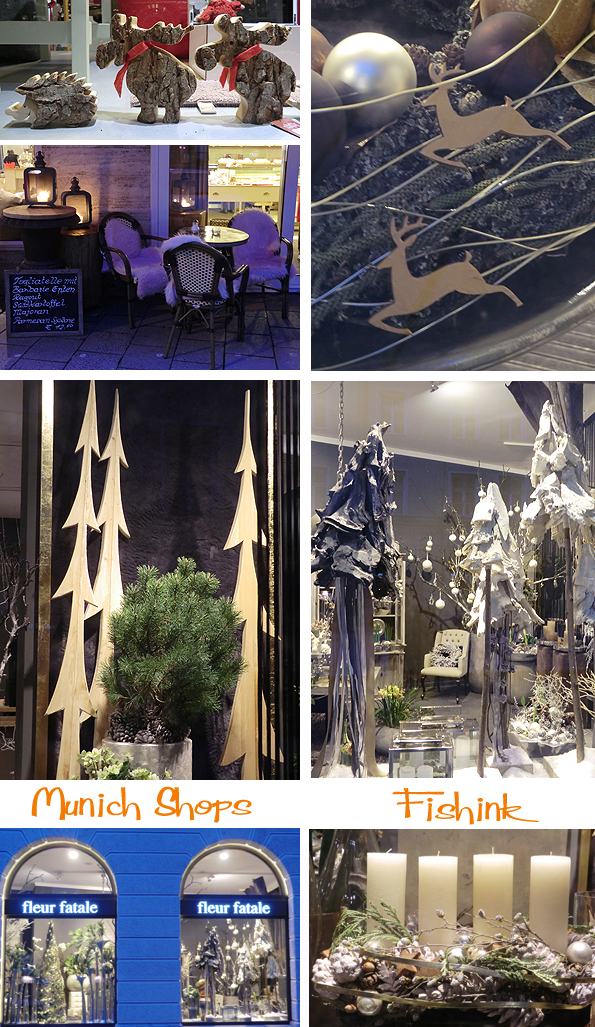
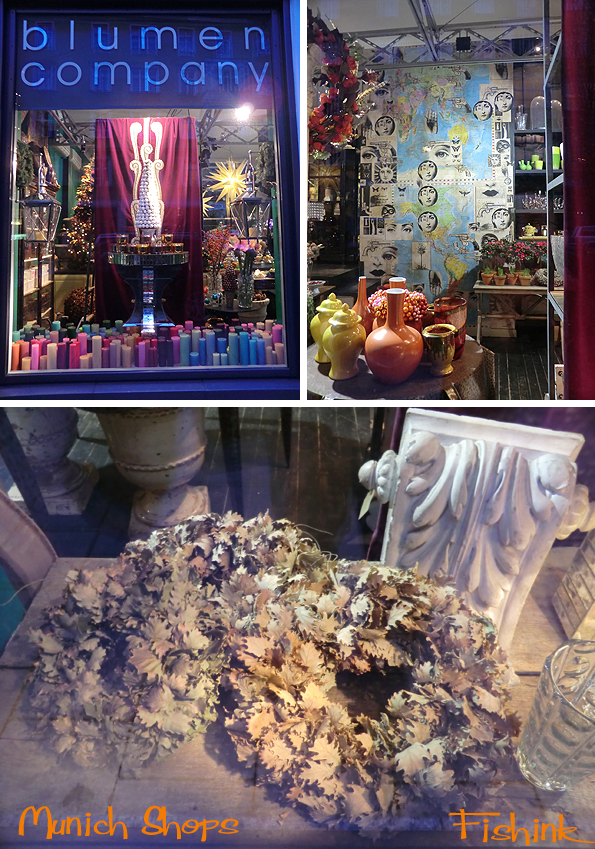
The shop window displays also captured my attention Fleur Fatale and Blumen Company in particular.

As we were away this year we had to make our own christmas decorations, trying to find out what the german words were for cloves and star anise was certainly interesting !

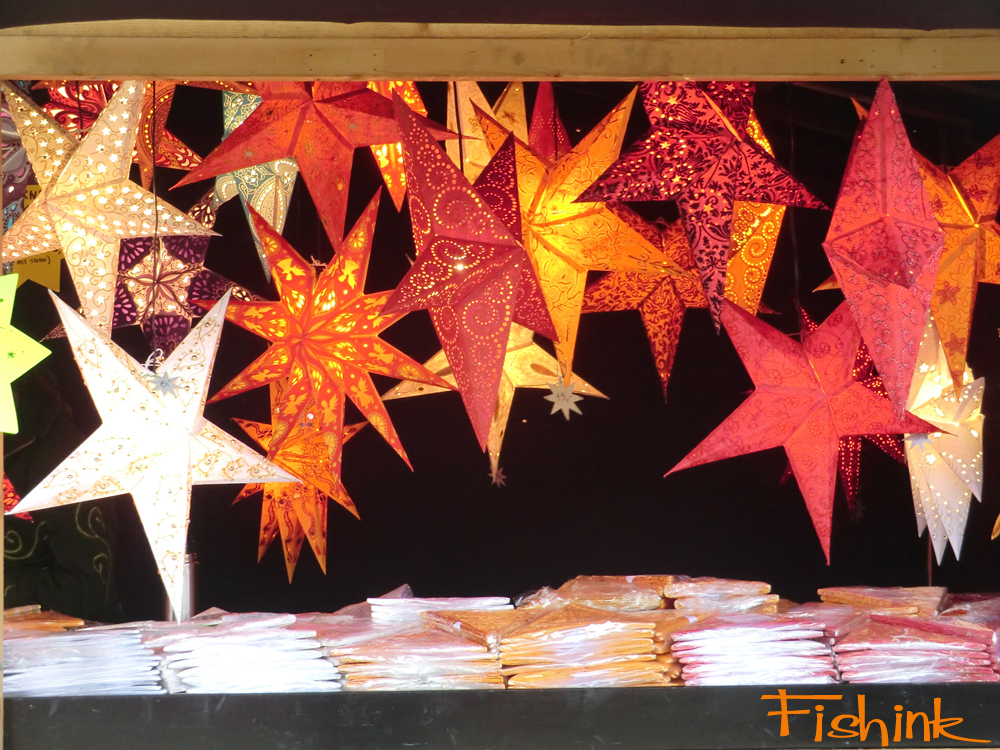
These stars seemed to be everywhere this year, but they still looked amazing when lit en-mass.
Hope you enjoyed the german christmas images as much as I did. More posts about the Design and Toy Museum, and other daytrips trips to follow.
Happy New Year 2013 and Grimms Fairy Stories
Welcome to 2013 to you all, and I hope that Christmas and the holiday season in general, has been kind and that you have had a chance to chill out, ponder, relax, collect your thoughts and eat way too much food lol. I took the opportunity to take a short break away to Munich and spent an amazing 10 days there which I’ll share with you over the next week or so. Boy do they know how to do christmas.
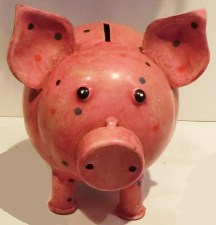
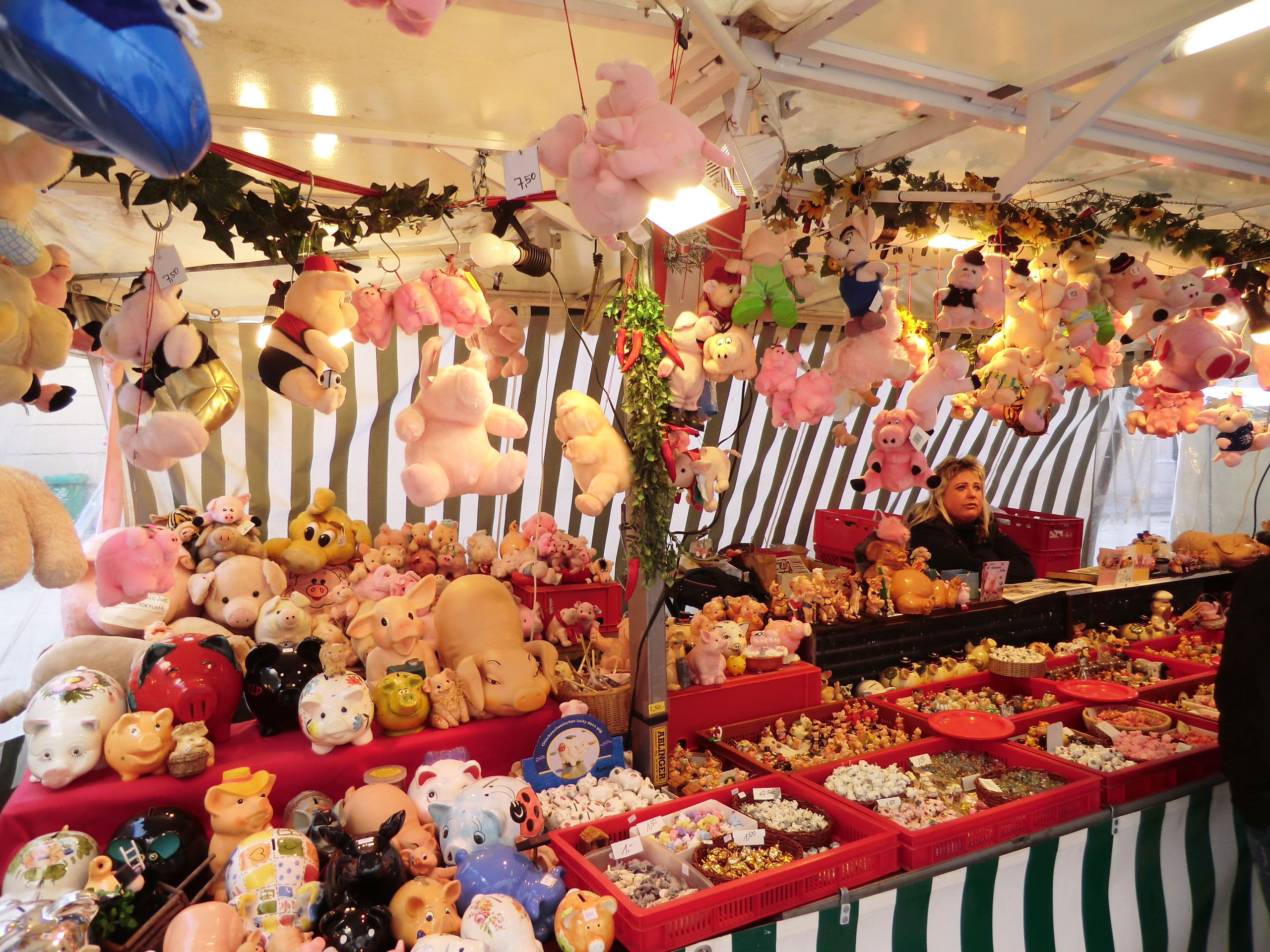
Another surprise for me was their love of pigs, especially with it being New Year for the pig is a symbol of good luck, so people go crazy for them and they’re everywhere.
Have you even seen such an array of pigs ? But more about Germany and the highlights of my travels soon.
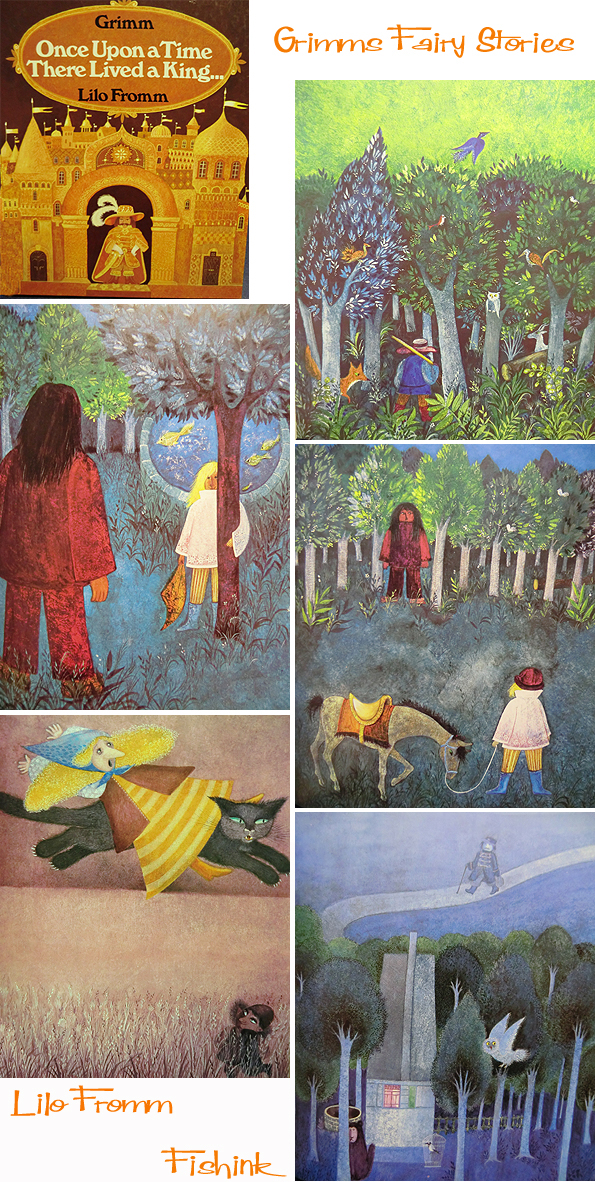
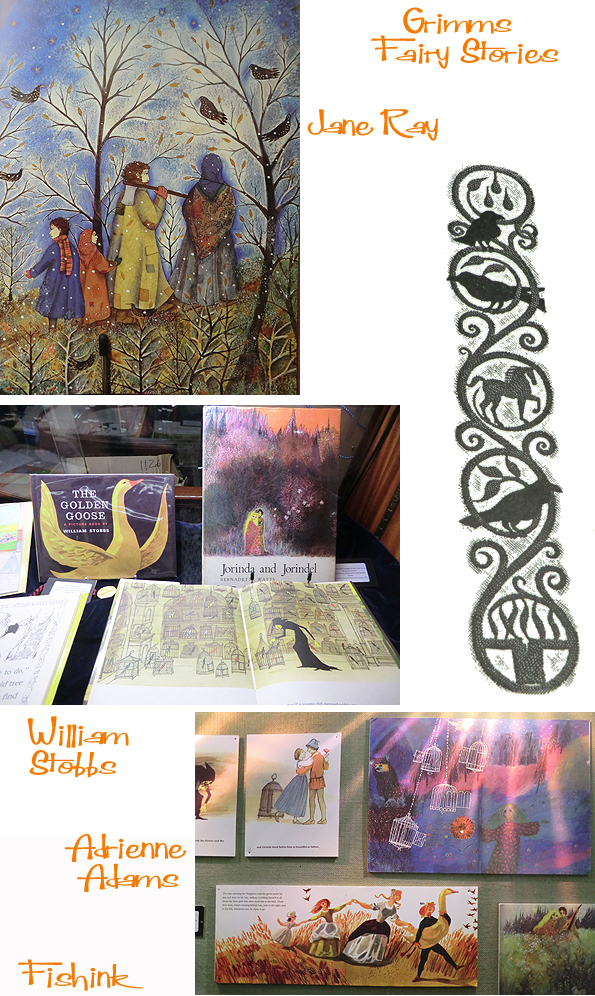
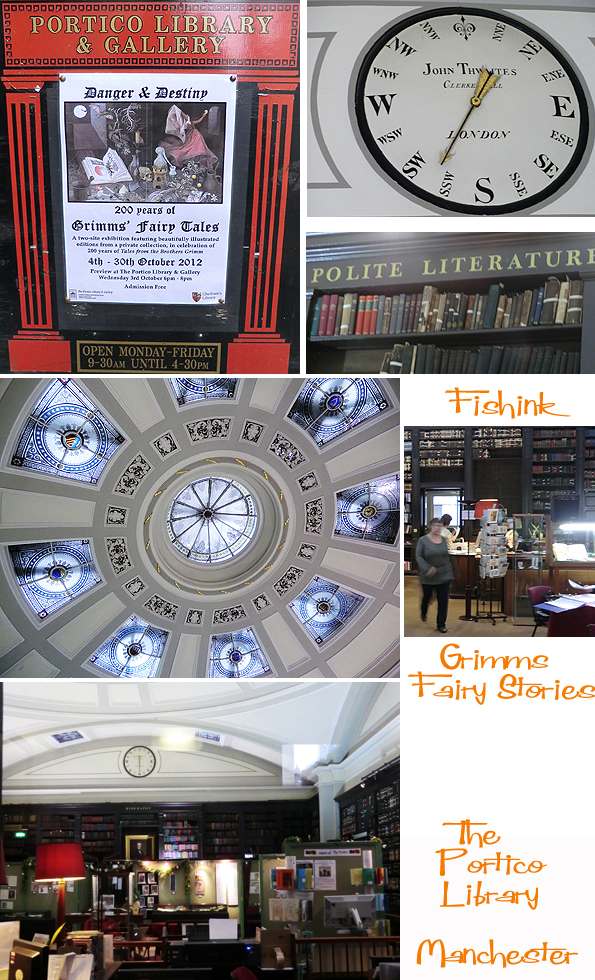
Very aptly, one exhibition that got a little lost in the crowd of things to blog about last year, was illustrations from Grimms’ Fairy Stories, which took place at The Portico Library and Gallery in Manchester. It was a lovely, rustic (and a little old fashioned) style of display with books in cases and photocopies on noticeboards with wonderful imagery.
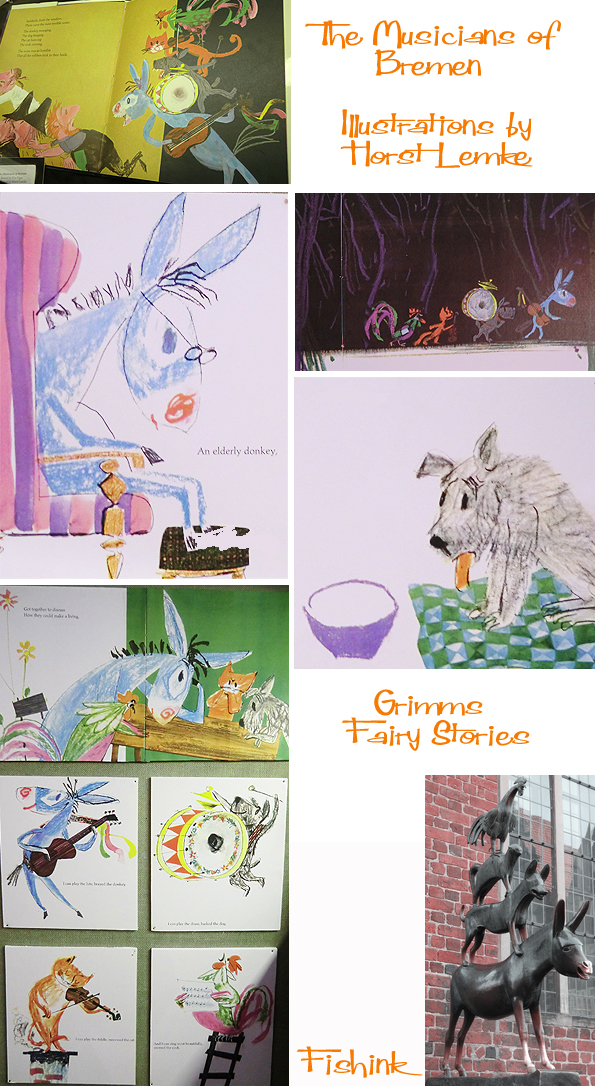
The Brothers Grimm were Jacob and Wilhelm (1780’s -1860’s) were German academics, linguists, cultural researchers, and authors who together collected folklore. They are among the most well-known storytellers of European folk tales, and their work popularized such stories as “Cinderella”, “The Frog Prince”, “Hansel and Gretel”, “Rapunzel”, “Rumpelstiltskin”, and “Snow White”. Their first collection of folk tales, Children’s and Household Tales (Kinder- und Hausmärchen), was published in 1812. The brothers spent their formative years first in the German town of Hanau and then in Steinau. Their father’s death in 1796, about a decade into their lives, caused great poverty for the family and affected the brothers for many years. They attended the University of Marburg where historian and jurist Friedrich von Savigny spurred their interest in philology and Germanic studies—a field in which they are now considered pioneers—and at the same time developed a curiosity for folklore, which grew into a lifelong dedication to collecting German folk tales.
The rise of romanticism in the 19th century revived interest in traditional folk stories, which to the Grimm brothers represented a pure form of national literature and culture. With the goal of researching a scholarly treatise on folk tales, the brothers established a methodology for collecting and recording folk stories that became the basis for folklore studies. Between 1812 and 1857 their first collection was revised and published many times, and grew from 86 stories to more than 200. In addition to writing and modifying folk tales, the brothers wrote collections of well-respected German and Scandinavian mythologies and in 1808 wrote a definitive German dictionary (Deutsches Wörterbuch) that remained incomplete in their lifetime.
The popularity of the Grimms’ collected folk tales endured well beyond their lifetimes. The tales are available in more than 100 translations and have been adapted to popular Disney films such as Snow White and the Seven Dwarfs, Sleeping Beauty, and Cinderella. In the mid-20th century the tales were used as propaganda by the Third Reich; later in the 20th century psychologists such as Bruno Bettelheim reaffirmed the value of the work, in spite of the cruelty and violence in the original versions of some of the tales that were sanitized.
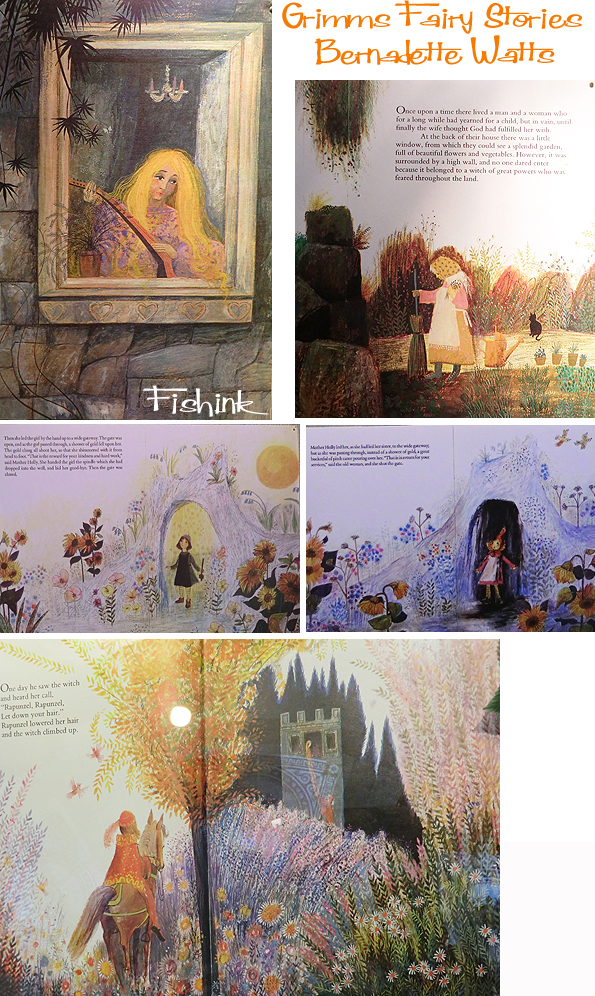
The Portico Library is such a wonderful tucked away almost secret building that it doesn’t fail to delight once you come across it’s interior. Situated not far from Manchester’s City Art Gallery, it’s worth keeping an eye out for what exhibitions are on, just to see inside. : )
Many thanks to the Portico for letting me take some images to show you and to Wikipedia for the info about the brothers themselves. Happy 2013 enjoy the start of your new year and I’m delighted that you’ve found your way back to Fishink Blog, and I’m looking forward to sharing another year with you all.

 fishinkblog.com