Tibor Reich at the Whitworth

For the regular visitors to my blog, you may remember a post from last year called
. The Whitworth in Manchester, UK is hosting a great exhibition on Tibor’s work right now, and it is on until August 2016. For those of you who won’t get to see it for yourselves, here is a sneak preview. Beginning with some of Tibor’s photography from the 1950’s and 60’s. Texture and pattern played such a big role in his world.

His family and home life looked idyllic.
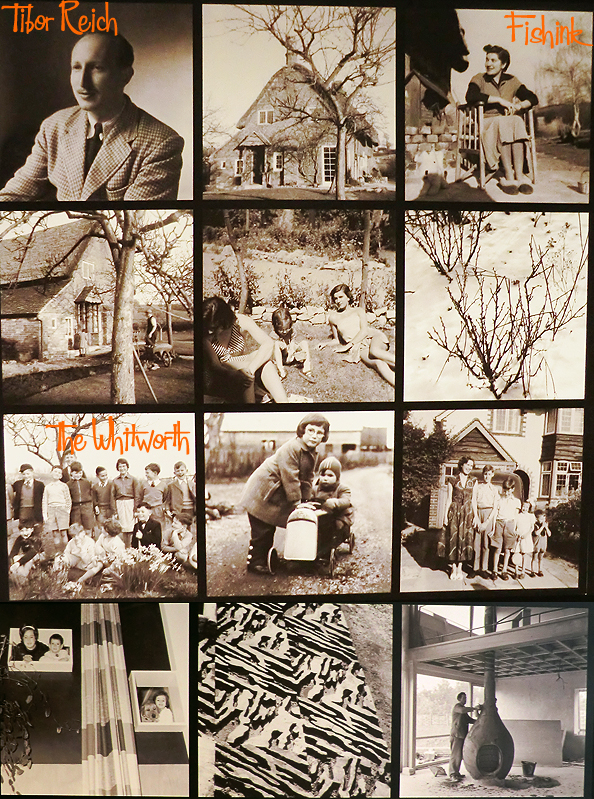
He even created his own ceramic fireplace (dubbed the ‘Flaming Onion’) in the heart of his self-designed home. His drawings were the key to developing his work. Tibor drew on anything that was to hand from chocolate box covers to the cardboard inserts from stamps. For him, each surface presented an opportunity for mark making.

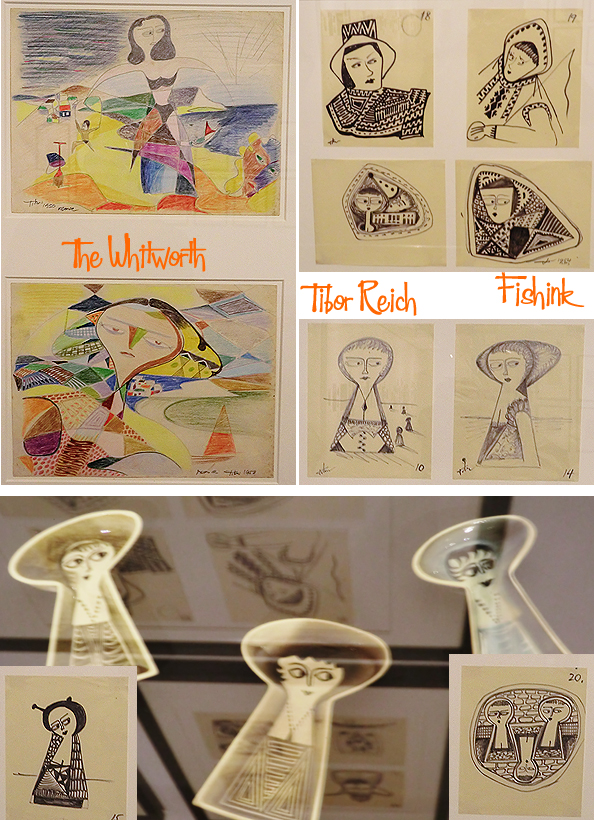
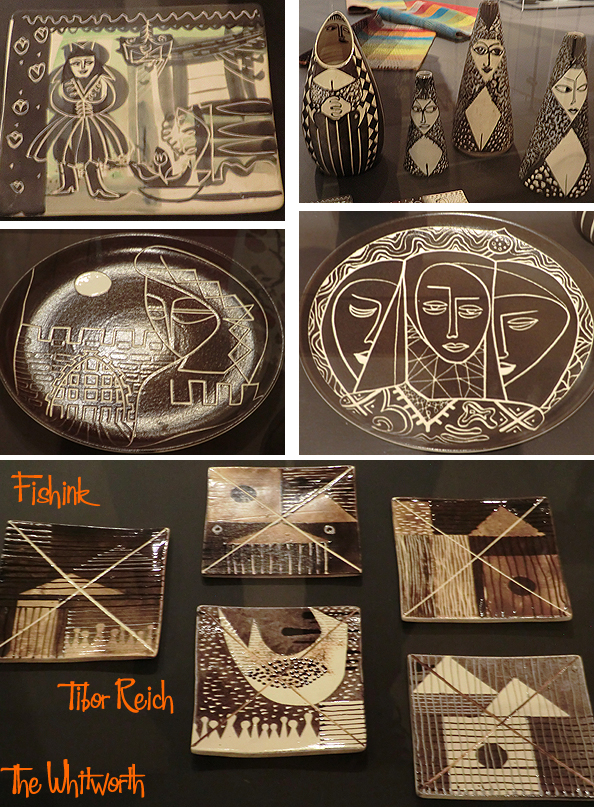
You can see how his sketches made perfect ceramics. (Apologies for the blurry images, it was tricky getting better shots because everything was behind glass and had many relections).
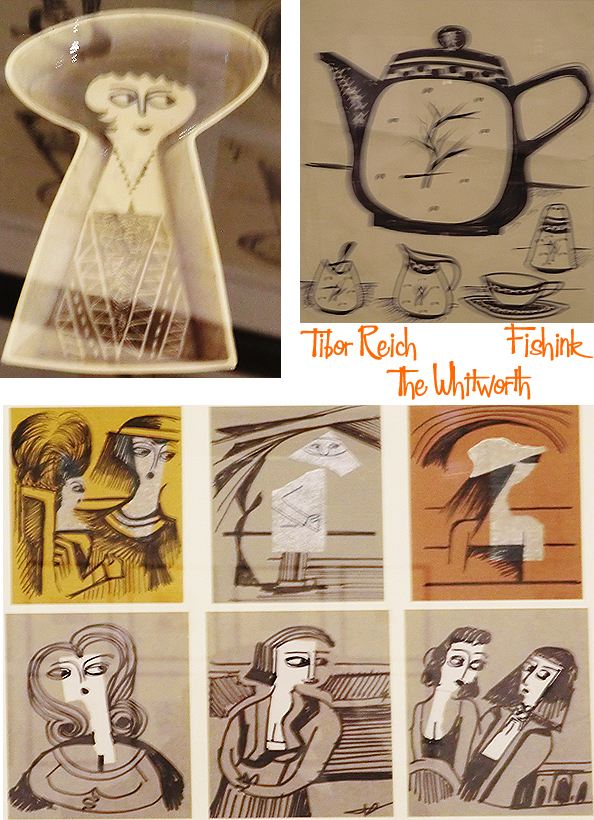
These ladies are full of character.

In the early forties Tibor developed his own range of magic-marker pens to speed up the design process. Some of the repeats below were included in ‘Original Designs for Textiles’ held at the Cotton Board, Manchester in 1943, alongside works by Henry Moore and John Nash. they were later used by couture houses including Molyneux, Hardy Amies and Norman Hartnell.

These drawings were from Tibor’s teenage years in Budapest in the early thirties. They illustrate Tibor’s early interest in patterns and textures created by a building’s cladding.


You can see here how Tibor’s photographs were translated into his textiles.

He certainly had a love for colour.
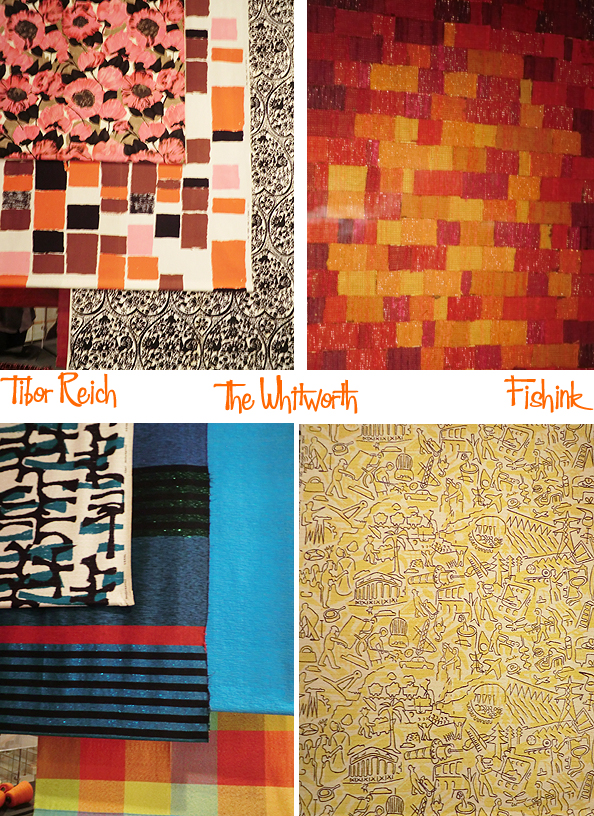
Movement, line and shading.
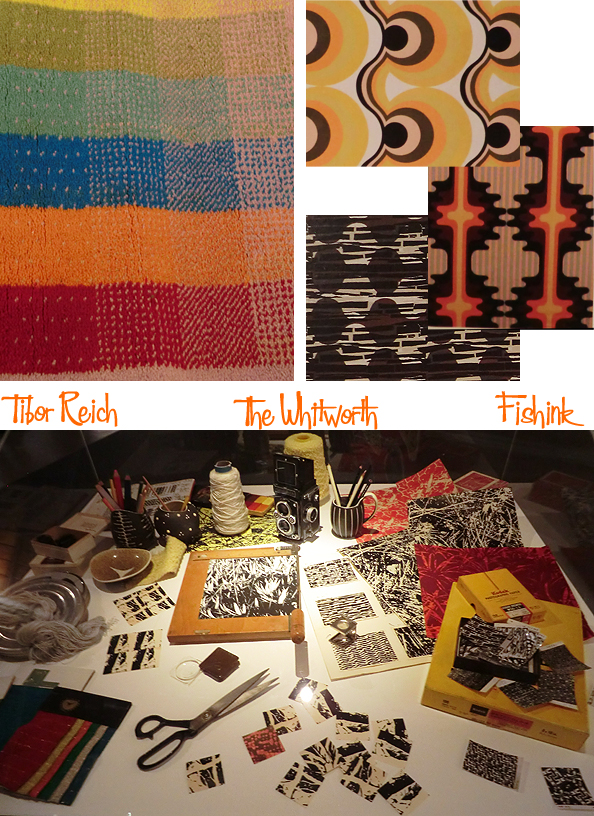
Tibor took his photographs and made a positive and negative of parts of the images. Arranging the prints in a way that created ‘virtual texture’, the resulting range ‘Fotexur’ was launched in 1957 to great acclaim. A design called ‘Flamingo’ (below) won the first ever Design Council award for a textile design of the year.

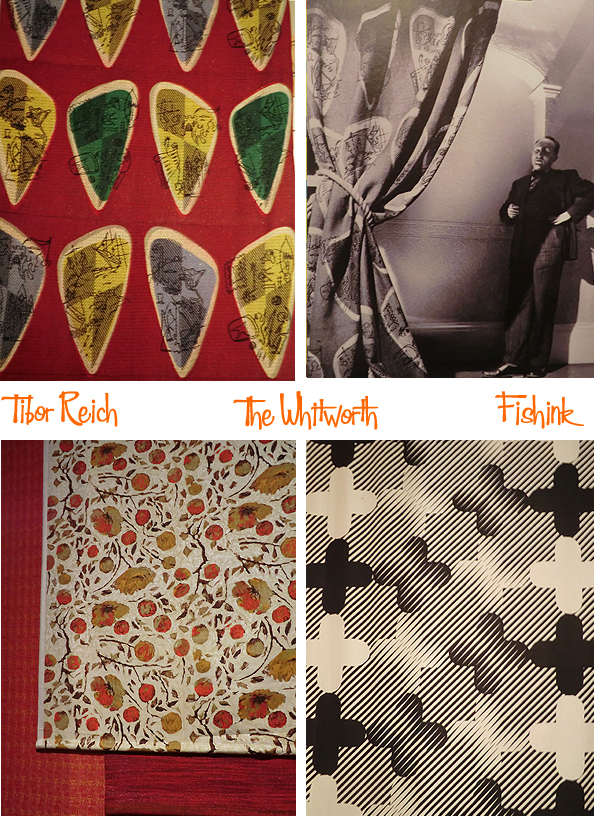
As Britain entered a new era of affluence in the 1960’s, the focus of design moved from reconstruction to revolution. Tibor’s bright and bold colours harmonised with contemporary artistic trends of psychedelia involving freedom of colour and composition. One such Op Art inspired design called ‘Opatia’ was awarded the Cotton Board Design Award and later used on the QE2.

In 1964 Tibor fabrics launched it’s Sloane Street showroom and ‘Design for living centre’ in Stratford-upon -Avon. Whilst tastes and fashions changed, Tibor’s textiles continued to capture the beauty of nature and essence of the hand crafted appearence within mass produced products. In 1973 Tibor received the Textile Institute Design Medal for his contribution to 20th century textile design and his influence on public taste.
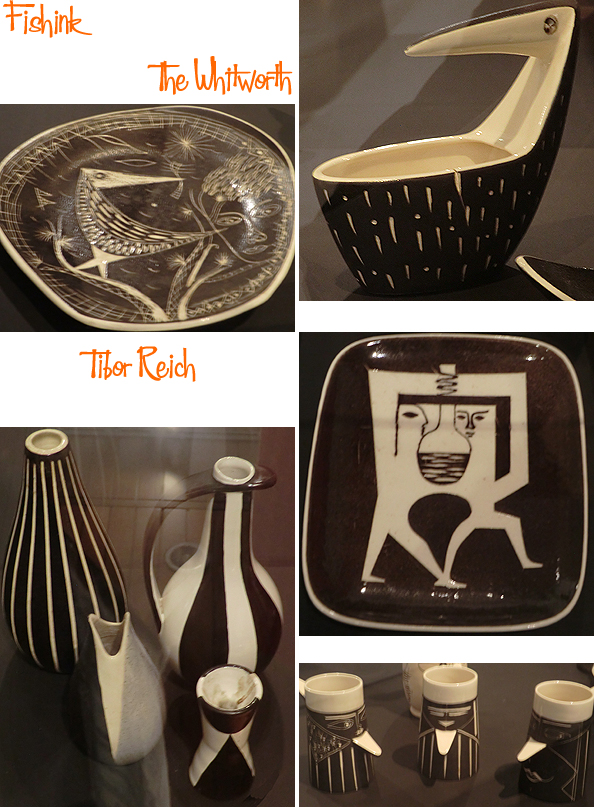
Here’s a small selection of his vast ceramic range, some wonderful shapes and designs here.

This bird on the right (below) is a favourite of mine.
For more info on Tibor check out his site here.
There was also a great wallpaper exhibition on at the moment. What fabulous designs !

More nature inspired wallpapers.


Of course this bird design (above) was also right up my street! The Whitworth is such a beautiful building, it’s always been on my favourite list of places to visit, and it’s plain to see why.
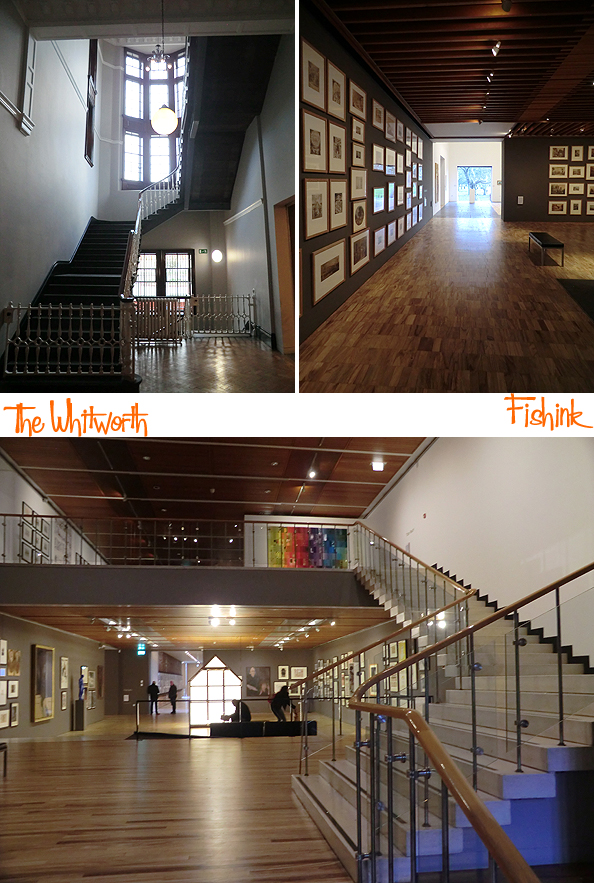
On a sunny day, you can almost believe you are miles away. Designing wallpapers and fabrics.. perhaps!

Fishink in Lisbon Part 5 Museums and Art Galleries

Welcome to the fifth and final part of my recent travels to Lisbon. Today I am initially visiting the Ricardo Espirito Santo Foundation collection or the Decorative Arts Collection. It’s situated in a corner of Miradouro das Portas do Sol in the 17th century Azurara Palace, the museum gives a picture of aristocratic life in the 18th and 19th centuries. The building itself was bought by Ricardo Espirito Santo, a wealthy banker who later bequeathed his valuable collection to the state. These ceramic pieces caught my attention.

Some wonderfully detailed tapestries.

Although the museum was very informative and the building was an original 17th C. former city palace of the Count of Azurara, it sadly wasn’t as interesting as I had hoped. I find that I’m currently more drawn to the decoration on objects, rather than rooms set out to display and discuss various time periods. So within an hour, Fishink had seen it all and quickly left the building.

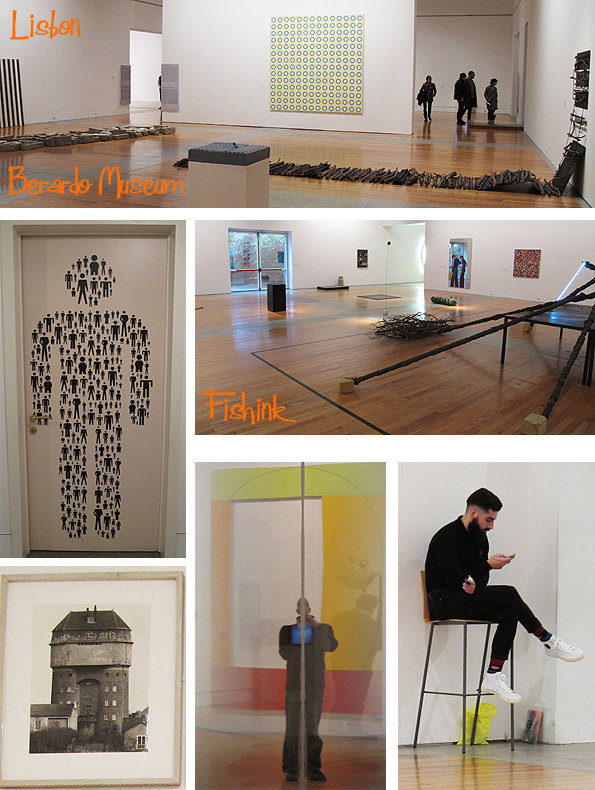
As a surprising contrast, another free, and much more interesting experience, came by way of the Berardo Collection Museum. It is a museum of modern and contemporary art in Belém. Full of fresh invigorating spaces, clean lines and a great array of different artists work. As a point of interest the Art Auctioneer Christies, valued the collection to be worth in the region of 315 million Euros ! Let’s begin with a little David Hockney, you can never go wrong there.

A couple more 1960’s artists Allen Jones and Peter Phillips.

Alain Jacquet, associated with Pop Art and the minimovement known as Mec Art (for mechanical art), made use of mechanical processes and advertising clichés in photoscreened works like his “Déjeuner sur l’herbe” series. In it, he posed three friends, including the French critic Pierre Restany and his wife, in modern dress and slipped in a commercially packaged loaf of bread with the label “Jacquet.” He later used photoscreen processes to superimpose textures like burlap, wood or steel on cotton fabric, Plexiglas or plastic.
“My work is all about making images disappear,” he said in an interview in The New York Times in 1968. “It’s a visual, formal thing — there’s no deep philosophy behind it and I’m not commenting on photojournalism. I’m fascinated by the way a picture can break down into the tiniest abstract elements close up, then reappear as a pictorial image.”
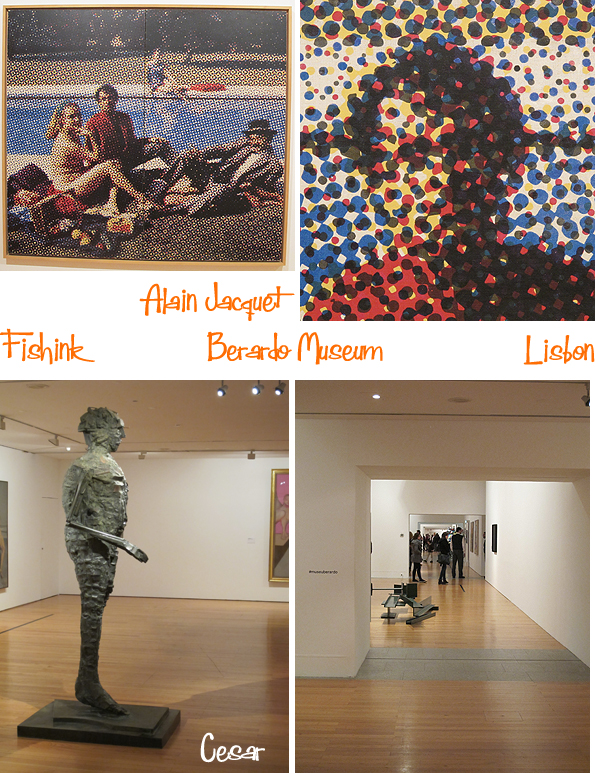
I liked this Lynn Chadwick sculpture, are they ladies or bats ? More in a blogpost to come.

Quite a few artists here, whose work was unknown to me, I’ll be looking them up soon.


The exhibition ‘Your body is my body‘ was a selection of around three hundred art and political posters from Portugal and abroad, taken from the collection assembled by Ernesto de Sousa throughout his life, and dating from between 1933 and 1988.
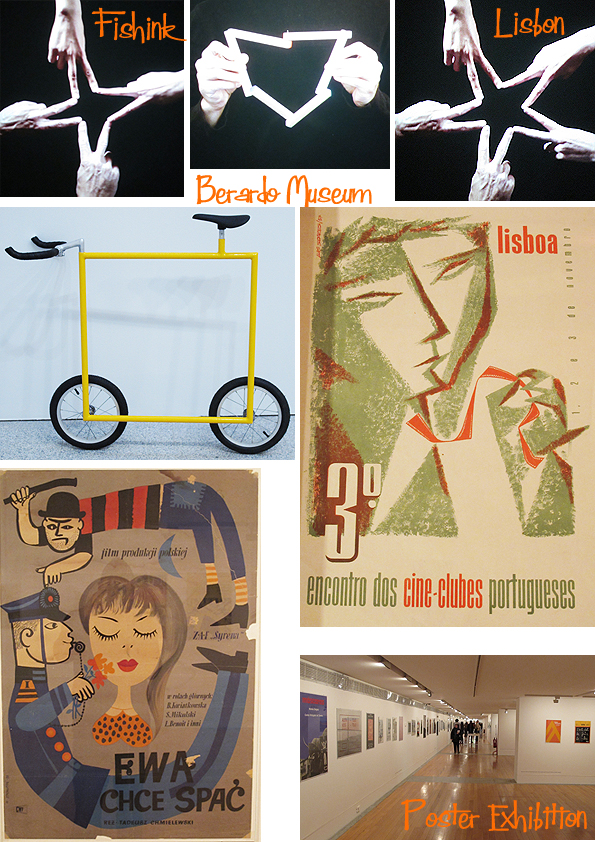
Some of these artists were already familiar to me, like the police and criminal one above by
, others were new and it was great to see so many of them on display all together.
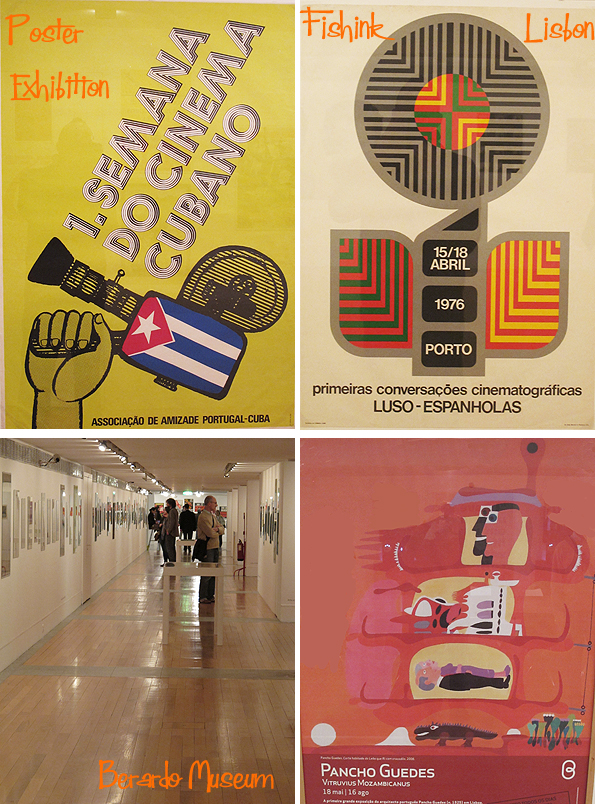
More contemporary sculptures.

Even the door to the gent’s toilet was a work of art ! lol
Finally a last chance to ride the Funicular Railway from one city level, up to the next. Only a five-minute journey, but great to experience the old carriage with all it’s creaking and jerky movements. I felt like I was in a 1930’s spy film.

Here’s the route from above and a glimpse of ‘Cervejaria Trindade’ where we had a beer and a sit down. Great frescos on the wall tiles and the waiters were dressed to look like monks!

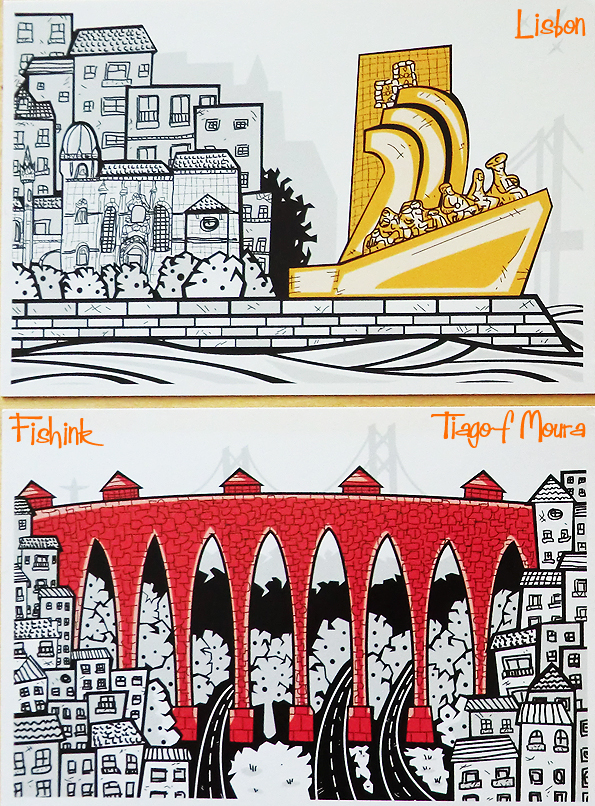
Lisbon was such a breath of fresh air. I was only there for three and a half days but, in a good way, it felt like so much longer. I’d just like to end with a few postcards I bought by graphic artist Tiago f Moura. He created this project in 2012, when he entered a contest sponsored by clothing manufacturer Benetton called “Unemployee of the Year”. Contestants were asked to use their creativity and ingenuity to address the problem of unemployment and promote hope in a poor economy. Moura intended to capture the positive spirit of European cities through his unique illustrations. I think he’s managed to encapsulate Lisbon’s charm very well indeed.
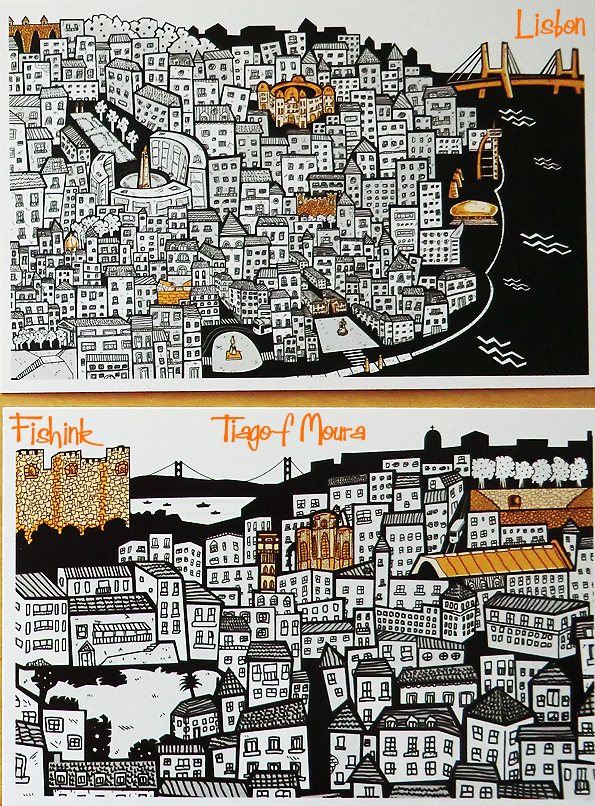

I hope you’ve enjoyed my journey as much as I did. Do let me know your thoughts, or if you’ve visited yourself and seen something I have missed out, tell me and I’ll add it to my list for next time : )
In case you missed any here are the links to the previous posts.
Fishink Photography

I just heard that my good friend Lizzie who writes the blog Dream Discover Italia has recently been awarded the 2015 Italy Magazine’s Art & Culture Best Blog Award .. Wowsa !!! Congratulations and much merrymaking are in order… well done Lizzie ! So glad to see her continuous hard work paying off.
She recently nominated me to take part in a 7-day photo challenge. All I had to do for this, was to put a photo that I had taken, onto Facebook, for 7 consecutive days and perhaps say a word or two about it.
Doing this got me thinking about photography. More specifically, about how we store images today, on our ipads, phones, Macs and PCs, and just how much things have changed from my younger days, with memories of waiting 3 days to get your photographs returned from Max Spielman before sticking them in albums. Also who recalls that wonderful feeling of anticipation, before you saw the results, of what they might look like! Lol
In some respects it’s a change for the better. Digital images are immediate. If you don’t capture what your viewing, first ‘click’ around, you can see instantly and have another try, unless your subject matter has already flown, jumped, or otherwise disappeared. But what I find a little disheartening, is the way that our photos end up stored in some huge folder and rarely, ever get looked at ever again. Ok so you can print them out, have them eternally revolving on your TV screen or digital photo frame, but do they have the same impact or shelf life ? Are these precious moments we once captured, becoming fleeting instances that get forgotten so quickly ? Or is life becoming more about the here and now and less about memories of the past ?
I for one, still like to have photographs of things I have seen, personally, a picture does speak a thousand words. I can look at a photo of some friends and recall so much more about our conversation on that day, where we met and things that happened, than if I try to recall the same event, without the visual prompt. Perhaps that’s just how my brain works ? What does anyone else think ?
In the spirit of keeping our photographs alive, here’s a few I’ve taken earlier : )

As usual with my images, there is often an element of colour and texture involved.

Frosty plants and snowdrops.

Still awaiting more sunshine to come and warm up our days. The small splashes of crocus and daffodil colours are most welcome.

Have a look at your old photos today and see what you can discover.
Fishink in Lisbon Part 4 Streets, treats and city life

Walking through Lisbon’s busy streets, you have to be both a confident driver and tourist. You never quite know when the road you’re on will narrow and nearly disappear, or when a tram may suddenly come hurtling towards you from around a concealed corner. It makes life more interesting… if you see it that way ! lol.

I liked the mock tile look on this Tuk-Tuk and the elegant, old shop fronts, in parts of central Lisbon.

This tiny little glove shop (above) Luvaria Ulisses was founded in 1925 by Joaquim Rodrigues Simões, an entrepreneur with a profound understanding of the habits of the people of Lisbon. As a Lisbon city council executive between 1919 and 1923, he requested authorization from the Government to construct shops in the neglected area of the Carmo Wall. He kept the space corresponding to no. 87-A, to himself as he immediately envisioned an establishment there.
A more modern approach to city life can be found in the highly decorated bottle banks that are scattered around the streets. Apparently this was a clever initiative by the Lisbon Municipal Council and you can see a few more here.

Some really interesting streets and places to discover around the district of Principe Real, which is essentially an extension of Bairro Alto. Great shops and bars for the hip and trendy and smaller tucked away restaurants and galleries that you sometimes nearly overlook or have to ring a buzzer to gain admission. Some only come to life when the daylight starts to fade.

One such gallery/ shop was Oficina Irmaos Marques. It is the brainchild of Gezo Marques, a Brazilian creative director, who is adept at the art of recycling and re-creating furniture and ornament for a contemporary clientele.

I sensed an air of the absurd, rubbing shoulders with childhood-kitsch and clever up-cycling. I loved his little house mountains, a creative reference to the ghettos from his Brazilian past.

I noticed this lovely fish by Jonathan Adler, (mentioned on the blog before). I couldn’t resist buying it for the bottle of cooking oil to stand on in my kitchen. Another of Gezo’s creations was commissioned by a local mexican restaurant (below top right) and is a huge twinkley addition to their wall.
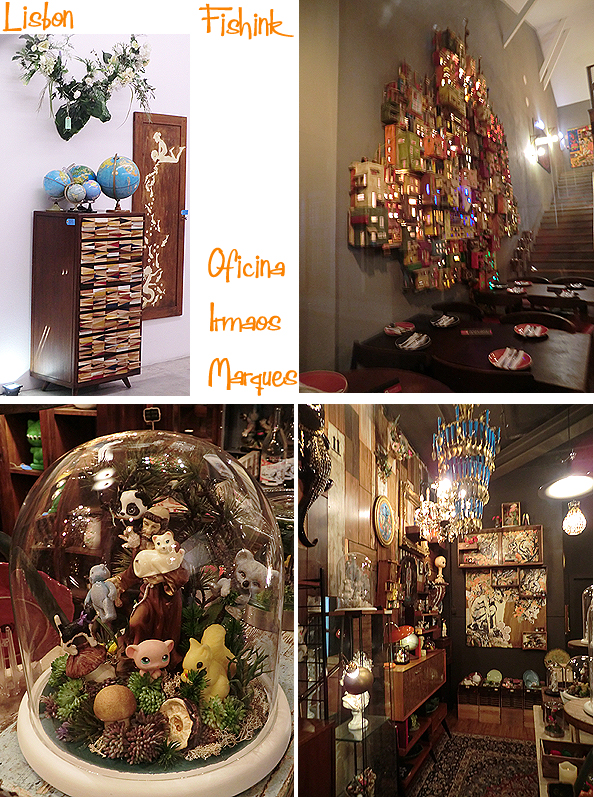
Some of the paintings.

Well worth tracking this fascinating store down if you’re in the area.

If you’re very lucky (like we were) the friendly staff may also offer you a coffee or mint tea and a friendly chat… how kind.
More in the final post about Lisbon next week. Do you want to go there yet ? lol
Past posts have been
Fishink in Lisbon Part 3 Monuments and Markets

Welcome to Lisbon and the third post about my recent travels. Walking along the riverfront, I was struck by the fact that there were so many sculptures and striking buildings to discover. Padrão dos Descobrimentos (Monument to the Discoveries) is a sculpture on the northern bank of the Tagus River estuary, Lisbon. Located along the river where ships departed to explore and trade with India and Orient, the monument celebrates the Portuguese Age of Discovery (or Age of Exploration) during the 15th and 16th centuries. It was conceived in 1939 by Portuguese architect José Ângelo Cottinelli Telmo, and sculptor Leopoldo de Almeida, as a temporary beacon during the Portuguese World Fair opening in June 1940. Yet, by June 1943, the original structure was demolished after the exposition as there was no concrete formalization of the project.
On 3 February 1958, the government promoted the intent to construct a permanent Monument to the Discoveries. Between November 1958 and January 1960, the new monument was constructed and the statues sculpted from limestone excavated from the region of Sintra. The new project was enlarged from the original 1940 model, as part of the commemorations to celebrate the fifth centennial of the death of Infante Henry the Navigator.

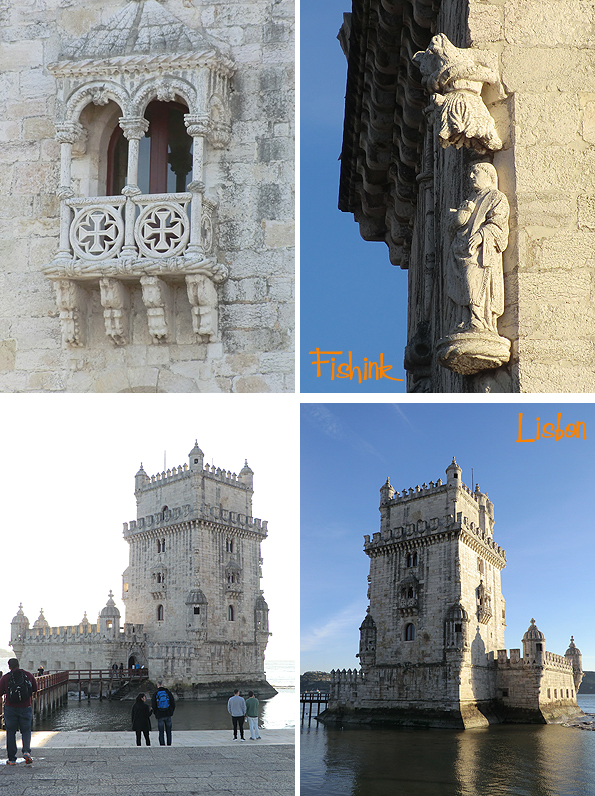
Belém Tower became a UNESCO World Heritage Site because of the significant role it played in the Portuguese maritime discoveries of the era of the Age of Discoveries. The tower was commissioned by King John II to be part of a defense system at the mouth of the Tagus river and a ceremonial gateway to Lisbon.
It was built in the early 16th century and is a prominent example of the Portuguese Manueline style, incorporating hints of other architectural styles. The structure was built from lioz limestone and is composed of a bastion and a 30 m (100 feet), four storey tower.
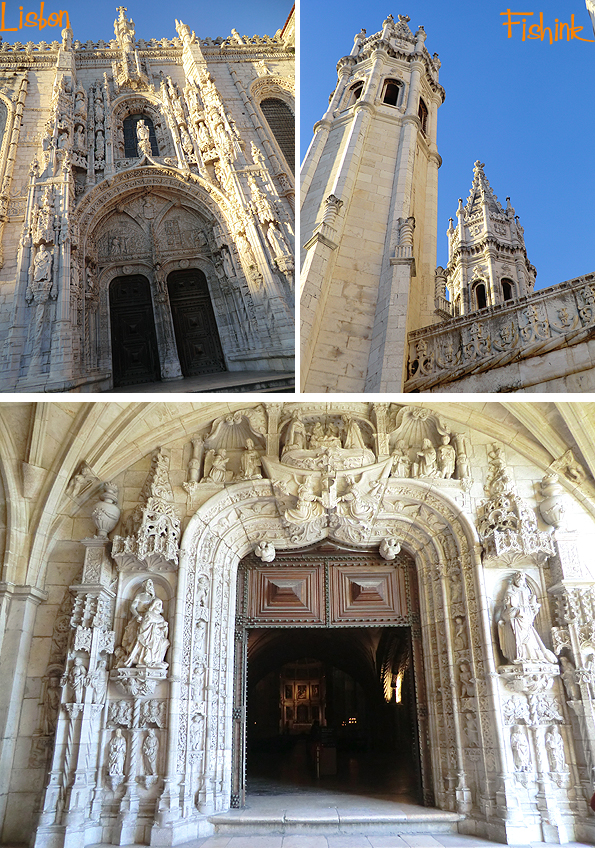
The Jerónimos Monastery or Hieronymites Monastery, is a monastery of the Order of Saint Jerome located near the shore of the parish of Belém, in the Lisbon Municipality, Portugal. It is is one of the most prominent examples of the Portuguese Late Gothic Manueline style of architecture in Lisbon and is incredibly ornate and detailed.
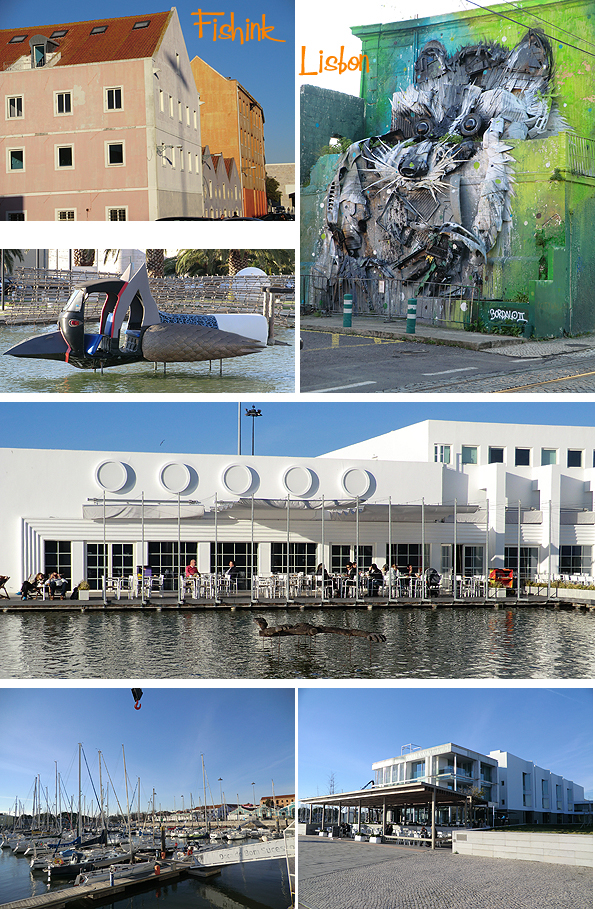
As a complete contrast, on the opposite side of the road, lies colour, contemporary sculpture and deco-inspired, modern buildings. Clean, white, sleek, cool lines… Lisbon never fails to delight or surprise.
I picked up a copy of this wonderful 2016 Calendar, from the Electricity Museum gift shop, with illustrations by the Brazilian Illustrator Yara Kono. A complete bargain at just 3 Euros! I’ll be posting more about this superb artist soon.
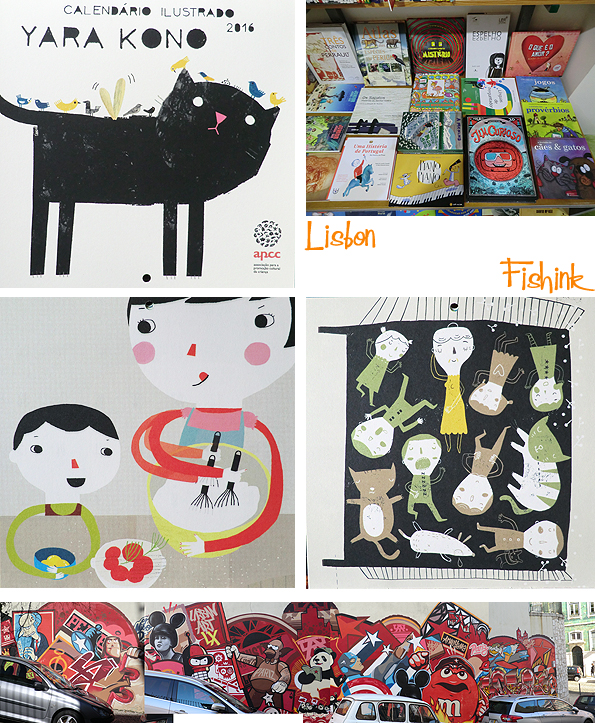
There is amazing graffiti and delicate pattern nearly everywhere you look around Lisbon. Interesting shapes and carved or sculpted details constantly catch your eye.

One of the ‘must do’s’, is a Tuesday or Saturday visit to Lisbon’s flea market. It is called locally the Feira da Ladra, often thought to mean “Thieve’s Market” (in Portuguese “ladra” is a woman thief) but it actually derives from “ladro,” a bug found in antiques. A market of this type is thought to have been in place in Lisbon since the 12th Century and the name Feira da Ladra was first mentioned in the 17th Century. Today, the traders here are perfectly legal, many of them gypsies showing their wares in the Campo de Santa Clara street, in the district of Alfama. The market starts at the Arco de São Vicente, an arch near where the famous Tram 28 stops.
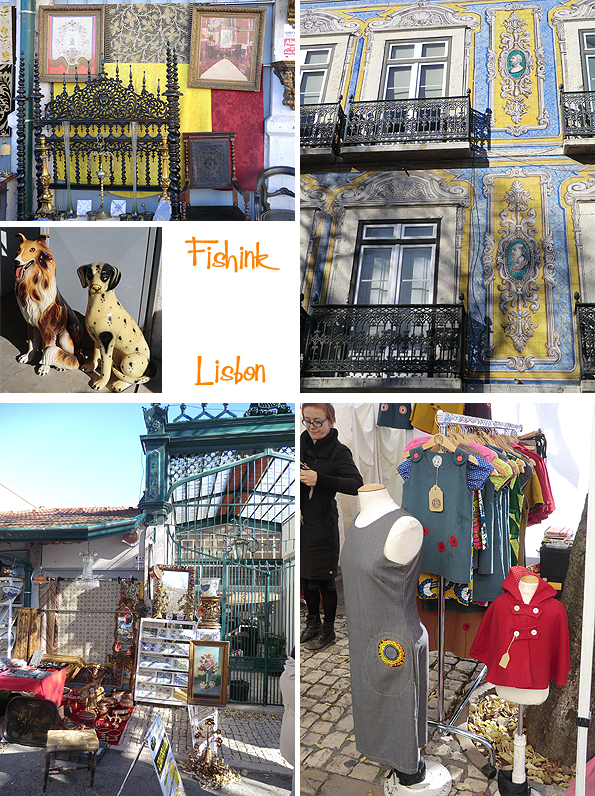
Of course today it caters for the tourist trade, but there are still antiques and bargains to be discovered amongst the bric-a-brac and furniture.

Crowds flock, musicians play and there’s lovely wholesome food in the covered market hall too. Get there early for a great morning out.
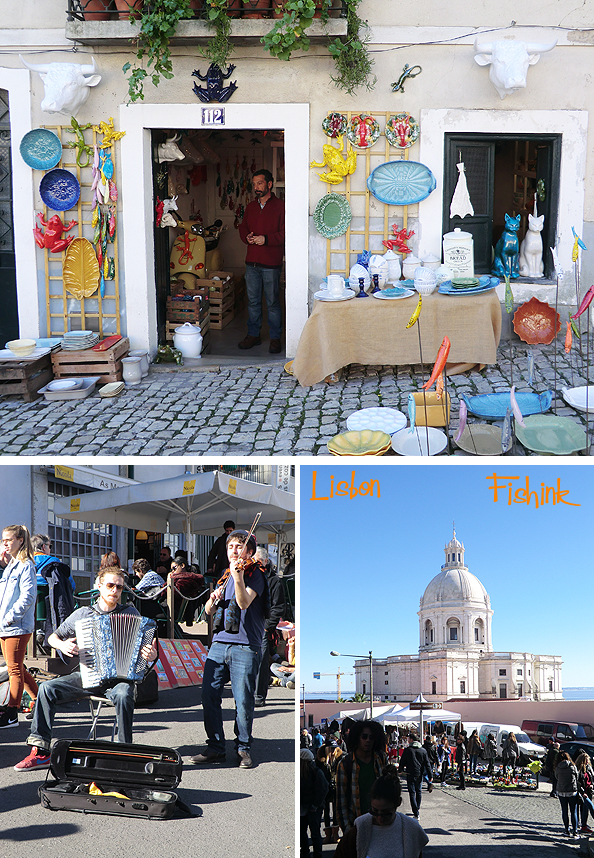
Hope you’re enjoying my Lisbon visit ? …. more in part four, next week. If you missed Parts 1 and 2, you can find them
and
Fishink in Lisbon Part 2 Cakes, Trams and Electricity
Welcome back to Fishink in Lisbon. One of the great things that the Portuguese seem to do soooo well is their little coffee stands, wonderful cakes and extravagant Patisseries. Below are just a few examples.
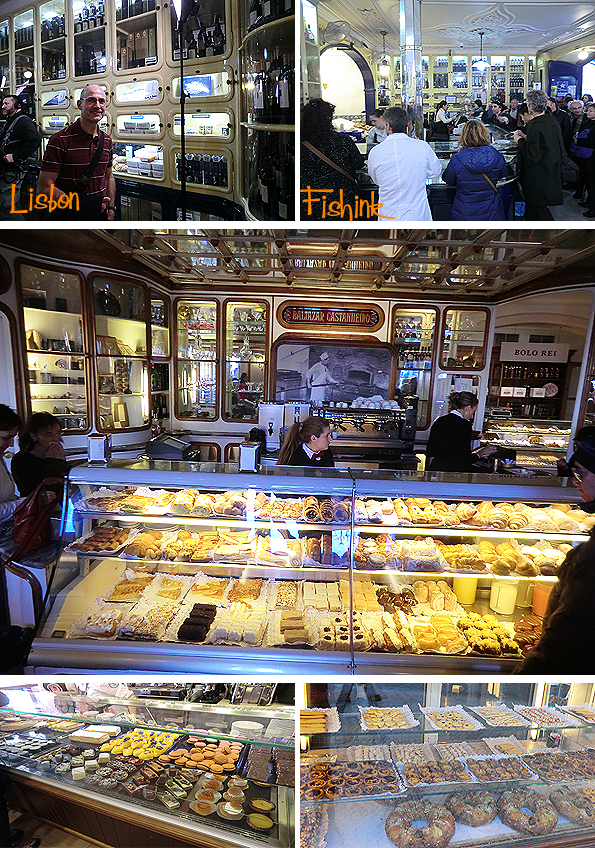
Portugal is famous for its ‘Pastéis de nata’ (a Portuguese egg tart pastry) which were created before the 18th century by Catholic monks at the Jerónimos Monastery. It was quite common for monasteries and convents to use the leftover egg yolks to make cakes and pastries, resulting in the proliferation of sweet pastry recipes throughout the country. Following the extinction of the religious orders and in the face of the impending closing of many of the convents and monasteries in the aftermath of the Liberal Revolution of 1820, the monks started selling pastéis de nata at a nearby sugar refinery to secure some revenue. In 1834 the monastery was closed and the recipe was sold to the sugar refinery, whose owners in 1837 opened the Fábrica de Pastéis de Belém. The descendents own the business to this day.
Since 1837, locals and visitors to Lisbon have visited the bakery to purchase fresh from the oven pastéis, sprinkled with cinnamon and powdered sugar. Their popularity normally results in long lines at the take-away counters, in addition to waiting lines for sit-down service. I thought it would be rude not to try one (or even two), even if this one (below) does look a little burnt and crispy.. it still tasted great.
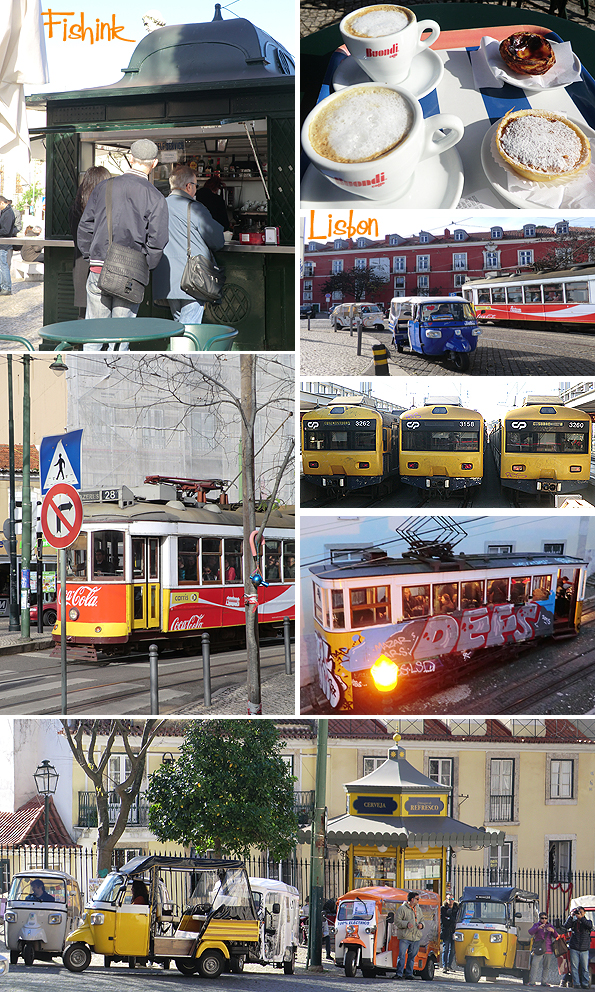
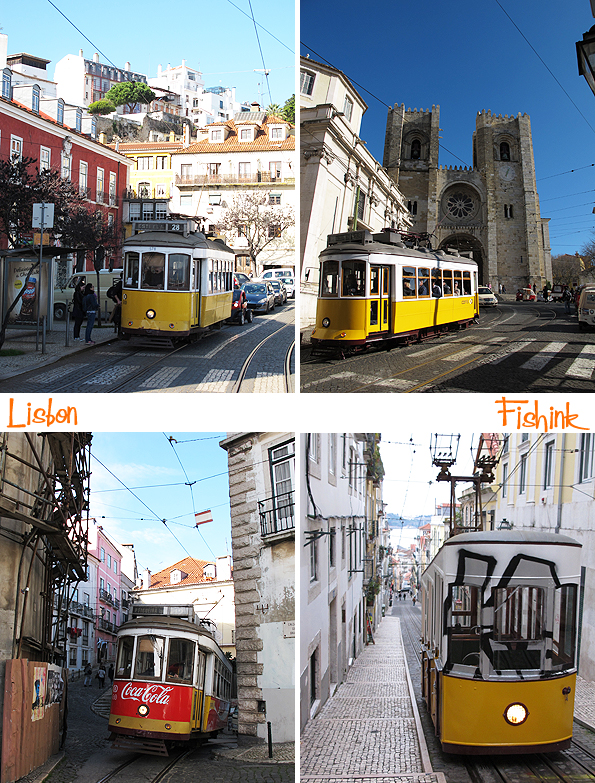
Lisbon is also famous for it’s varied modes of transportation, trains, tuk-tuks, funicular railways and perhaps most renown are it’s trams. The first tramway in Lisbon entered service on 17 November 1873, as a horse-car line. Up until 1959, the network of lines was further developed, and in that year it reached its greatest extent. At that time, there was a total of 27 tram lines in Lisbon, now only five remaining lines operate in the southern centre and west of the city. Despite the relevant tourist attraction, those lines are still very important because of sections of the city’s topography of small, narrow streets and very hilly aspects, that it can best be crossed by small trams. Yellow is such a popular colour here.
There are plenty of places selling fish-inspired treats, whether it’s a gift shop or a restaurant, touting it’s fresh wares in the window.
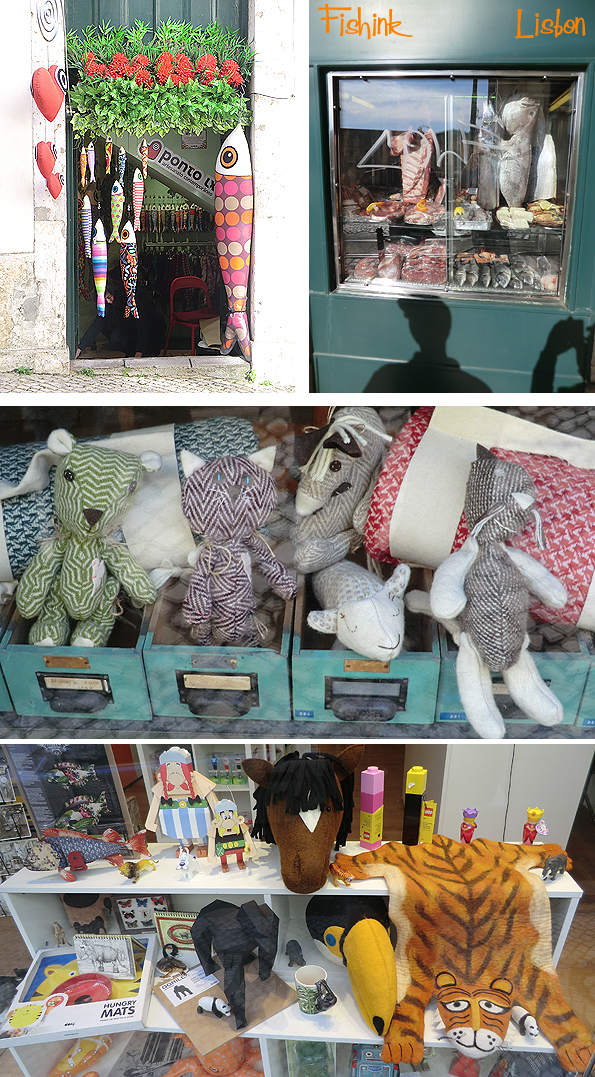
I came across this wonderful children’s gift shop (above) called Capitao Lisboa and the Folk Art Shop (below) near to the centre of Lisbon with an interesting array of ceramic figures, some looking a little like Frida Kahlo!

Rossio Square is the popular name of the Pedro IV Square which has been a preferred meeting place for locals and tourists alike and since the middle ages it has also been the setting of popular revolts and celebrations, bullfights and executions… fortunately, non there today. The contrast of the blue sky with the sun on the white stone and yellow walls, makes for quite a striking scene.
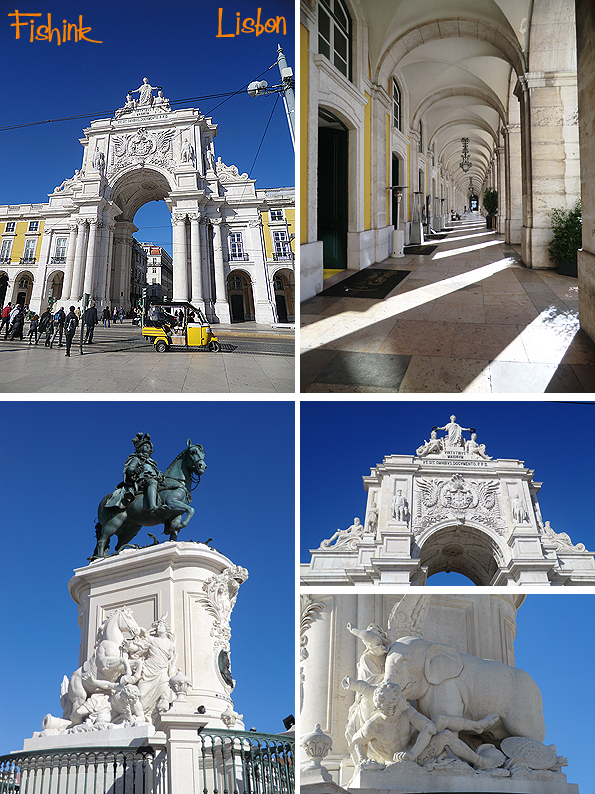
From there you can walk along the river and take in a whole host of impressive monuments. (More in my next post.)
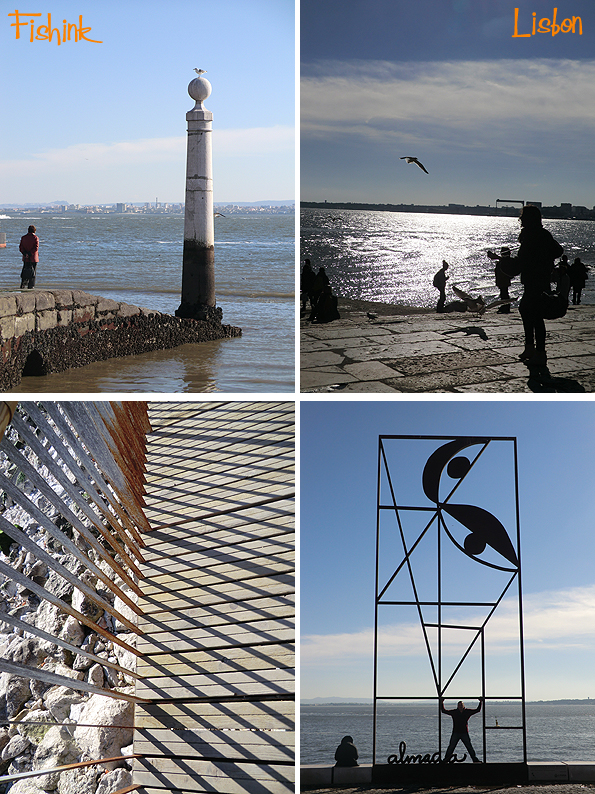
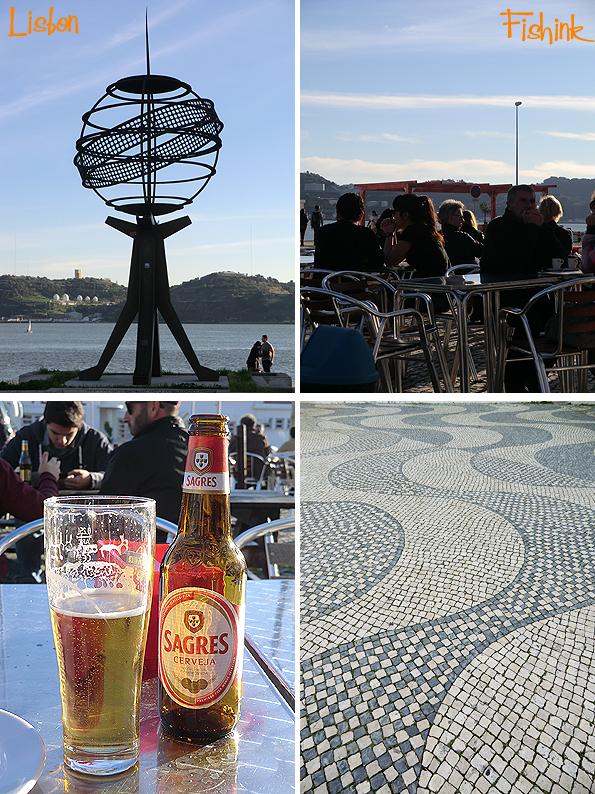
This metallic sculpture, pays homage to the Portuguese artist Jose de Almada Negreiros, whilst the the ’25th of April Bridge’ is a suspension bridge connecting the city of Lisbon, capital of Portugal, to the municipality of Almada on the left (south) bank of the Tejo river. It was inaugurated on August 6, 1966, and a train platform was added in 1999. Because it is a suspension bridge and has similar colouring, it is often compared to the Golden Gate Bridge in San Francisco. The upper deck carries six car lanes, while the lower deck carries two train tracks, with a total length of 2,277 m, it is the 27th largest suspension bridge in the world. The name “25 de Abril” commemorates the Carnation Revolution.

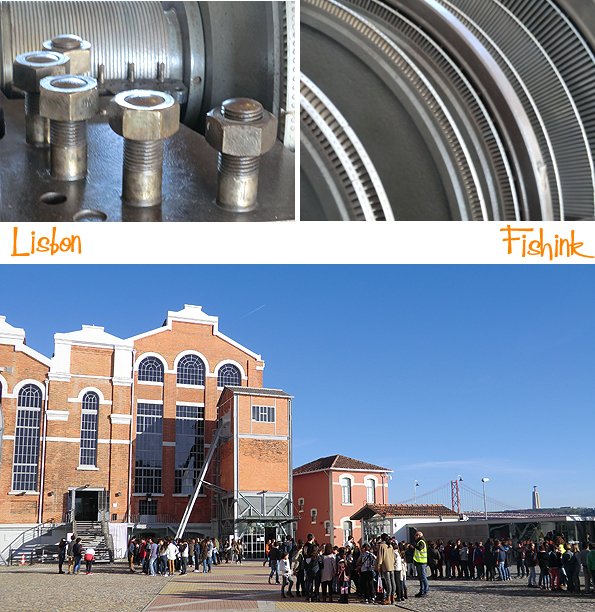
A little further along we discovered the Electricity Museum, which opened to the public in May 2006 as a reflection of a more up-to-date concept of a museum. The Tejo Power Station is one of Lisbon’s architectural landmarks and boasts a façade of undeniable beauty. In its day it was a real pioneer in electricity generation. Today, almost a century since it was built, the power station has again taken on innovative aspects and a prominent position as an Electricity Museum.
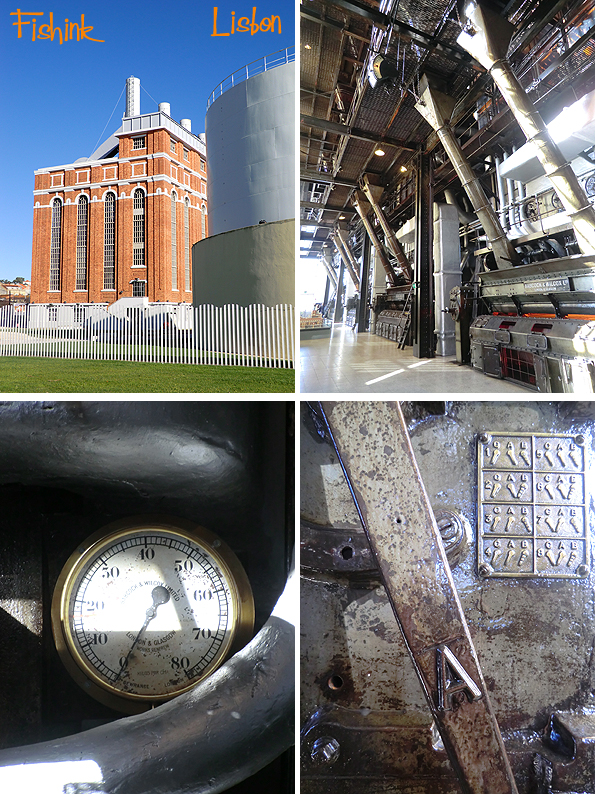
I hadn’t intended to visit this museum as (to be honest) I had thought it initially sounded quite dull, but I was so glad that I did. Not only did I find the whole museum (and the quality of the exhibitions) extremely impressive, but I was also transfixed by it’s odd little quirky gadgets, dials and devices that displayed and monitored various happening along the process of creating electricity. That and the fact that the whole experience was free, was pretty amazing.
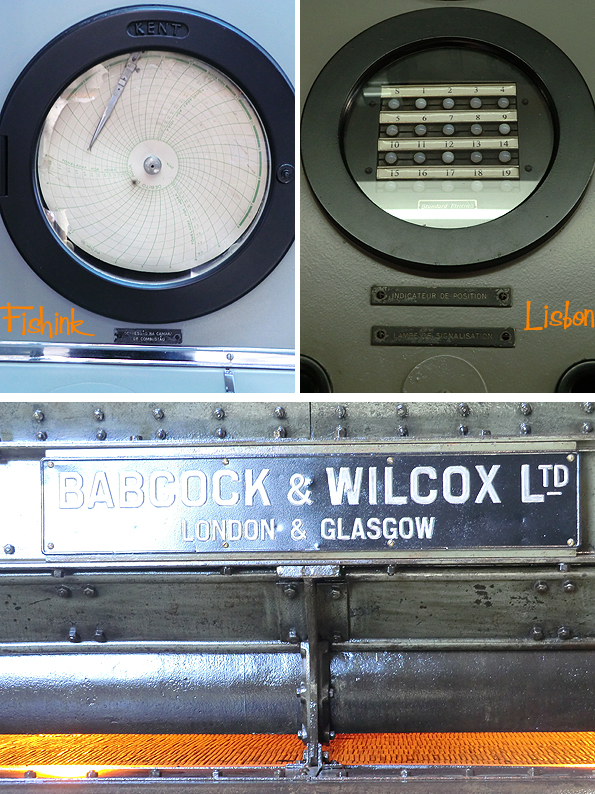
I can’t begin to imagine how long it must have taken to clean up all the machinery and present it to the public in it’s present state, but it looked good enough to eat your Portuguese egg tart off ! 110% for effort here.

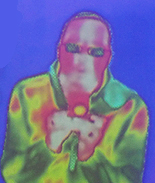
Some impressive models, a snazzy lightbulb collection and a device that showed how hot and cold you were. Don’t you think this looks like something the Petshop Boys would release as a video lol
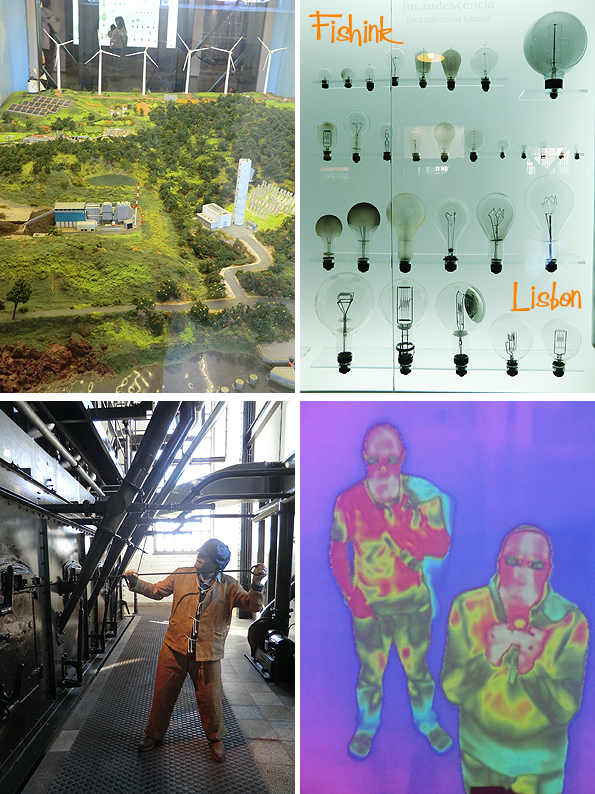
Electrical posters from throughout the ages.

Shapes, textures and instruments, all meticulously cleaned to within an inch of their life.
After all that reading it was time for a rest, soak up some rays and grab a beer. See you in part 3. If you missed part one it’s here
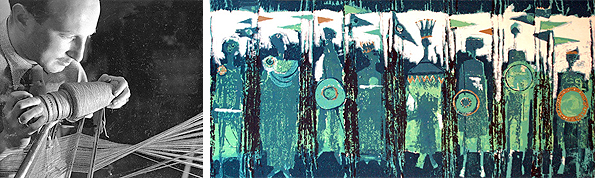
For those of you who are near to Manchester and who enjojed my post about
, you may well be interested in an exhibition on at the Whitworth which started this weekend and is on until August. The exhibition explores the ideas behind his innovative textiles, photography, ceramics and drawings. Should be well worth a visit.
I’d also just like to say a Huge vote of thanks to everyone for voting for my blog in this year’s UK Blog Awards. Sadly we didn’t make it to the finalists list this year (like we did last year), but hey it’s still great to be up there and singing with the best of them. So thanks again and please carry on tuning and chipping in : ) It is so much appreciated.
Fishink in Lisbon Part 1 Portuguese pattern and Ceramics

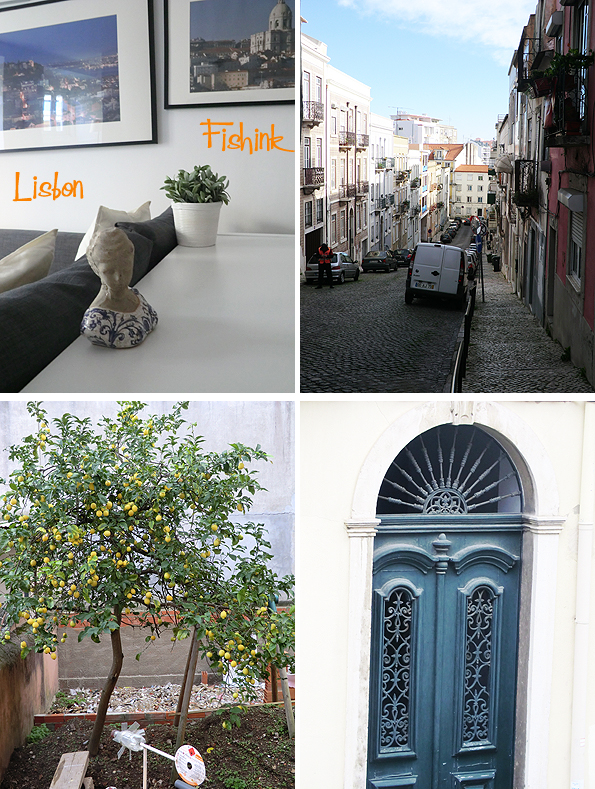
I was away last week, enjoying a sunny, well-needed out-of-season break to Lisbon. What a fabulous city! Quirky, artistic, smothered in ceramics and pattern and great little hidden gems. I’d like to share my experiences with you over the next few posts, so sit back, put your feet up and enjoy the ride : ) I’d booked a nice little Airbnb apartment in the centre of an area called Graça, here’s the place and street below, with a lemon tree in the back garden and a host of great little shops just around the corner.
Everywhere you go there are tiles and ceramics on the walls. It’s literally impossible to wander anywhere and not see evidence of some fancy wall-hung decorative pottery. I also loved the old store signage, such beautiful fonts.
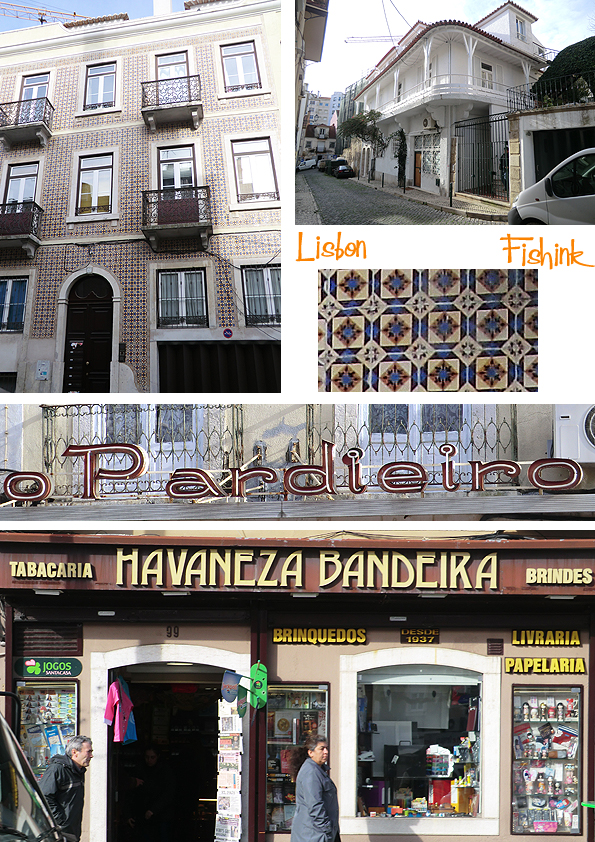
I couldn’t get over how much decoration and texture one city could own, a delight for a textile designer and illustrator like myself.

There is an 18th-century church, Igreja da Graça with a beautiful terrace overlooking the city. It’s a popular hangout for young groups, thanks to its kiosk café and fantastic views that go from the castle down to the river. From a variety of view points you can see out over the city and onto the Tagus River (Rio Tejo). Graffiti also pops out from the city walls every now and then.
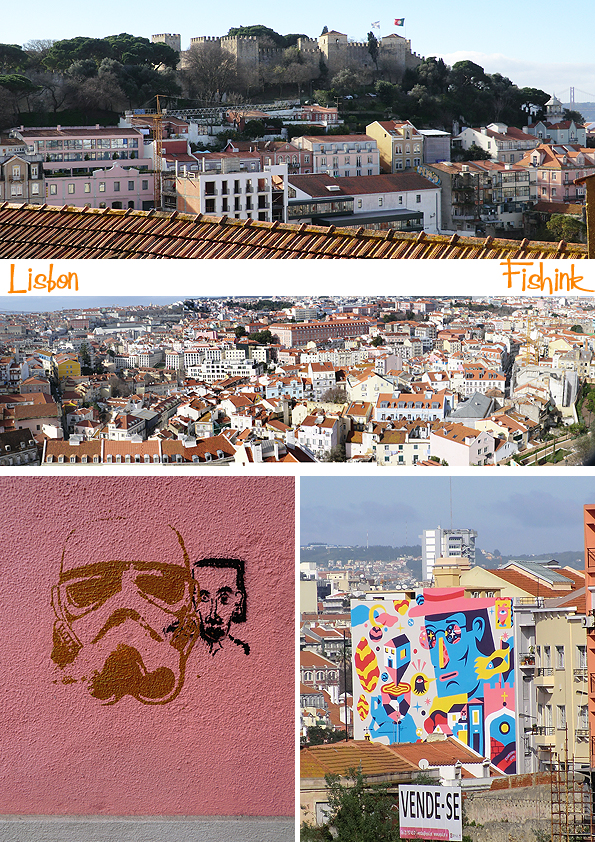
Inside the church there are some quite creepy and dark stations of the cross, contrasted by ornate and decorative painting and mouldings on the ceiling and walls with unusually pink and yellow frescos.

Wonderful to see such a range of designs on the tiles and a real mix of styles and periods too.

This sunny vista was just around the corner from the statue of Saint Vincent of Saragossa, Lisbon’s patron saint located at one of the most famous view of the city – Portas do Sol Belvedere. He is holding a boat with two Ravens, the symbols of Lisbon.

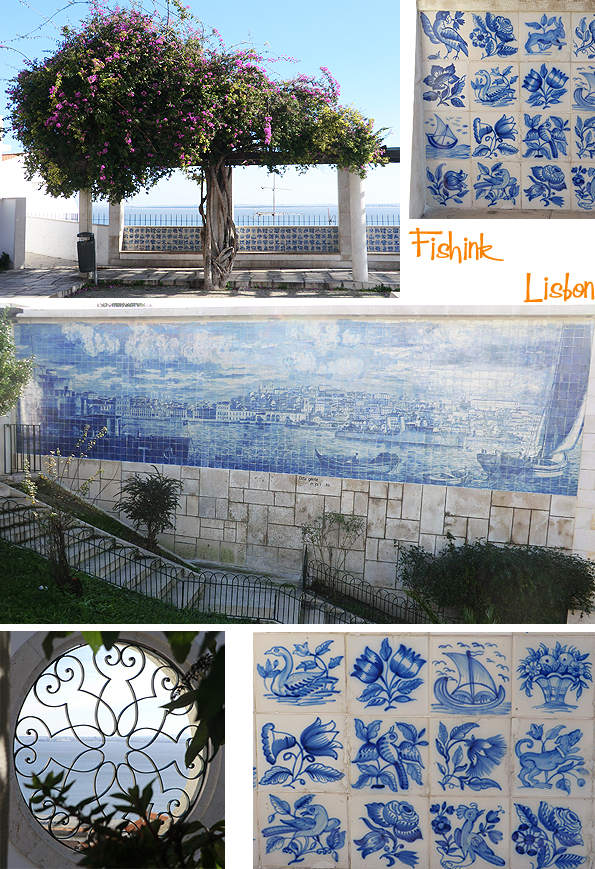
Just down from the statue , near the Se Cathedral, is this beautiful shop called Azulejo. The term azulejo comes from the Arabic word az-zulayj, meaning “polished stone.” The company called themselves ‘Handmade by Us’ and although they don’t appear to have a website, they did have three different shops in Lisbon alone. I loved (and purchased) one of their ceramic fish.. which is another symbol of Portugal. The lovely bird is destined for a friend’s 50th later this year, so Gill if you’re reading… look away now lol
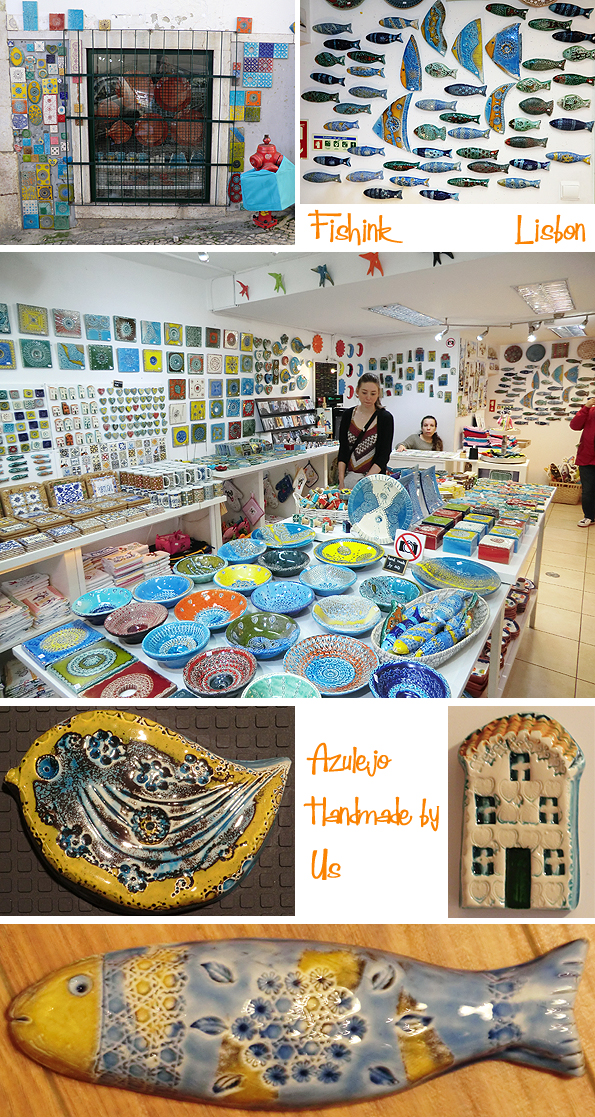
More news on Lisbon to come for the next 5 weeks. Do check back for the updates and I hope you’ve enjoyed my travels so far.
Can I remind you that today is the last chance to vote for your most favourite Blogpost so please click here today.
Many thanks, it really all helps : )
Leo Espinosa Illustration for all occasions

Talented Illustrator Leo Espinosa is an award winning Illustrator and Designer from Bogotá, Colombia, who’s work has been featured in a variety of publications, products, animated series and gallery shows worldwide. He can boast The New Yorker, Swatch and Coca-Cola as just three names on his list of impressive clients !

The Magical Book of Pombo is a compilation of popular fables written at the turn of the 20th century by one of Colombia’s most famous poets, Rafael Pombo. It is a follow-up to a Latin Grammy’s winner children’s album, also illustrated by Leo Espinosa in 2008. Conceived with a classic look, but spiced up with plenty of contemporary details to appeal both to children, and to the many generation that have grown up reading Pombo’s tales. The Magical book of Pombo was launched at the 2012 International Book Fair in Bogotá, where it became the #1 best seller children’s publication. It’s character design was also implemented on costumes for a life show version of the book.

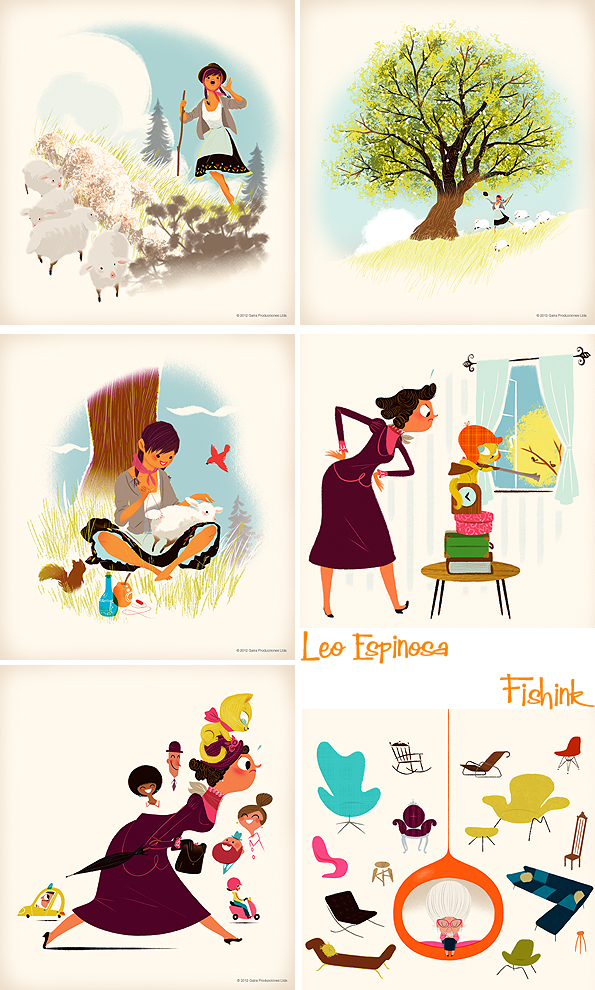
Leo’s illustrations have been recognized by American Illustration, Communication Arts, Pictoplasma, 3×3, and awarded with Gold and Silver Medals from The Society of Illustrators. It’s great to see some of Leo’s sketches next to his finished pieces, taken from his page on drawger.

I am very impressed with the numerous styles of working that Leo happens to be a cool master at.

He has served as faculty member at Rhode Island School of Design and has given multiple lectures and workshops at schools and institutions such as Parsons School of Design, Pratt Institute and The Leonardo Museum of Science and Art. He also does Fashion illustration!

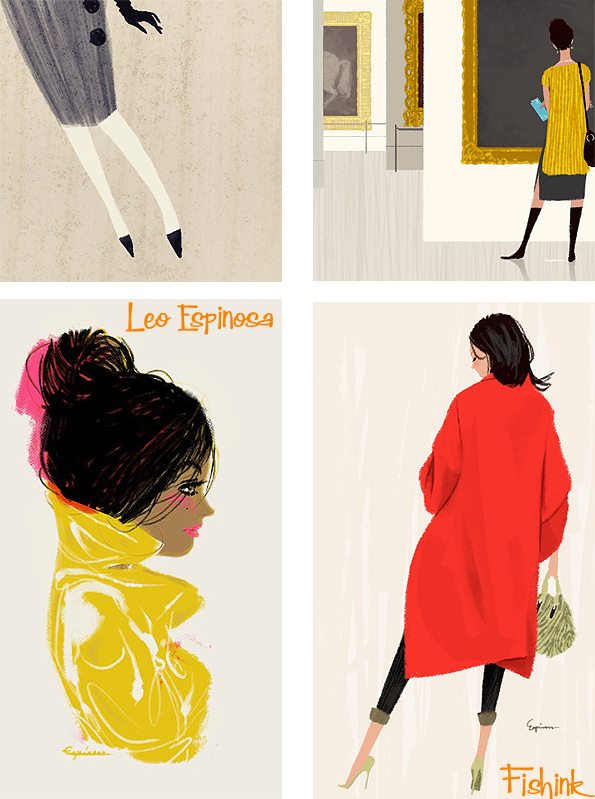
Posters and other cultural subjects.

Nowadays, Leo lives with his family in Salt Lake City, Utah. Great Work Mister E.
Can I remind you that if you’ve not yet voted for your most favourite Blogpost yet that you can still do so here anytime until January 25th… please get your Aunt Barbara, her dog Barney and the pet ducks to vote too.. it all helps : ) Thank you.

Fishink and Hannah Turner Ceramics
Good Monday everyone… have you voted for my blog yet in the UK’s Blog awards ? No… well it takes just a minute of your time and a couple of clicks so please do it now and here … every vote helps believe me : ) Pass it onto your friends too, Many thankyous.

One of the new pastimes I’ve been able to re-discover is ceramics. Bearing in mind that I’ve not thrown on a potters-wheel since the age of seventeen, I was delighted with my first results. I need to learn to throw with thinner walls and not leave the bases quite so chunky, but there’s a beginning that looks promising. I’ll keep you informed as to the ‘hopeful’ progress I make here.
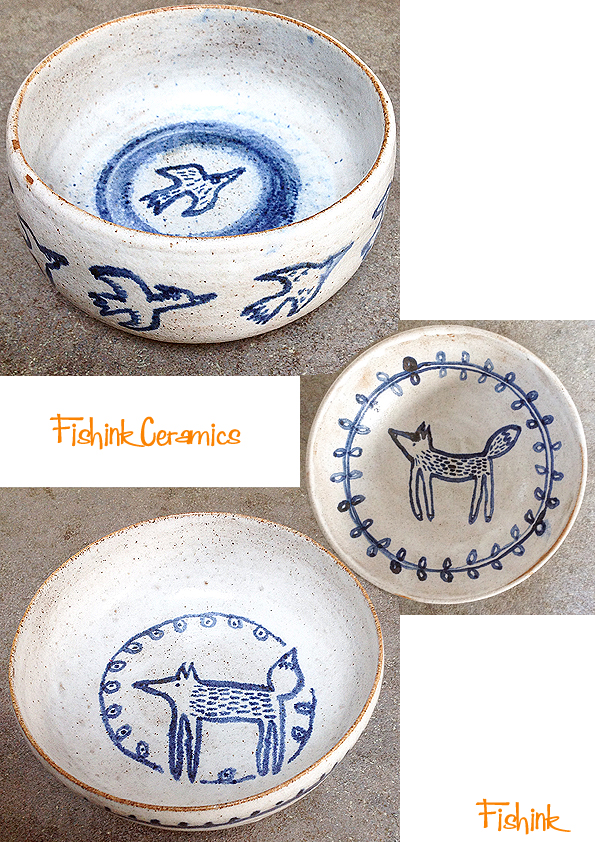
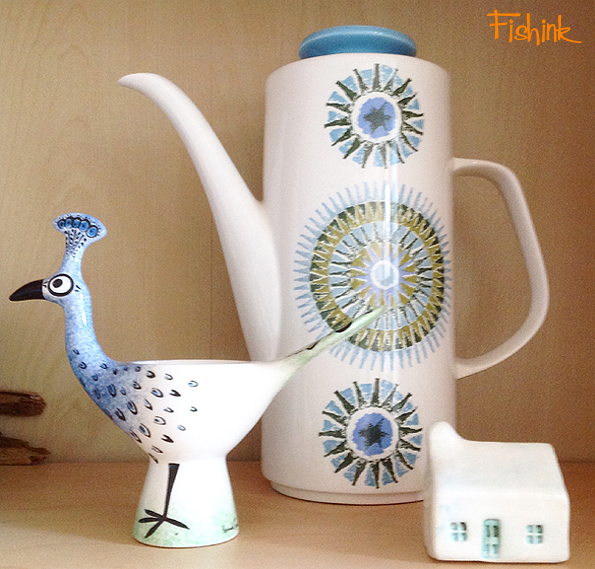
One of my lovely birthday presents (the peacock egg cup holder) led me to this weeks featured artist, talented ceramist Hannah Turner.
Here she is and after starting a ceramics company in 1991, Hannah has gone from strength to strength with her quirky, 50’s inspired designs.

Obviously thery’re right up my street !

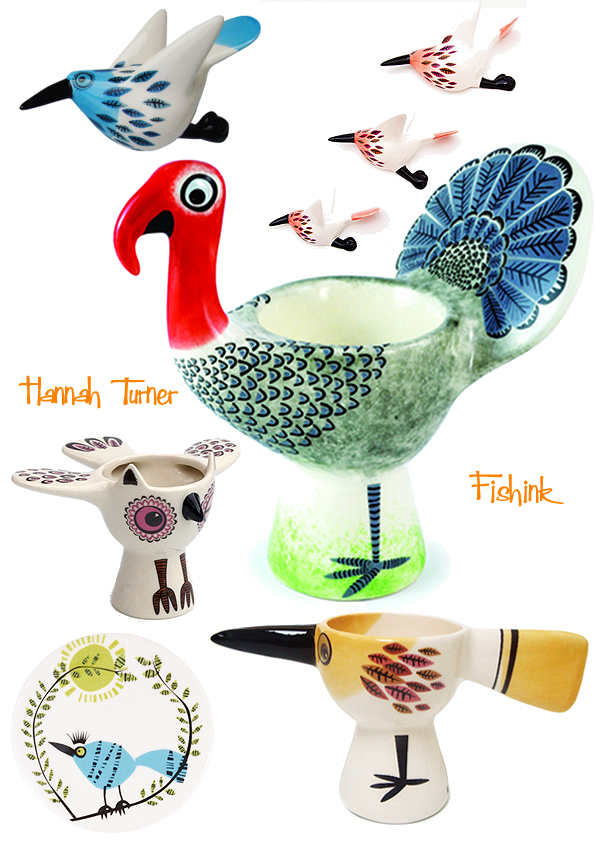
They make me smile. Hannah casts things using slip casting, and then creates the surface prints using Illustrator on the computer, rather than hand painting (as she once did). The ceramics are now made in Sri Lanka apart from a few limited edition pieces, but she is developing a range of textiles that will be made in the UK. Can’t wait to see those.
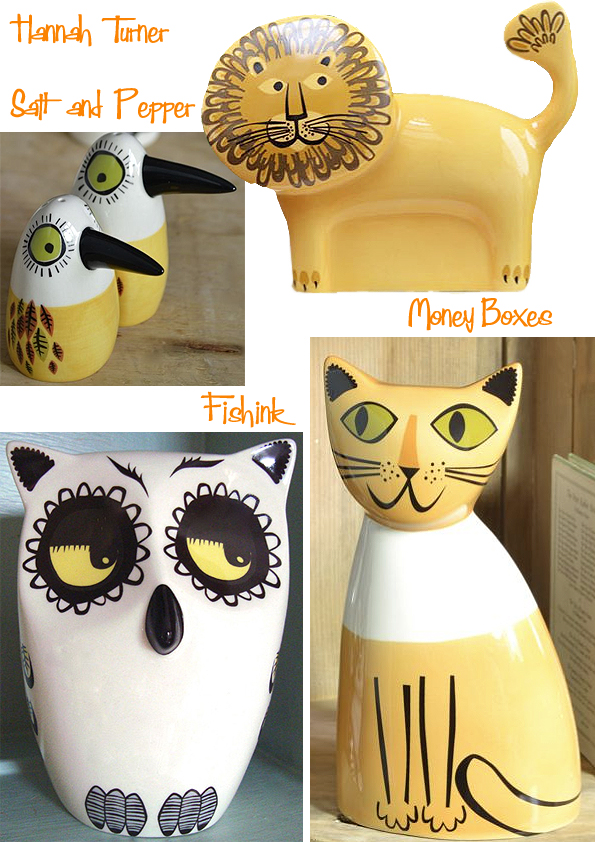
How about some rather fab money banks ? The lion is one of my favourites.
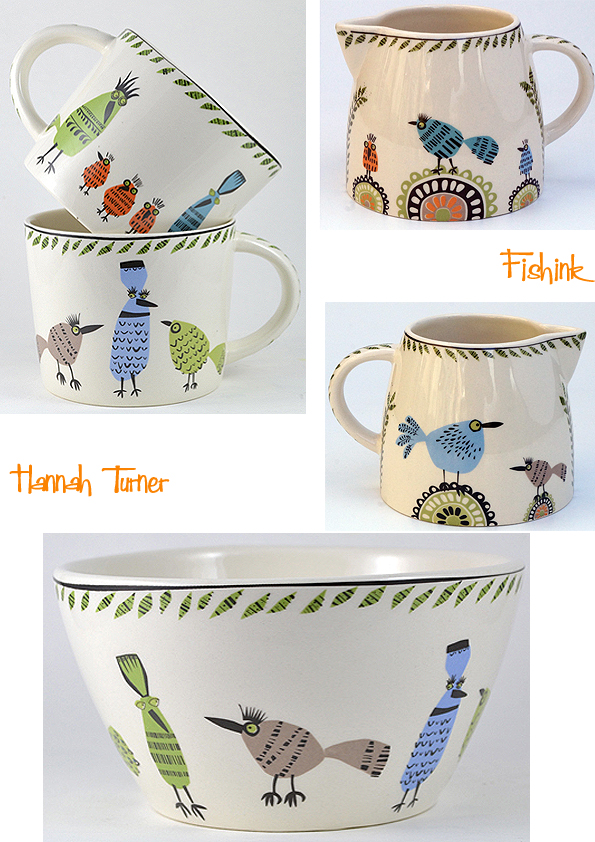
New ceramics for your breakfast table ?
A beautiful bird for your shelf ?
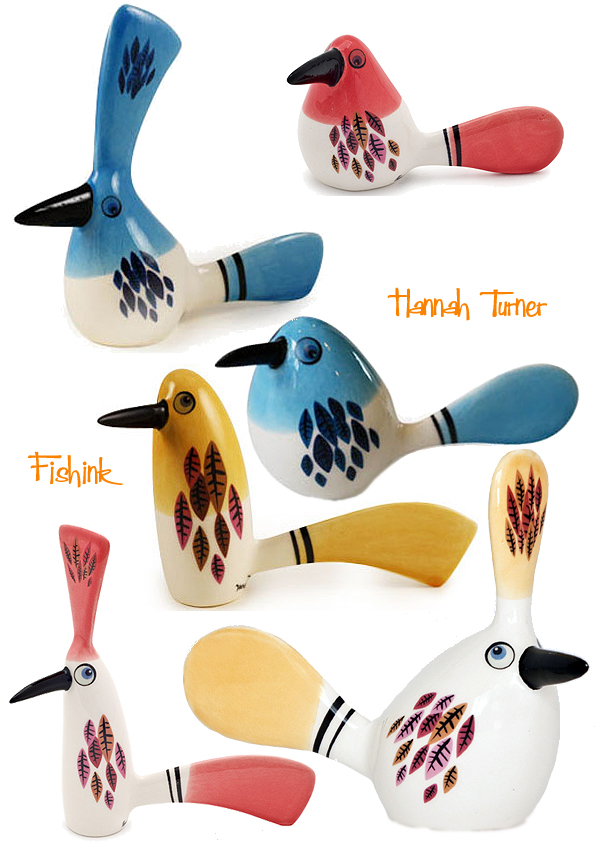
Or even a wee book for the children… something for everyone.

Keep up the great work Hannah. I love them. Pop over to her site here and treat yourself today.
Finally, I just wanted to pay my respects to the great chamelion of music, Mr David Bowie who passed away yesterday after an 18 month battle with cancer. He was such an inspirational, creative soul and encouraged musical and fashion revolutions, over and over again throughout his lifetime. Such a bright spark will be dearly missed, may his music live on and be played loudly.

Happy New Year with Agostino Lacurci
Welcome to Fishinkblog and 2016. HAPPY NEW YEAR to you all.. and so how was your Christmas and New Year ? All good I hope with the chance for that much needed down-time and opportunity to reflect and recharge the internal batteries too : )
I turned a half century over the festive period and had the welcome opportunity to meet up with 24 of my best friends and celebrate it with a meal in Manchester… what a treat !
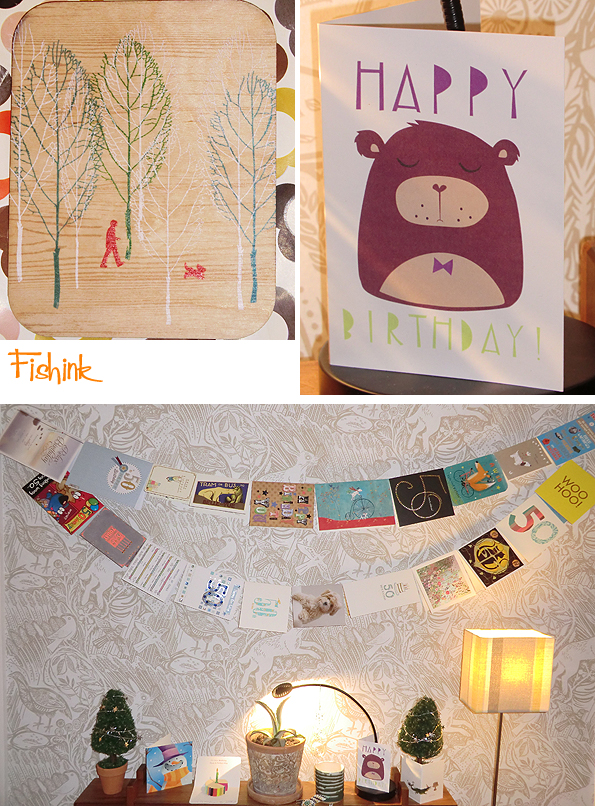
I even received a home-made cake and some lovely presents. Thank you everyone for your generosity and friendship, it meant so much.
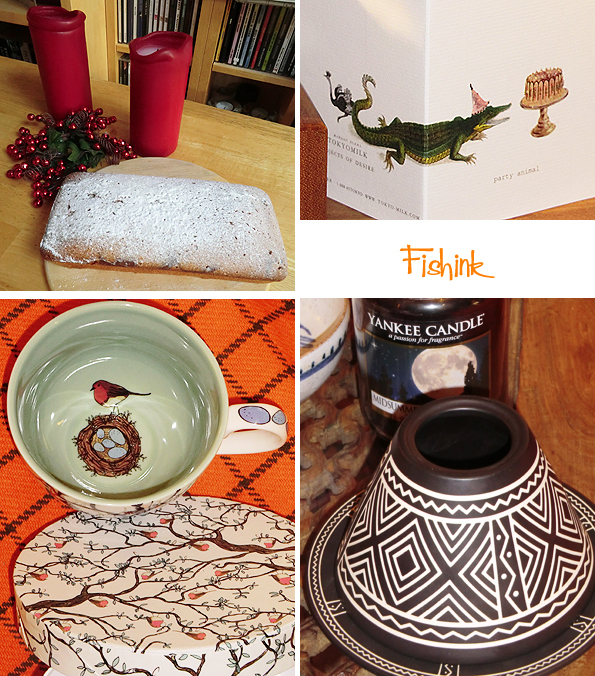
The next announcement is to ask a big favour from you all and that is to vote once again for your favourite Fishinkblog, in the UK Blog Awards 2016. It takes but one minute and you can do it by clicking HERE. I appear in the category of an individual entry and am listed under the ‘Arts and Culture’ section. Please ask everyone you know to add their votes too.. last year we got in the runners up top ten.. let’s see if we can improve on that… many thanks. Ok and now to today’s artist feature.

Agostino Lacurci is a very talented graffiti illustrator. Born in Foggia in 1986, Agostino has been creating since 2008 and designing stories on buildings and important public spaces, working in unison with their inhabitants.

I love his stylish swirls and curves.
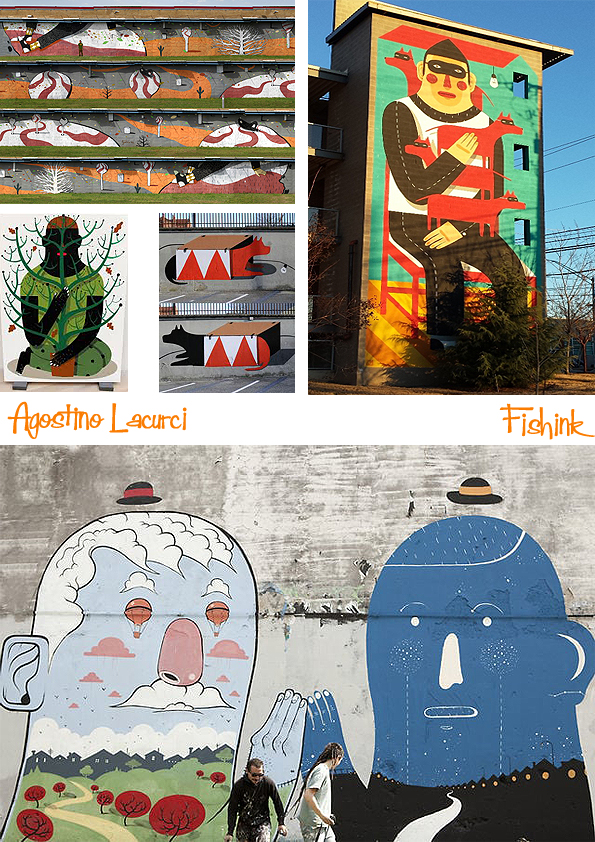
Many residents have welcomed his artwork and say that it’s made their neighbourhood a friendlier place since the murals arrived !
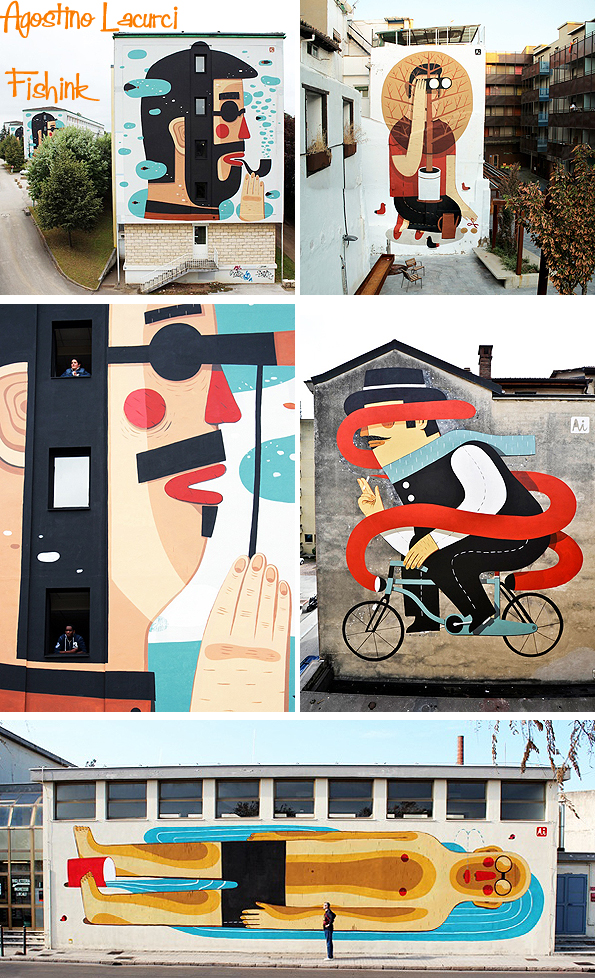
This swimmer is a fab addition to what was previously a rather drab building.

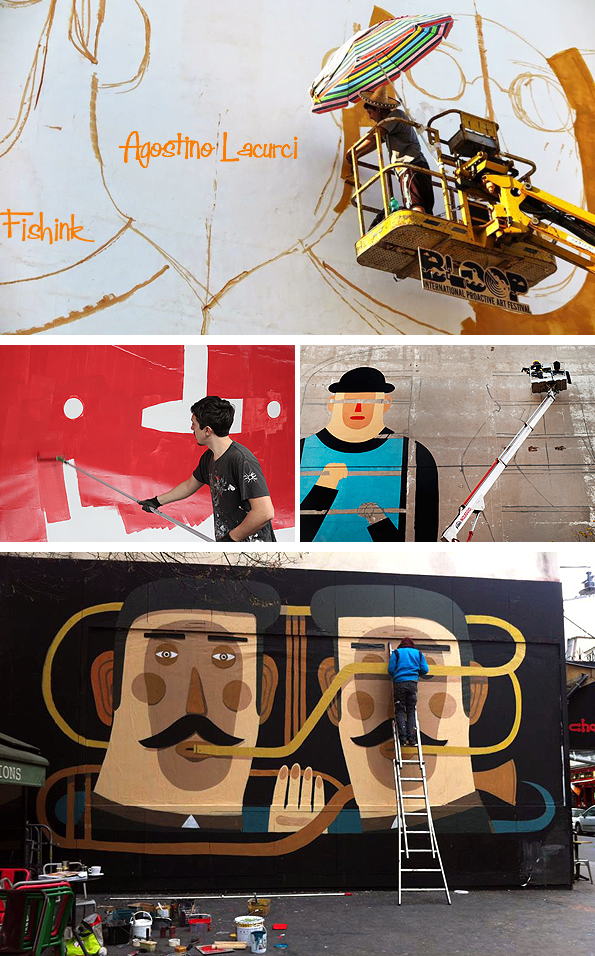
If you’re wondering how he copes with the scale of everything… look at this ! Boy do you need a head for heights, err and a sun umbrella !
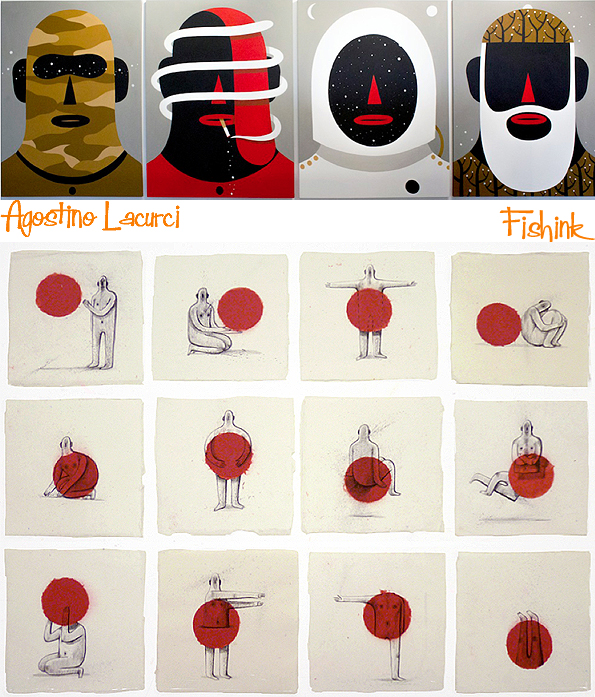
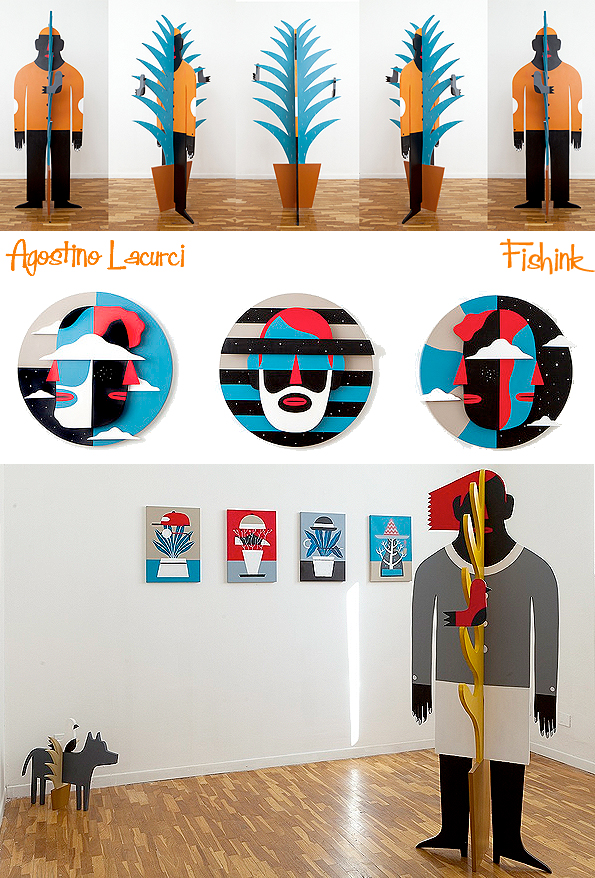
He also creates paintings and 3-D sculptures.

This is a ‘now you see him, now you don’t’ man and tree sculpture. How clever.

I really enjoyed finding out more about Agostino’s work and ideas, I hope you did too. There’s a great Q&A article over on the Lancia Trend Visions site if you want to know a little more.
Happy 2016 everyone don’t forget to vote now for Fishink Blog. Thank you.


 fishinkblog.com